// SPACE.COM — SPAZIO & SCIENZA
A ghostly pyramid of light is about to appear before dawn — here's how to see it
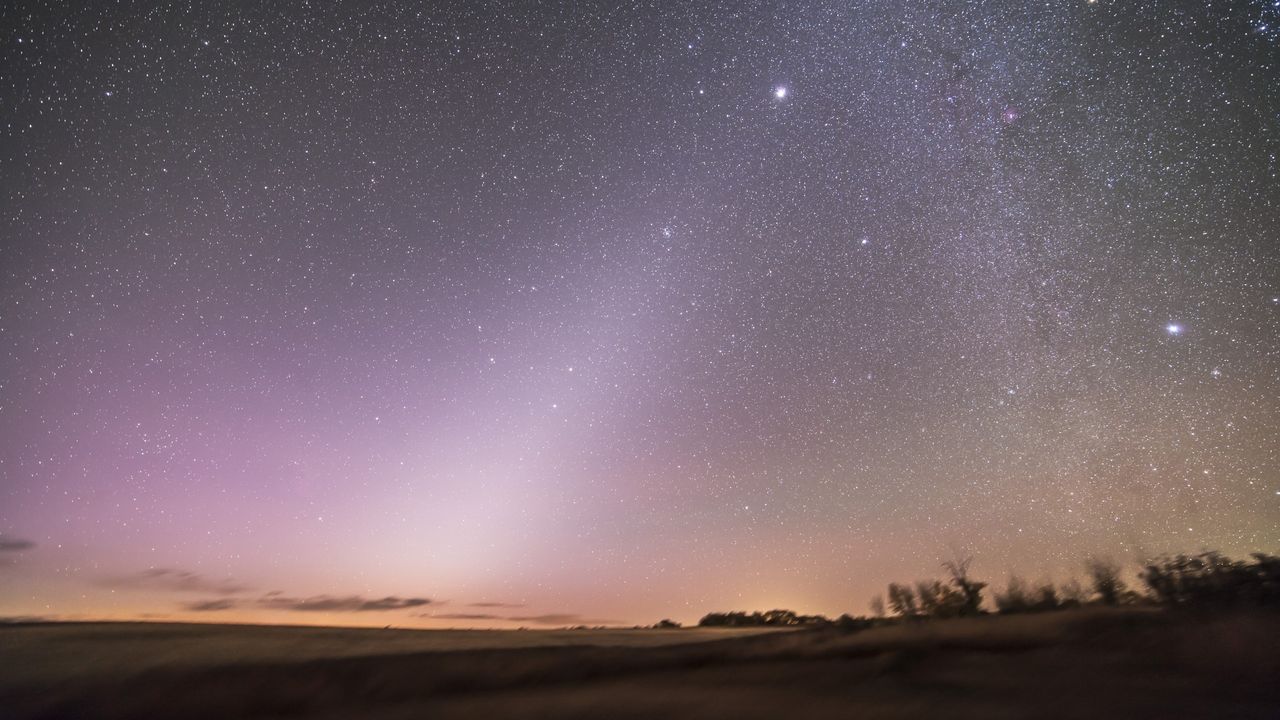
A ghostly "false dawn" is about to light up the predawn sky — if you know where to look.
When you purchase through links on our site, we may earn an affiliate commission. Here’s how it works.
Starting today (Sept. 9), skywatchers in the Northern Hemisphere have a chance to spot one of the night sky's more elusive sights: the zodiacal light.
Zodiacal light is a faint, pyramid-shaped glow rising in the east before morning twilight. It is caused by sunlight reflecting off interplanetary dust.
The phenomenon is sometimes nicknamed the "false dawn" because its soft glow can be mistaken for the signs of morning twilight. Unlike dawn, however, the zodiacal light appears as a distinct cone or wedge of light extending upwards from the horizon along the ecliptic — the apparent path the sun, moon and planets follow across the sky.
Early fall provides a good opportunity for northern hemisphere observers to look for zodiacal light before dawn, when the angle of the ecliptic helps the glow stand more prominently above the eastern horizon.
Timing and location are everything in order to observe the Zodiacal Light. You must be far from city lights, looking east, around 4:00 a.m. EDT. Give your eyes plenty of time to adjust to the darkness and avoid looking at your phone or other bright lights while searching for the faint glow.
Trace the cone of light as high as possible. Under pristine, dark skies, you can follow this glow deep into the zodiacal constellations that lie along the ecliptic. The base of the light cone will start near Cancer, resting just above the horizon, stretching upward through Gemini, and reaching high into the predawn sky toward Taurus.
Capturing the Zodiacal Light is very similar to photographing the Milky Way. You will want a fast, wide-angle lens (such as a 14 mm lens at f/2.8) to properly frame the sweeping diagonal of these constellations. Use a high ISO (1600 to 3200) and take a 15-to-20-second exposure on a fixed tripod.
You must confirm your public display name before commenting