// NASA BREAKING NEWS — SPAZIO & SCIENZA
NASA’s Chandra Unveils Mysterious X-Ray Objects
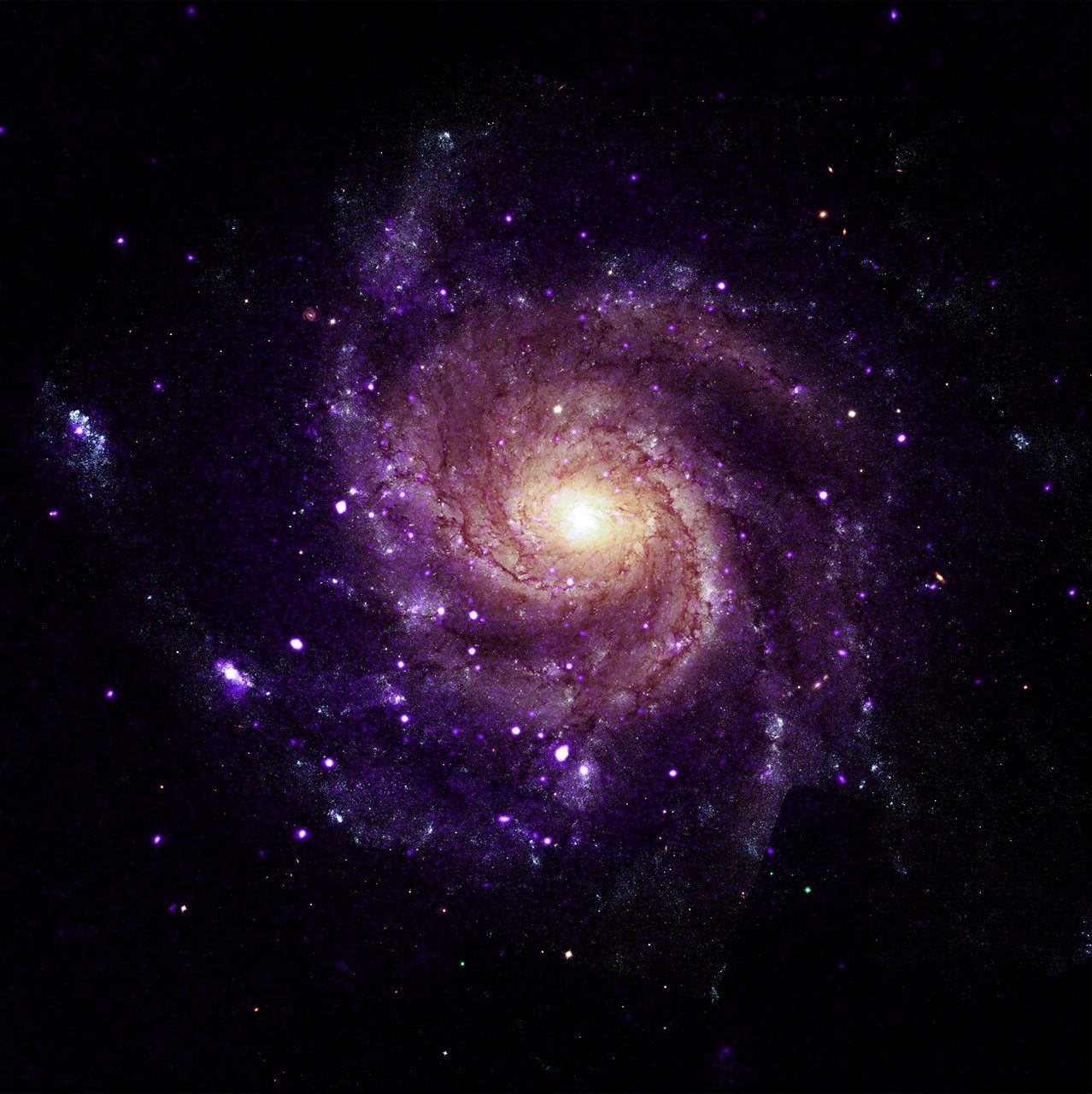
Using NASA’s Chandra X-ray Observatory, scientists have discovered a new class of objects behaving unlike any they have seen before. Astronomers suggest these newly spotted objects in other galaxies may help solve not one, but two long-standing questions in astrophysics.
These mysterious objects give off unusually low-energy X-rays but intense levels of ultraviolet radiation. This discovery is featured in a paper published Wednesday in Nature Astronomy.
“We’ve never encountered a group of objects that act like this,” said Mustafa Muhibullah of the University of Alabama who led the study. “Of course, the next step was to try to figure out what these things are.”
The researchers found a total of 84 of these “hypersoft X-ray sources” – so named because they give such low-energy X-rays – in the six different galaxies they searched, using data openly available to the public in the Chandra archive. Two of the galaxies are spirals, M31 (the Andromeda galaxy) and M101 (the Pinwheel galaxy), while the other four are ellipticals. They found hypersoft X-ray sources both in regions of active star formation and areas where there are older stars.
The team spotted the sources by finding objects that appeared in Chandra images taken at the lowest X-ray energies but vanished in higher-energy images. That means these objects give off far more low-energy X-rays than high-energy ones. Because low-energy X-rays border energetic ultraviolet radiation on the electromagnetic spectrum, the researchers determined that these sources are producing large amounts of energetic ultraviolet radiation as well.
It is unclear what types of objects are responsible for these low-energy X-rays and intense ultraviolet radiation. The team thinks they most likely involve a black hole, neutron star, or white dwarf pulling material from a companion star. The material pulled from the companion star is heated up to produce X-rays before falling onto the white dwarf or neutron star, or into the black hole. Such binary systems have been seen before, but not with such bright ultraviolet radiation and low-energy X-rays.
The discovery suggests that there may be large populations of binary systems with energetic ultraviolet radiation that have been undetected until now.
“These clandestine X-ray sources are actually among the most energetic objects in galaxies, and they could be solving two cosmic mysteries at once,” said Muhibullah.
Scientists think that some white dwarf systems pulling material from companion stars may eventually explode as a supernova – known as a Type Ia – that is critical for measuring the expansion of the universe. These supernovae played a key role in discovering that this expansion is accelerating. Astronomers have been looking for the stars that turn into Type Ia supernovae for many years, so far without success.
“If we could find a way to spot these Type Ia supernova explosions before they go off, that would be really important,” said co-author Jimmy Irwin, also of the University of Alabama. “Right now, we study them after they’ve exploded, and astronomers have struggled to understand what is actually ignited.”