// NASA BREAKING NEWS — SPAZIO & SCIENZA
Partners, NASA Ready for June Launch of Swift Boost Mission
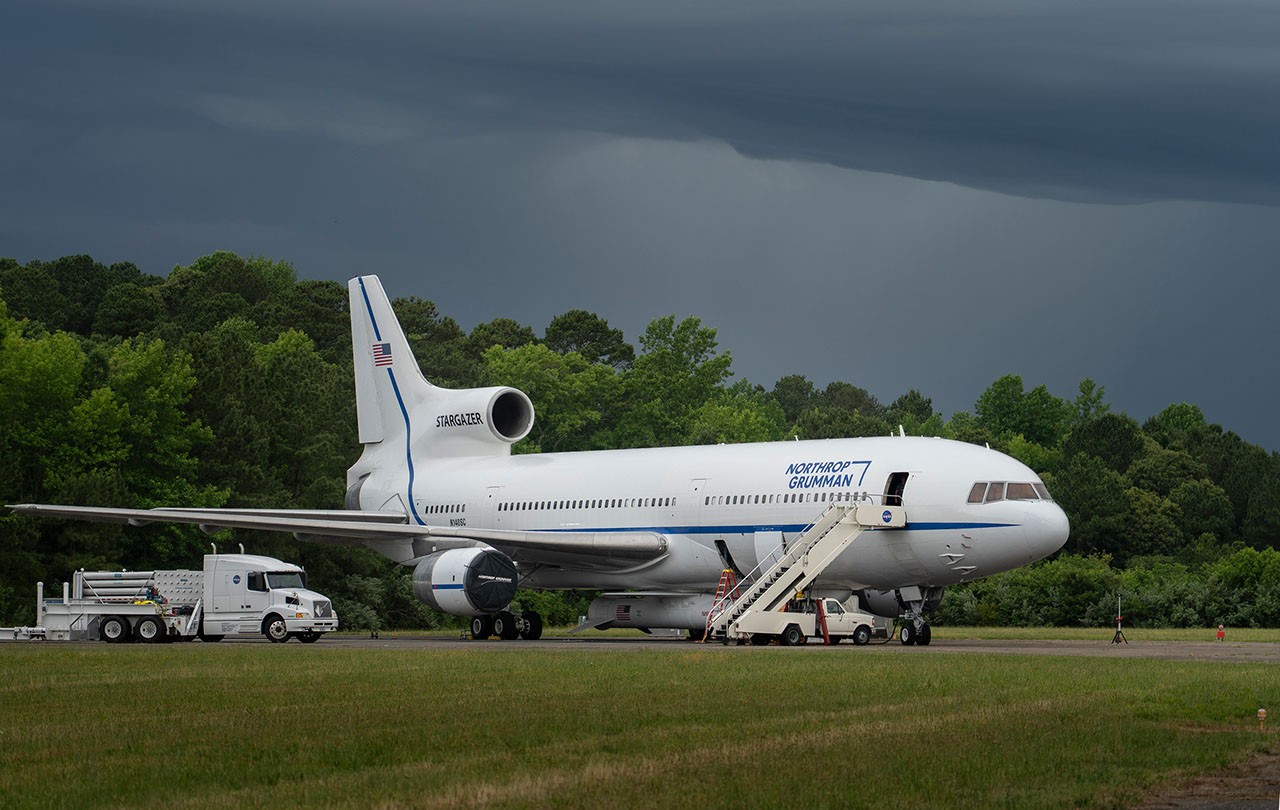
A mission to raise the orbit of NASA’s Neil Gehrels Swift Observatory is poised for launch no earlier than Tuesday, June 30, 6:23 a.m. EDT (10:23 p.m. UTC+12), from Kwajalein Atoll, part of the Republic of the Marshall Islands in the South Pacific Ocean.
A robotic servicing satellite called LINK, built by Katalyst Space, will blast into orbit on a Northrop Grumman Pegasus XL rocket. LINK will rendezvous with, grapple, and slowly raise Swift’s altitude over several months, preventing it from re-entering Earth’s atmosphere later this year.
“Swift is NASA’s multitool when it comes to studying the cosmos,” said S. Bradley Cenko, principal investigator, Swift, NASA’s Goddard Space Flight Center in Greenbelt, Maryland. “It observes the sky using a wide range of light and rapidly points at short-lived outbursts, alerting other facilities in space and on the ground to help coordinate follow-up observations. For the last two decades, Swift has been a key player in NASA’s efforts to understand how the universe works, and we’re looking forward to getting back to that work after the boost is complete.”
Our planet’s atmosphere creates drag on all spacecraft in low Earth orbit, gradually reducing their altitudes if they don’t have propulsion systems to counteract the effect.
A recent bout of increased solar activity magnified this impact on Swift, which launched in November 2004.
Rather than allowing Swift to re-enter the atmosphere as many missions do, NASA is using the opportunity to advance the U.S. commercial satellite servicing industry.
In September, the agency contracted Katalyst to attempt to boost the observatory. The company would have less than one year to design, build, test, and launch a satellite to meet, grab, and lift Swift to nearly its original orbit.
"Swift wasn't designed to be serviced," said Ghonhee Lee, CEO of Katalyst. "By demonstrating we can quickly and cost-effectively extend its lifetime, we're creating a blueprint for servicing spacecraft that were never designed for on-orbit maintenance. If we're going to build an enduring presence beyond Earth, we need the capability to manipulate our environment in space. That means deploying robotic spacecraft that can reposition, repair, refuel, and refit satellites after launch.”
The LINK spacecraft weighs about 880 pounds and stands about 5 feet tall, about a third of Swift’s overall size. Nearly 20 feet of solar panels will power three ion thrusters and a trio of robotic arms.
LINK completed environmental testing that mimicked launch and space-like conditions at NASA Goddard this spring, as well as additional preflight assessments at Katalyst’s facility in Broomfield, Colorado.