// NASA BREAKING NEWS — SPAZIO & SCIENZA
NASA’s Newest Wind Tunnel Builds on Legacy of Innovation
Public Affairs Officer, NASA Langley Research Center
For more than 100 years, wind tunnels at NASA’s Langley Research Center in Hampton, Virginia, have helped shape the future of flight.
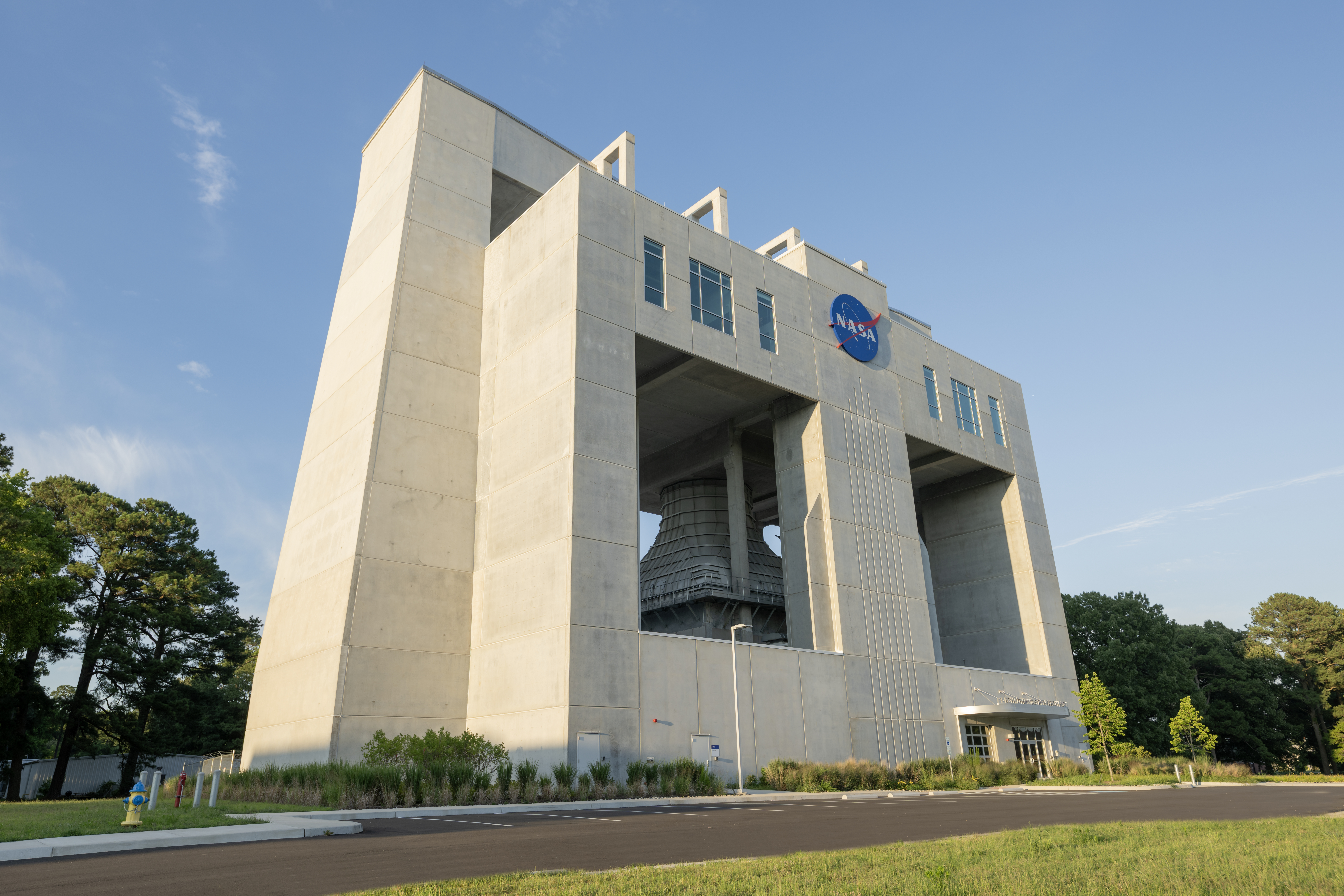
Now, two of NASA’s longest-serving facilities — the 12-Foot Low-Speed Tunnel and the 20-Foot Vertical Spin Tunnel — will pass the torch to the Flight Dynamics Research Facility (FDRF), the first major NASA wind tunnel built in more than 40 years.
“The FDRF has a combination of features found in no other single facility in the world,” said Mike Fremaux, retired chief engineer for the Intelligent Flight Systems division at NASA Langley. “It’s a high-performance vertical wind tunnel with a large test section capable of conducting all manner of tests to assess the dynamics of flight vehicles.”
When the FDRF opens later this year, it will provide enhanced versions of the capabilities offered by the two legacy facilities. The FDRF’s test section will allow researchers to drop models into a rising vertical airflow. This will offer researchers the ability to conduct spin tests of aircraft and free-flight tests of vehicles designed to re-enter Earth’s atmosphere from space.
The FDRF will play an integral role in conducting research that supports NASA’s aeronautics, science, and space exploration missions. Like many NASA facilities, the FDRF’s story is rooted in a history of innovation.
When the 12-Foot Low-Speed Tunnel began operations in 1939, aviation looked very different than it does today.
It was built for NASA’s predecessor agency, the National Advisory Committee for Aeronautics (NACA) to study the controllability of airplanes using free flight. Aircraft models flew unsupported in the wind it generated, instead of being mounted to supports. Multiple operators used rudimentary remote controls to operate the models in the tunnel.
The facility that housed the tunnel boasted a unique design: a 60-foot diameter sphere. The configuration allowed the tunnel to move and adapt to the flight paths of free flying models. “Pilots” could use hydraulic actuators, pivoting the tunnel’s test section to match the models’ movements. The spherical design made it easy for air from the facility’s fan to recirculate through the tunnel, regardless of the pitch angle of the test section.
In 1958, NASA moved the free-flight tests to another Langley tunnel. The agency deactivated the 12-Foot’s hydraulic actuators, fixing its test section into a horizontal position, and began using it for more conventional testing, looking at how aerodynamic force affected the stability and control of strut-mounted models.