// HACKER NEWS — CYBERSECURITY
The forgotten battle of East Lansing
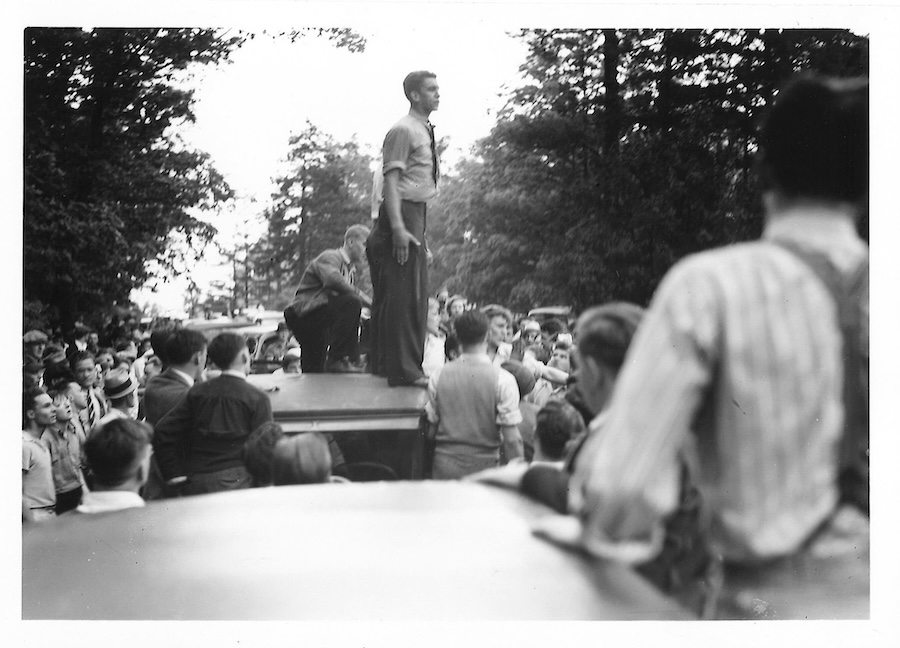
With 3-foot-long concrete reinforcing rods in their hands, students at Michigan State College took to the streets of East Lansing on Monday, June 7, 1937, to push back an invasion of Lansing labor union members, kicking off the one-day — and oft-forgotten — Battle of East Lansing.
(Perhaps if it had a catchy folk song sung by a local Peter, Paul and Mary-type group, future generations would better remember it?)
Recounting these events nearly five decades later in an interview with labor historian Ken Germanson, Lester Washburn, president of United Auto Workers union of Lansing — Local 182 — said the trouble started when the union had racked up a series of wins.
Lansing was a major automobile producer, with the 52-acre Oldsmobile assembly plant on the south side, the Fisher body plant on the west side and the city’s own REO Motor Car Company plant in the neighborhood to which it gave its name.
Earlier in 1937, the latter was the site of a four-week sit-down strike that led to the recognition of UAW Local 182 as the chief collective bargaining representative for the autoworkers.
“We were being too successful as far as organizing was concerned in that town,” Washburn said in the 1986 interview. “Everybody wanted to join the auto workers. One night, we had 19 people come in the hall and ask for a union; Capital City Wrecking Company. They wreck buildings, sell used lumber as well as new lumber. They had 25 employees. 19 of them come in and ask for a union, we give them one that night, elected officers, set them up.”
The next morning, however, Capital City Wrecking Company fired the six newly elected officers and refused to recognize the union.
According to Washburn, what followed was a court fight and a strike. The legal battle found the union trying to prove that the company had violated its rights and the National Labor Board Act of 1935. The judge issued a temporary injunction against the union until he could rule.
The strike was staged by employees of the wrecking company and their UAW brothers from other local shops. Men would picket the company when they weren’t working their own jobs, and the auxiliary organization — made up of the wives of the union men — set up a tent to serve coffee and doughnuts to the strikers.
In the interview, Washburn said some authorities felt the strike violated the court’s injunction.