// SPACE.COM — SPAZIO & SCIENZA
In 1776, the solar system only had 6 planets. Now, it has 8. Does it end there?
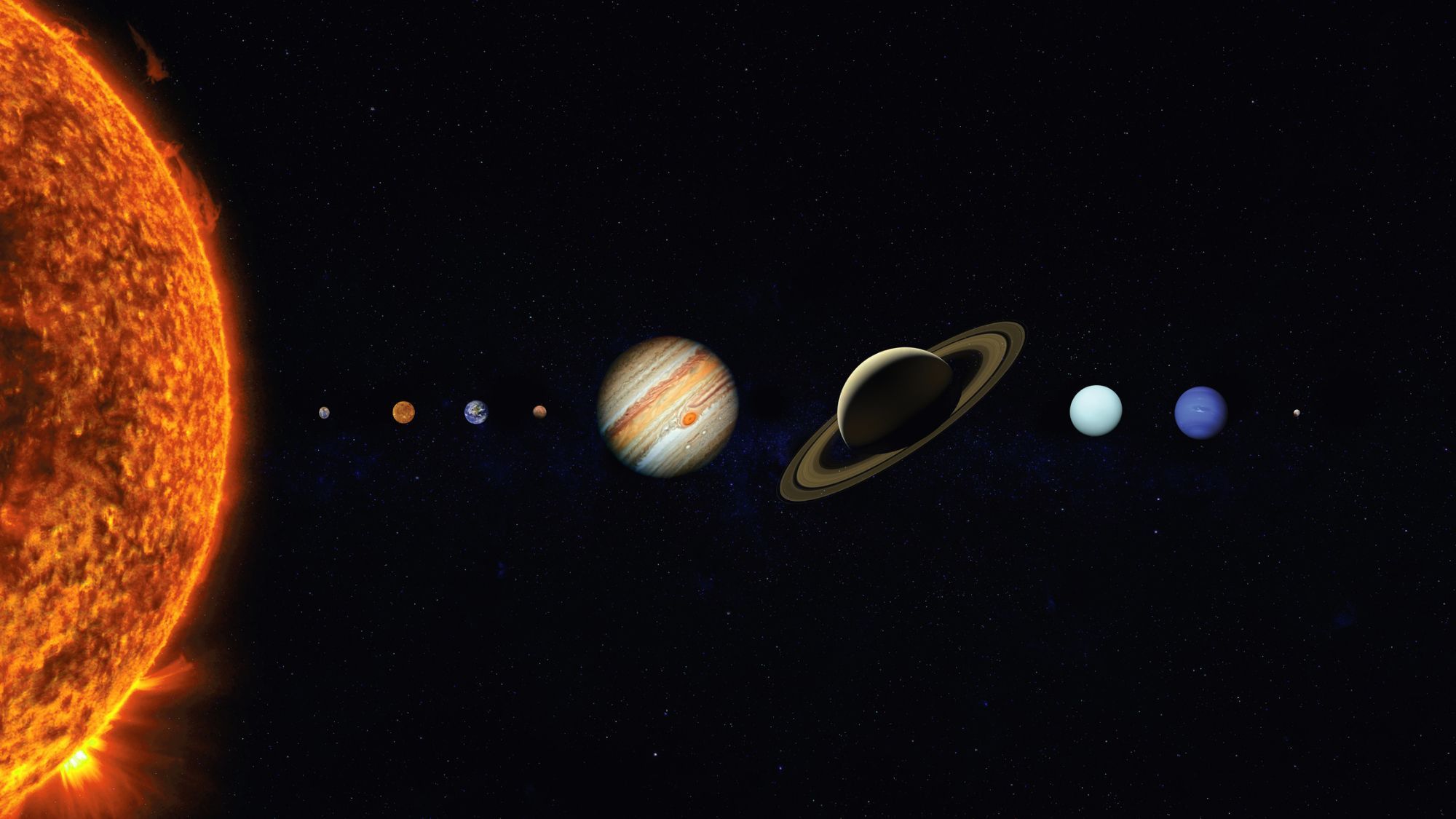
From 6 to 9 to 11 to 7 to 8: What 250 years has done to our solar system planet count.
When you purchase through links on our site, we may earn an affiliate commission. Here’s how it works.
Over the past 250 years, the number of "planets" in our solar system has ranged from six to nine — and, briefly, even 11 — depending on what astronomers knew at the time and how they defined a planet. As the United States prepares to celebrate its 250th anniversary, that changing tally offers a unique lens on humanity's evolving understanding of the cosmos since 1776.
Throughout history, astronomers have discovered new worlds, identified entirely new classes of celestial objects and repeatedly revised the very definition of a planet. The result is a surprisingly complicated answer to one of astronomy's most basic questions: How many planets are there in our solar system?
"The change in the number of recognized planets well represents how science is done," Kevin Schindler, historian and public information officer at Lowell Observatory, told Space.com. "Scientists discover something — a planet, dinosaur fossil, or beetle, for example — study it and classify it. With further study, and by studying more examples, scientists learn more and update their understanding of the thing, sometimes reclassifying it."
When the United States declared independence in 1776, astronomers recognized just six planets: Mercury, Venus, Earth, Mars, Jupiter and Saturn. That changed only five years later when William Herschel discovered Uranus in 1781, expanding the known solar system and increasing the planet count to seven.
The tally grew again in 1801 with the discovery of Ceres, a world orbiting between Mars and Jupiter. Three similar objects were found soon afterward, and for a time astronomers considered all of them planets, briefly bringing the total to 11. However, as additional objects were discovered, scientists realized they represented a distinct population and those objects were reclassified as asteroids, reducing the planet count down to seven, Schindler explained.
Neptune's discovery in 1846 raised the total to eight, while Clyde Tombaugh's discovery of Pluto at Lowell Observatory in 1930 established the familiar nine-planet solar system. This changing planet count underscores a broader pattern in humanity's journey of exploration and discovery over the past 250 years.
"I think it shows that exploration and the thirst to understand the universe around us is ingrained in us, it's part of our DNA and we continue to want to learn," Schindler said. "Our founding fathers established the United States based on scientific principles such as reason and logic, observation, evidence-based analysis, and openness to debate different points of view and be open to change."
For much of the 20th century, the answer seemed settled: The solar system had nine planets. However, beginning in the late 1950s, advancing spacecraft technology allowed scientists to study planets, moons and smaller bodies up close, revealing worlds far more diverse and dynamic than could be seen through telescopes alone. Then, in the early 1990s, astronomers began discovering a growing population of icy worlds beyond Neptune.