// SPACE.COM — SPAZIO & SCIENZA
Powerful X-class solar flare triggers radio blackouts across North America
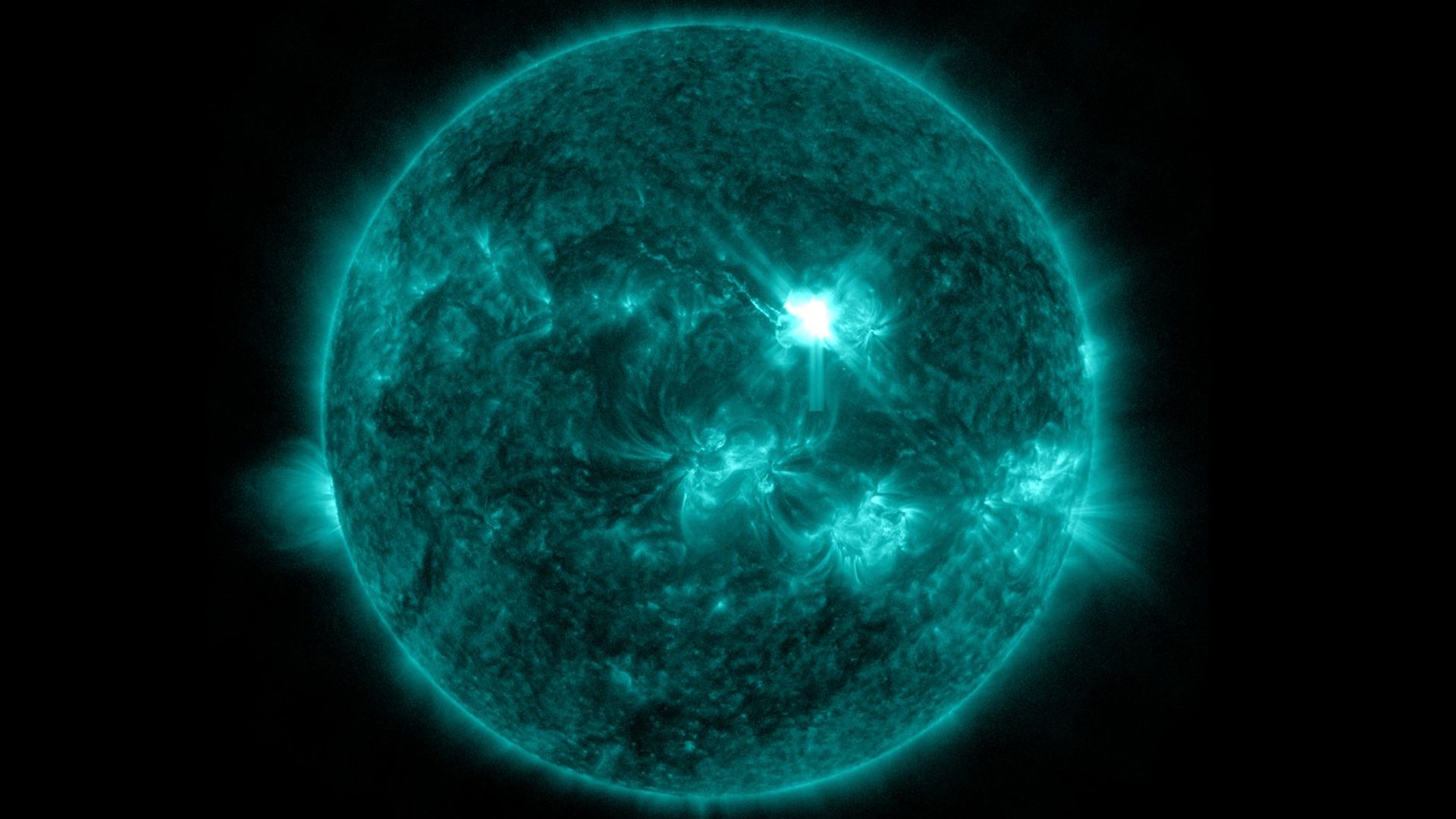
A coronal mass ejection accompanied the X1.1 solar flare.
When you purchase through links on our site, we may earn an affiliate commission. Here’s how it works.
A restless Earth-facing sunspot unleashed a powerful X-class solar flare on June 30, triggering radio blackouts across parts of North America.
The X1.1 solar flare erupted from sunspot region AR4479, peaking at 4:50 p.m. EDT (2050 GMT) according to NOAA's Space Weather Prediction Center.
The intense burst of X-rays released during the eruption reached Earth in just over 8 minutes, triggering strong (R3) radio blackouts across the daylight side of Earth. This mainly affected high-frequency radio users across parts of North America who may have experienced temporary signal degradation or brief communication outages while the flare was at its strongest.
The eruption also launched a coronal mass ejection (CME) — a huge cloud of magnetized solar plasma hurled into space. When Earth-directed, CMEs can collide with our planet's magnetic field and spark geomagnetic storms, which subsequently can produce dazzling northern lights displays.
This one, however, appears unlikely to pack much of a punch.
Early observations suggest the CME is traveling mostly northward, with only limited Earth-directed material. We may experience a glancing blow around July 3.
While forecasters will continue analysing imagery and models over the coming days, the eruption isn't currently expected to produce a significant geomagnetic storm or widespread aurora display.
Solar flares are sudden bursts of energy released when magnetic fields around sunspots become twisted and reconnect. They are ranked using five classes — A, B, C, M and X — with X-class flares representing the most powerful eruptions.