// TOM'S HARDWARE US — HARDWARE & GADGET
AMD drops an EPYC $15,000, 256-core beast
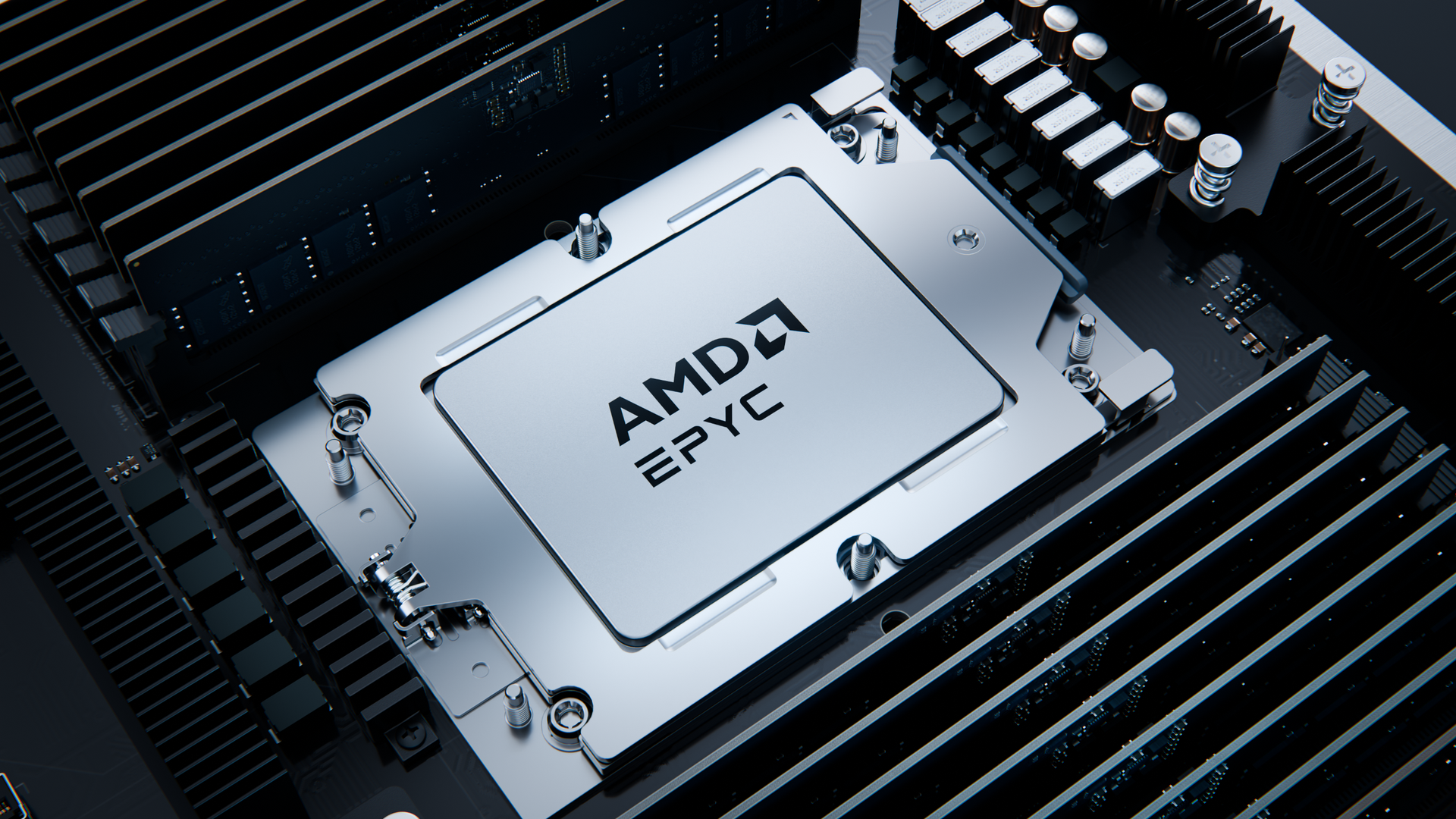
Zen 6 is ready to redefine data center performance.
When you purchase through links on our site, we may earn an affiliate commission. Here’s how it works.
After unveiling the EPYC 9006 (codenamed Venice) series in July and previewing a few impressive Zen 6 benchmarks, AMD has now released full pricing for its highly anticipated next-generation server chips. According to the list StorageReview obtained, AMD has big plans for the data center, with a wide range of SKUs from eight to 256 cores and pricing from $700 to $14,904.
As a quick refresher, AMD strategically divided the Venice lineup into two distinct segments. The SP7 platform is the flagship offering, delivering maximum memory capacity and throughput. It supports up to 16 memory channels, accommodating both RDIMMs and MDRDIMMs up to DDR5-12800. The platform offers up to 96 PCIe 6.0 lanes and supports Venice chips with TDPs between 400W and 600W.
The Venice parts designed for the SP7 socket offer scalable performance for enterprises. The lineup begins with the 64-core EPYC 9556, priced at $8,008, and extends to the flagship 256-core EPYC 9996, which commands $14,904. In retrospect, the EPYC 9996's price tag does not seem particularly shocking, especially since the previous-generation EPYC 9965 (codenamed Turin) launched at nearly the same price, around $14,800.
As is typical for server processors, the total price increases as the number of cores rises. However, the price per core actually decreases substantially as you move up the core ladder. The pricing dynamic is very notable with Venice. For example, the flagship EPYC 9996, with a massive 256 cores, comes out to just $58.21 per core, whereas the "entry-level" SP7 chip, the 64-core EPYC 9556, costs around $125.12 per core. As a result, higher core-count models are more attractive from a per-core value perspective for data centers, cloud service providers, and enterprises.
The SP7 SKUs support both 1P and 2P socket configurations. The latter, in particular, enables up to 512 Zen 6 cores in one system by pairing two EPYC 9996 chips on a single motherboard. That level of performance logically comes with a substantial investment, since the processors alone would cost $29,808 before factoring in the significant expense of memory today.
Among the nine SP7 SKUs, two models in particular stand out: the EPYC 9686F and EPYC 9586F. The "F" suffix means these chips feature maximum boost clock speeds, in this case, 5 GHz. While both are impressive in their own right, AMD optimized these parts to hit 5 GHz. Naturally, this level of optimization carries a price premium. For example, the 64-core EPYC 9586F costs almost as much as the 96-core EPYC 9656, despite offering 33% fewer cores. The trade-off is also apparent in the thermal envelope. The EPYC 9586F has a TDP that is 100W higher than the EPYC 9656.
The SP8 platform is a more streamlined and cost-effective counterpart to the SP7 platform for the Venice family. It supports eight-channel memory and does not embrace MRDIMMs. However, the limitation balances out by expansion possibilities, as the SP8 platform offers 128 PCIe 6.0 lanes, 33% more than the SP7 platform. Additionally, the SP7 platform has a lower thermal footprint, as these Zen 6 parts carry TDP ratings between 130W and 400W.
Get Tom's Hardware's best news and in-depth reviews, straight to your inbox.