// NATURE NEWS — SPAZIO & SCIENZA
Daily briefing: Vaping has ‘alarming’ risks for children
Search author on:
PubMed
Google Scholar
Hello Nature readers, would you like to get this Briefing in your inbox free every day? Sign up here.
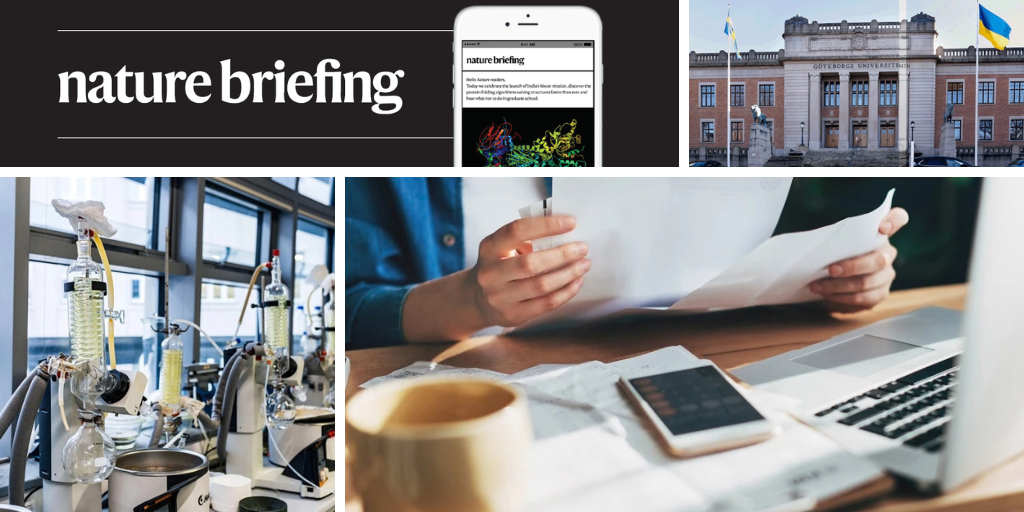
The website of the ‘European Academy of Engineering’ features a doctored image of a University of Gothenburg building. (Johan Wingborg; digitally manipulated image sourced from Google Maps.)
“Not one of my proudest moments.” That’s how computer scientist Moshe Vardi describes having to ask his institution to retract a press release about what he had thought was a prestigious award from ‘the National Academy of Artificial Intelligence’, won alongside two of his scientific heroes. But the ‘Academy’ turned out to be a sham — part of a sprawling international network of suspicious academic societies that have hoodwinked leading scientists and universities around the world, reveals a Nature investigation. The ultimate goal seems to be selling memberships and awards to early-career researchers, says Fan Xiudi, who studies academic rigour in China.
Some academic journals seem to be outsourcing their peer-review process to third-party firms that pay reviewers for their work, according to a new study. The analysis finds that these firms advertise publicly and conduct background checks on applicants to assess their suitability to review manuscripts, but don’t list which journals are using their services. If journals are using third parties for peer review without disclosing it, then this “lack of transparency is concerning”, says social scientist and study co-author Amna Pottarath.
The time it took for RAIBO2, a robot ‘dog’, to complete the Sangju Dried Persimmon Marathon in South Korea — all on a single battery charge. (Popular Science | 5 min read)
Chemistry research still depends heavily on hazardous solvents, despite a 30-year campaign to make the field ‘greener’ by using more-sustainable alternatives. An analysis of 1.3 million chemical reactions listed in patents found that hazardous solvents were used in around 70% of reactions in 2016, up from 60% in 1976. The findings should be a wake-up call, say researchers — especially for chemists who use artificial intelligence to plan reactions. AI models that were trained on previously reported methods are likely to mirror the solvent choices of the past, even when greener alternatives are available.
A new English-language journal called Vita has set its sights on rivalling the world’s oldest and most influential academic titles. “What sets Vita apart is that it is a completely Chinese journal, launched by Chinese scientists and published by a Chinese publisher,” says Ning Zhang, founder of a US company that helps Chinese journals to build their global presence. Another of its appeals is that it’s free to both authors and readers. But to become a global leader, it must attract international scholars — and it’s unclear whether Vita’s funders will be keen to bankroll the publication costs of researchers outside China.
The use of e-cigarettes — vapes — is on the rise, but it carries serious health risks for children, argue two physician-scientists who co-authored a new review, and have seen the impacts in their own medical practices. “We were surprised by the extent to which vaping in young people is associated with poorer mental health,” they write. But “the most alarming finding” was that vaping increases the likelihood that children will eventually take up conventional smoking. Educators and regulators can use this evidence to adjust their approach — with sweet flavours and colourful packaging being obvious targets.
When the leaders of AI companies make apocalyptic claims about the dangers of their products, they are weaving a narrative that is self-serving and harmful, argues researcher Timnit Gebru, the former co-lead of Google’s Ethical AI team. It signals to investors that the products are powerful, allows companies to abdicate responsibility for damage and di