// ARS TECHNICA — SPAZIO & SCIENZA
SpaceX describes surgical intervention before launch of latest crew mission
With Crew-13, Jessica Watkins became the first Black woman to lead a mission into space.
A four-person crew rocketed into orbit Thursday from Cape Canaveral Space Force Station, Florida, heading for a six-month expedition on the International Space Station.
Riding a Falcon 9 rocket and Dragon spacecraft, the four crew members departed from Space Launch Complex-40 at Cape Canaveral at 11:10 am EDT (15:10 UTC) Thursday. Nine minutes later, they were in orbit to begin closing in on the space station for docking Thursday evening.
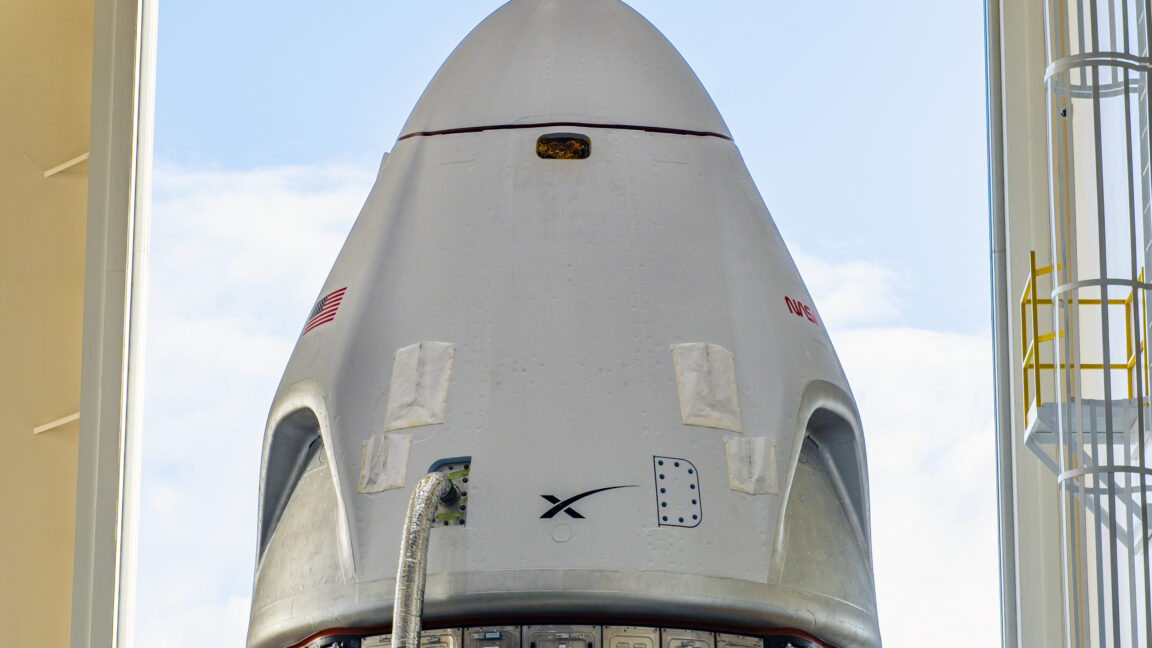
The launch was delayed from mid-September to replace a balky valve in the Dragon spacecraft’s propulsion system, a task that involved cutting into a propellant line inside the ship to swap out a faulty component.
Jessica Watkins, a 38-year-old geologist turned astronaut, leads the four-person crew sent into orbit Thursday, becoming the first Black woman to command a spacecraft. Watkins is the only veteran astronaut on the mission—designated Crew-13—after spending 170 days in orbit on a long-duration spaceflight in 2022.
Pilot Luke Delaney, a Marine Corps veteran, was seated next to Watkins for the Dragon spacecraft’s ascent into orbit. Two international crew members rounded out the Crew-13 team: Canadian astronaut Joshua Kutryk, a former pilot in the Royal Canadian Air Force, and Sergey Teteryatnikov, a Russian cosmonaut who served as a naval engineer before his selection to the Roscosmos Cosmonaut Corps in 2021.
Kutryk and his wife Heather are expecting their third child later this year. It’s rare, but astronauts have been off the planet for their child’s birth before. Most recently, NASA astronaut Randy Bresnik, set to command the Artemis III mission next year, was flying aboard the Space Shuttle Atlantis in 2009 when his wife gave birth to their daughter, Abigail Mae, in Houston.
“Leaving these three (plus one on the way) is the hardest thing I’ve ever done. But that has always been the nature of exploration,” Kutryk wrote on X.
Watkins and her crewmates were on course to reach the International Space Station (ISS) about eight hours after launch, the fastest-ever launch-to-docking transit to the ISS by a US spacecraft.
“What an epic ride. What an epic ride it was,” Delaney radioed mission control soon after reaching orbit. “Today, we proudly continue the streak of humans living and working in orbit, building on the legacies of yesterday to pave the way for the future of space exploration.”