// NASA BREAKING NEWS — SPAZIO & SCIENZA
Heading Home: NASA’s SpaceX Crew-12 Concludes Station Science Mission
International Space Station Research Communications Team
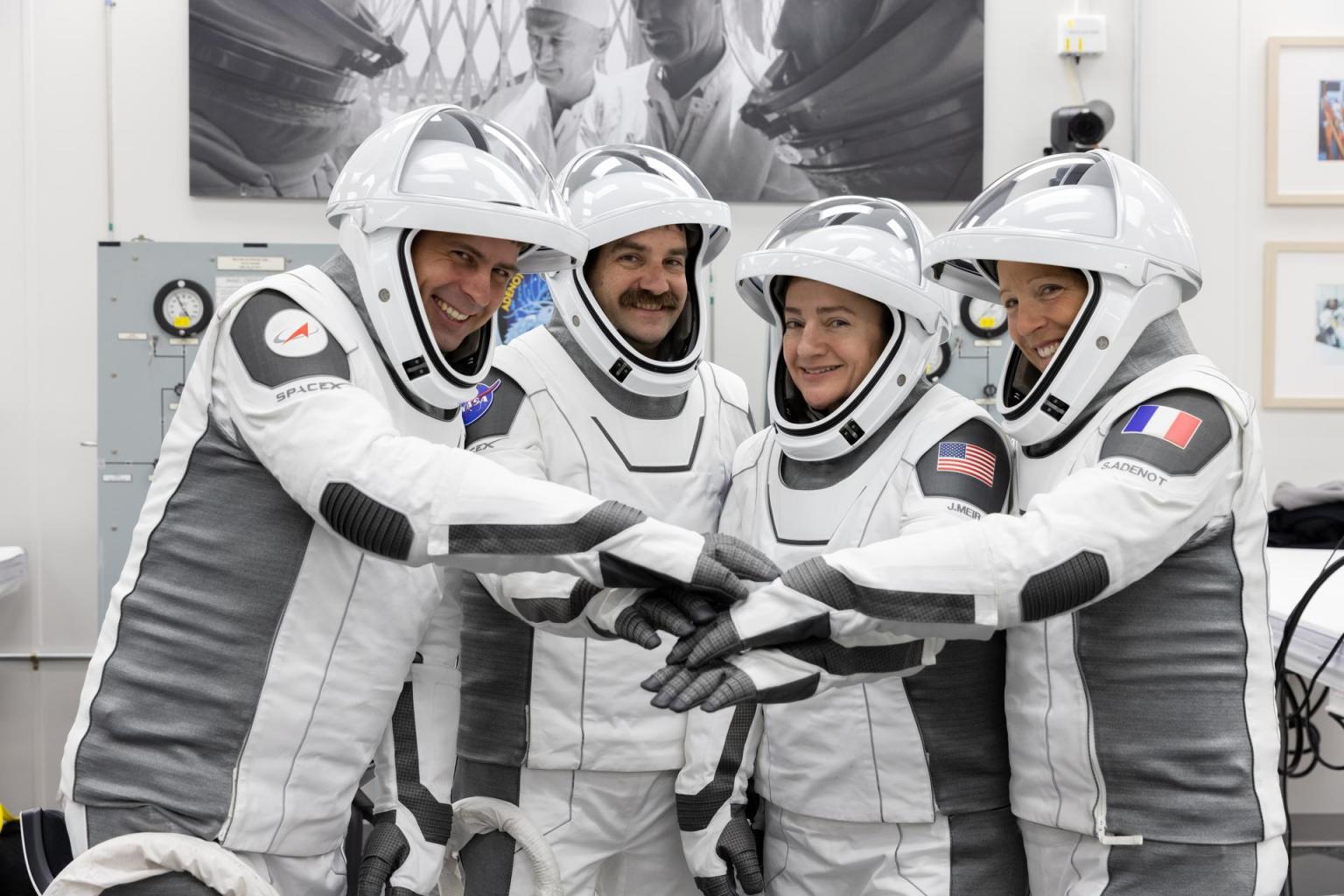
NASA’s SpaceX Crew-12 mission is ending, with the crew scheduled to return in early October. NASA astronauts Jessica Meir and Jack Hathaway, ESA (European Space Agency) astronaut Sophie Adenot, and Roscosmos cosmonaut Andrey Fedyaev will head home from the International Space Station after supporting research that benefits life on Earth and prepares humans for missions into deep space.
Here’s a look back at some of their accomplishments:
The crew members look out the window of a Dragon spacecraft during their journey to the space station, a destination that offers a unique vantage point to observe both Earth and the cosmos. Research in microgravity allows the scientific community to experiment through a new perspective, from changes in how cells behave to how materials take shape, space offers new paths to scientific discovery.
Hathaway floats alongside hardware used for crystal growth experiments aboard the orbiting laboratory. Microgravity reveals new details about crystal structures, helping researchers improve the quality and stability of pharmaceuticals. Here, cancer-targeting treatments are crystallized to better understand their properties and help advance cancer therapies on Earth.
Learn more about the Pharmaceutical In-space Laboratory (ADSEP-PIL-15).
Meir works with cables that deliver light used to cool, trap, and study atoms inside the Cold Atom Lab. In microgravity, ultracold atoms can be observed for longer periods, giving scientists a window to peer into the quantum realm. A recent upgrade to the facility increases the number of atoms produced, providing more data to advance quantum technologies such as solar cells and the components that power cell phones and computers.
Adenot holds a small container that houses a bone scaffold made from wood, designed to mimic the structure of real bones and support the growth of bone cells. Since microgravity can accelerate bone loss, it offers a unique opportunity to test how well the scaffold promotes bone regeneration. Insights from this study could protect future space explorers and provide new treatment options for patients with osteoporosis, a disease that affects more than 200 million people globally.
Meir sets up hardware for an investigation that studies soft materials made from tiny particles suspended in water. In microgravity, scientists can study how these particles interact and assemble into structures differently than they do on Earth. Understanding these interactions could help scientists fine-tune the texture, stability, and performance of materials used for growing plants, 3D printing, and producing pharmaceuticals.
Hathaway holds equipment to test for antibiotic-resistant bacteria aboard the space station. Some bacteria can withstand antibiotics, starvation, and disinfection, making them a concern in closed environments like spacecraft. Sequencing DNA in microgravity can reveal how resilient microbes adapt to space, helping scientists identify countermeasures to manage antibiotic‑resistant bacteria during exploration missions while also advancing efforts to combat resistance on Earth.