// TOM'S HARDWARE US — HARDWARE & GADGET
AMD’s secret Zen 3 gaming CPU had 128MB of game-boosting L3 cache but never saw the light of day
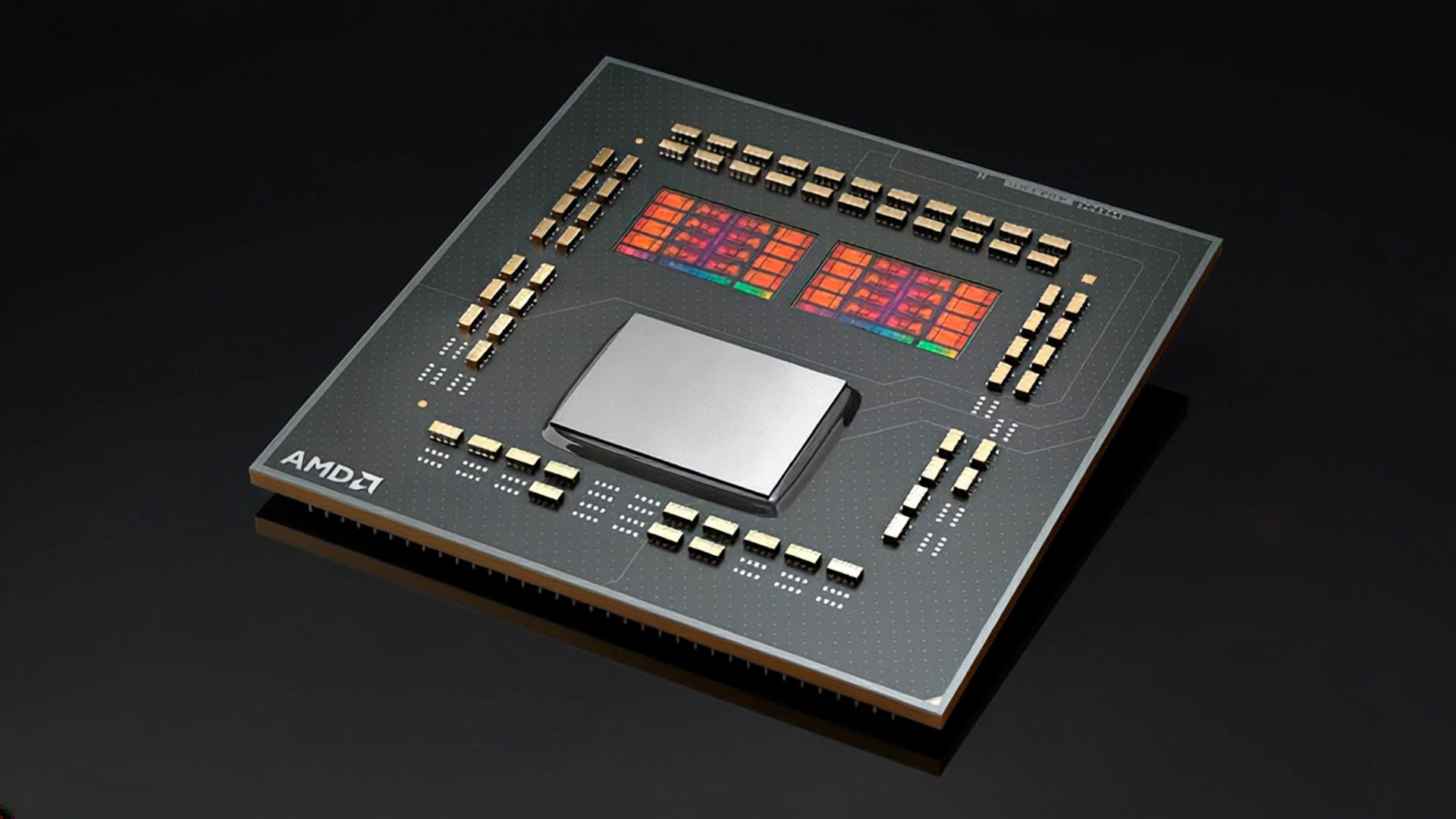
The 12-core Zen 3 gaming and productivity monster that never was
When you purchase through links on our site, we may earn an affiliate commission. Here’s how it works.
Despite being on the market for four years, the Ryzen 7 5800X3D remains one of the best CPUs for gaming on the AM4 platform. A Ryzen 9 5900X3D, if AMD had released it, would surely have given it a run for its money. Now, years later, an engineering sample of the Ryzen 9 5900X3D has emerged on the Chinese Chiphell forums, giving us a taste of what could have been an awesome 12-core chip for gaming and productivity.
What is really funny about the Ryzen 9 5900X3D is that we all knew it existed because AMD teased it at Computex 2021. The chipmaker showcased a “12-core 3D Chiplet Prototype" outperforming a regular Ryzen 9 5900X by up to 15% in average gaming performance, with both processors fixed at a 4 GHz frequency.
The Ryzen 9 5900X3D engineering sample (100-000000652-20_48/32_Y) brought to light by a Chiphell user reveals 128MB of L3 cache, double the amount found on the standard Ryzen 9 5900X. This comes from AMD integrating 64MB of 3D V-Cache onto one of the two Core Complex Dies (CCDs) inside the chip. The CPU-Z screenshot also shows a 4,649 MHz clock speed, which is likely the boost clock. If so, and rounding the boost clock speed to 4.7 GHz, the Ryzen 9 5900X3D could have launched with a boost clock just 100 MHz lower than the Ryzen 9 5900X.
Intriguingly, the 128MB configuration was just one of several experiments AMD was exploring. During a visit to AMD's labs, Gamers Nexus captured a 12-core Zen 3 chip with a staggering 192MB of L3 cache. It is the result of a Ryzen 9 5900X equipped with 64MB of 3D V-Cache on both CCDs. Another 16-core Zen 3 chip also had a similar 192MB L3 configuration, likely a Ryzen 9 5950X3D if it had come out on the retail market.
These early 12-core and 16-core Zen 3 X3D prototypes paved the way for the Ryzen 7 5800X3D, a processor that reigned as the gaming king for several years. AMD's decision to ultimately pursue an asymmetric design was spot on for gaming. An eight-core chip like the Ryzen 7 5800X3D delivers exceptional gaming performance and is not burdened by cross-die latency that can arise when stacking 3D V-Cache on both CCDs.
While AMD initially skipped equipping its 12-core and 16-core Zen 3 chips with 3D V-Cache, it eventually did so on Zen 4 and beyond, leading to the introduction of the Ryzen 9 7900X3D, Ryzen 9 7950X3D, and, more recently, the Ryzen 9 9900X3D and Ryzen 9 9950X3D, or even the over-the-top Ryzen 9 9950X3D2.
Get Tom's Hardware's best news and in-depth reviews, straight to your inbox.
A dual-stack configuration is very advantageous for productivity workloads, but it wouldn’t do much for gaming. Equipping both CCDs with 3D V-Cache means dealing with cross-die latency and lower clock speeds due to thermal and power constraints, which are significant trade-offs for gaming. Our CPU hierarchy shows this clearly: for example, the Ryzen 9 9900X3D (12 cores, 128MB L3) falls behind the Ryzen 7 9800X3D (8 cores, 96MB L3) in gaming. Or, in another scenario, the Ryzen 9 9950X3D (16 cores, 192MB L3) offers similar gaming performance to the Ryzen 7 9800X3D.