// ARS TECHNICA — HARDWARE & GADGET
Rocket Report: Indian startup nears first launch; SpaceX's millenary milestone
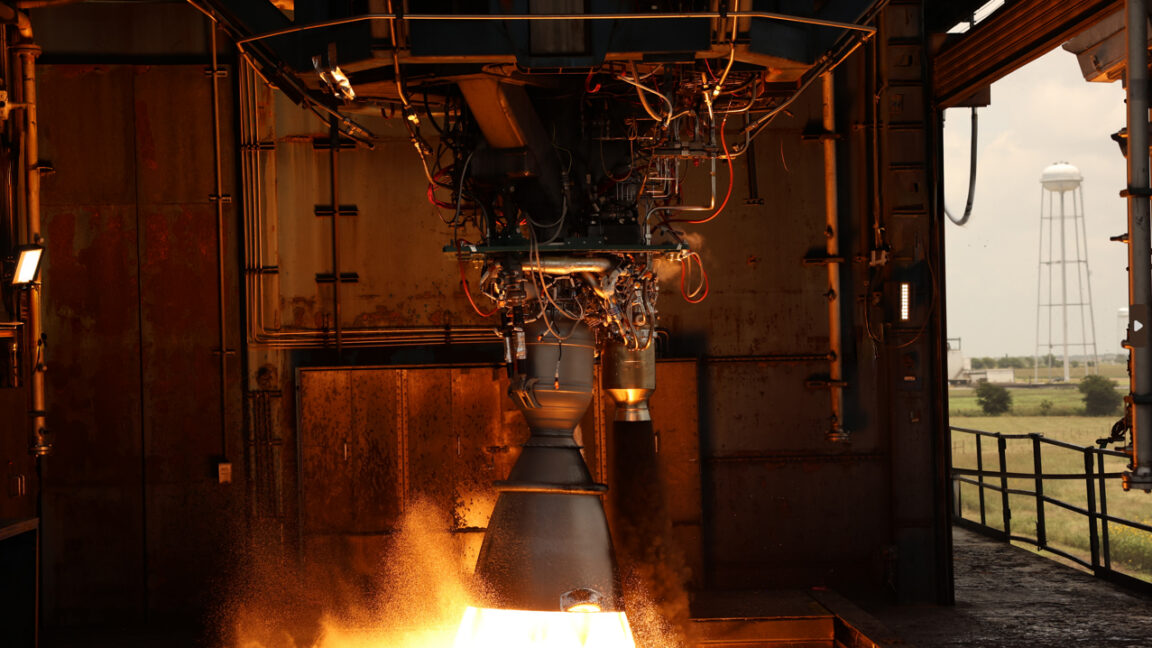
NASA awarded Rocket Lab deals for three dedicated launches using the company’s Electron rocket.
Welcome to Edition 9.01 of the Rocket Report! Back in January, I wrote about the 20 launches and landings we were most excited about in 2026. The list included things that were, at the time, officially scheduled to occur this year. I also gave my own view of the probability of each of these events actually happening before December 31. Halfway through the year, we can only count one of the events as completed, and that was NASA’s Artemis II mission in April. Many are now scheduled for next year, proving again that delays are a constant in the space industry. A couple of them—such as the launch of NASA’s Roman Space Telescope—do appear to be on track to happen soon.
As always, we welcome reader submissions. If you don’t want to miss an issue, please subscribe using the box below (the form will not appear on AMP-enabled versions of the site). Each report will include information on small-, medium-, and heavy-lift rockets, as well as a quick look ahead at the next three launches on the calendar.
Swift Boost Mission reaches orbit. A pioneering commercial mission to reboost the orbit of NASA’s Swift astronomy satellite launched early Friday after attempts earlier in the week were thwarted by bad weather and a technical issue. The Link servicing satellite developed by Katalyst Space Technologies soared to orbit on the tip of a Northrop Grumman Pegasus XL rocket that dropped from the belly of a modified L-1011 jetliner over the remote Pacific Ocean. Mission managers called off two launch attempts Tuesday and Wednesday due to poor weather around the L-1011’s staging base on Kwajalein Atoll in the Marshall Islands. On Thursday, “a launch vehicle issue temporarily prevented teams from deploying the rocket” after takeoff of the L-1011.
A rarity these days… This was the last scheduled flight of the air-launched Pegasus rocket, which had success in the 1990s and 2000s as a small satellite launcher for NASA and the US military. Usage of the Pegasus rocket has declined amid the rise of more affordable commercial launch options, especially SpaceX and Rocket Lab. Upon reaching orbit, Katalyst’s Link satellite will spend several weeks approaching the Swift observatory, which is unable to counter atmospheric drag and is likely to reenter the atmosphere and burn up later this year. Launched in 2004, Swift was never designed to be serviced in orbit. The Link mission will attempt to raise the satellite’s altitude and extend its mission.
Launch window set for India’s first commercial rocket. Skyroot Aerospace is set to launch the first test flight of its Vikram-1 rocket between July 12 and August 4 from the Satish Dhawan Space Center, marking India’s first private attempt to place a launch vehicle into orbit, the Economic Times reports. The mission aims to gather critical in-flight performance data across propulsion, stage separation, guidance, navigation and control, and overall vehicle performance. The test flight will originate from a launch pad originally built for India’s government space program.
The sky’s the limit... Skyroot has raised approximately $160 million to date, including a $60 million fundraising round announced in May, boosting its valuation over $1 billion. The Vikram-1 rocket is powered by three stages burning solid propellant and a fourth stage with liquid-fueled engines for the final maneuvers to place payloads into orbit. It is designed to place nearly a half-ton of payload mass into low-Earth orbit.
Rocket engines delivered for Rosalind Franklin. NASA has delivered the braking engines for the European Space Agency’s Rosalind Franklin mission to Mars, European Spaceflight reports. The braking engines are one of three major contributions NASA has committed to the mission, along with launch services and Radioisotope Heater Units (RHUs) to keep the rover’s instruments warm during cold Martian nights. The Rosalind Franklin rover