// SPACE.COM — SPAZIO & SCIENZA
'Acceleration without fuel:' Revolutionary superconducting thruster harnesses Earth's magnetic field in 1st orbital test
"We are essentially looking to remove all reliance on Earth's resources so that we can build a sustainable industry in space."
When you purchase through links on our site, we may earn an affiliate commission. Here’s how it works.
New Zealand company Zenno Astronautics has tested the first of its kind thruster based on superconducting magnets to maintain the position of a satellite in space.
Superconducting magnets can convert solar energy directly into momentum in space and provide a source of acceleration that needs no fuel, but until recently, the technology was too large and complex to fit on a satellite. That's no longer the case.
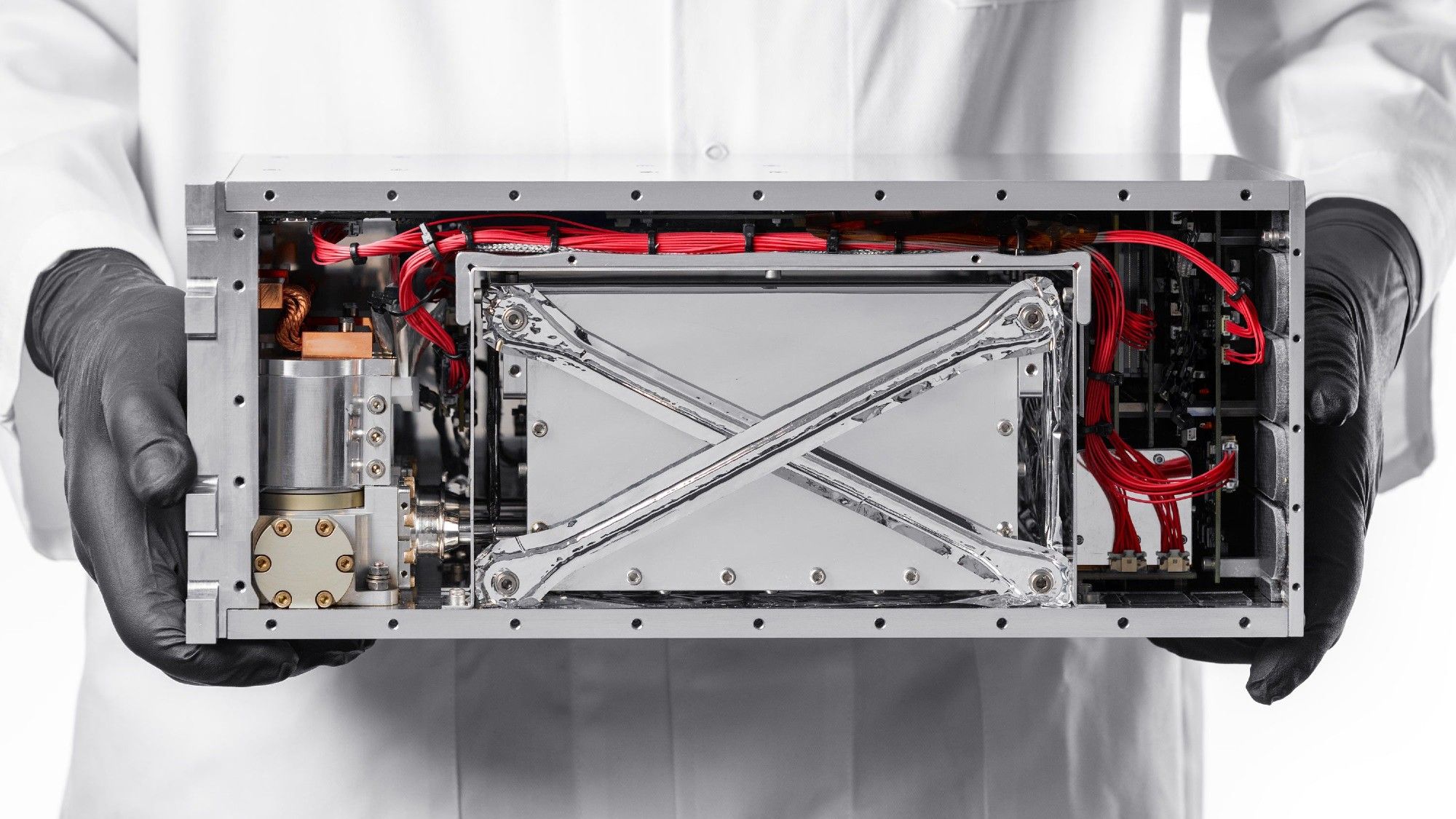
Zenno Astronautics, a spin-off from the University of Auckland, has flown its new "Supertorquer" system on the Mira satellite built by California-based start-up Impulse Space. The tests began shortly after Mira's launch in November last year aboard the SpaceX Transporter 12 mission and saw the shoebox-size device perform with flying colors, Zenno Astronautics CEO and founder Max Arshavsky, told Space.com.
"It's a technology that allows a spacecraft to not tumble violently in space and point in the right direction," Arshavsky said. "The unit has multiple super-conducting magnets that are positioned in different axes. When we power up the magnets, they generate a magnetic field, which interacts with Earth's magnetic field, and because we can control the magnetic field on the satellite, we can control the way in which it turns with respect to Earth."
Superconducting magnets are made of coils of superconducting wire that have zero electrical resistance and can therefore conduct much larger currents than normal wires. That larger current translates into a greater magnetic force. There is, however, a catch: Superconducting materials need to be cooled to extremely low temperatures to gain their wonder properties.
In labs on Earth, the cooling requires tanks of cryogenic liquids like liquid helium or liquid nitrogen. Those cannot be used aboard a satellite. Instead the system must expel all heat from its surroundings into outer space.
"The magnets need to operate at minus 200 degrees Celsius [-328 degrees Fahrenheit]," Arshavsky said. "But even though space is cold, the satellite is actually not. It's about 20 degrees C, pretty warm, because we are pointing at the sun."
The unit housing the superconducting magnets is wrapped in layers of insulation and fitted with a heat pump that removes all the excess heat from the system. Every time the satellite needs a push, the superconducting coils power up, drawing energy from a battery charged by the satellite's solar panels.