// PC GAMER — GAMING
2026 is a low-key revolutionary year for player movement in games
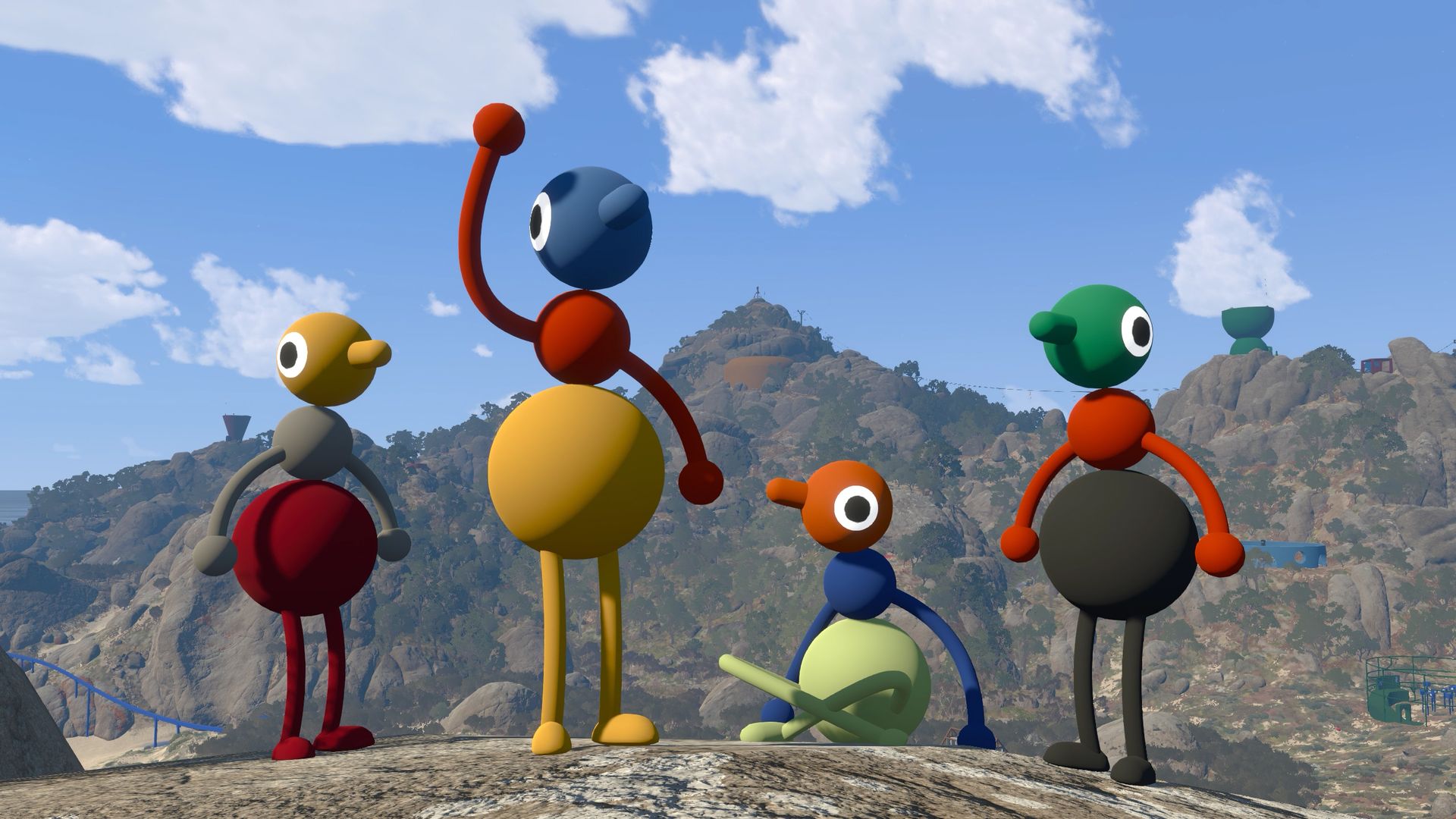
Big Walk, Cairn, Baby Steps and the new generation of games that make masterpieces from everyday actions.
When you purchase through links on our site, we may earn an affiliate commission. Here’s how it works.
A lot of the 3D games I consider touchstones of thoughtful player movement are a decade or more old: Mirror's Edge, of course, Titanfall 2, Dishonored 2, Doom Eternal or ARMA 3. That's by no means a comprehensive list, but these are the games that come to mind when I think about in-game movement that feels incredibly considered. And if ARMA 3 feels out of place in that list, its sim-style tactical physicality is memorable to anyone who plays it even briefly (me).
These each set the ceiling high for what you could achieve with their controls, if you were prepared to learn them. Each offered a power fantasy of some kind to be mastered, whether you're wall-running onto a mech or peeking out across a field to line up a perfect shot.
In recent years, though, I feel like it's increasingly common to find developers who want to capture granular, basic movements from real life that have no power fantasy element whatsoever. Things that would've sounded so boring if they were back-of-the-box features during the age of Quake 2 and Half-Life. I'm talking about walking slowly. Steadily moving up a cliff face. Mantling awkwardly over surfaces. Getting defeated by a slightly high rock and taking the long way around. Falling on your arse if you tumble down a small hill.
They're about finding the fun in something as simple as balancing the packages you're carrying in Death Stranding, or escaping the mud in Snowrunner. 'Boring' games with a simulation aspect are as old as PC gaming itself, but this newer crop are tapping into something more universal and compelling that strikes a chord with players. Some of these games have ended up being GOTY frontrunners.
It was 2025's Baby Steps that got me thinking about this in more detail. The idea that just the act of walking without falling over into physics hell could be the entire game was maybe not revolutionary by itself, but the high-end execution was an important distinction. There's something about Baby Steps that I find uniquely pure: it breaks down a fundamental and often just functional part of any other game—putting one foot in front of another, then slowly repeating it—into its constituent parts, then rebuilds it. Every step matters. Every part of every step.
It's a beloved and award-winning game. I didn't finish it, but did throw two expletive-filled afternoons at it, and I respect the heck out of what it tries to accomplish.
The irony is, even though Baby Steps is not a power fantasy by most people's criteria, it was inspired by a game that clearly is one. Well, inspired by a particularly gruelling custom map for it, anyway: The Mirror's Edge mod Stratocubulus got you to rethink everything about Faith's moveset in the game and experiment with the level geometry in order to solve it. "It was the stuff that was ambiguous as to whether or not you could do it, stuff that you could puzzle over and push you into trying new ways of moving," said designer Gabe Cuzillo at GDC 2026, as captured by Wes. "That was really the experience we're interested in."
Keep up to date with the most important stories and the best deals, as picked by the PC Gamer team.