// ARS TECHNICA — FINANZA
Chemistry Nobel goes to reactions like those that gave life a hand
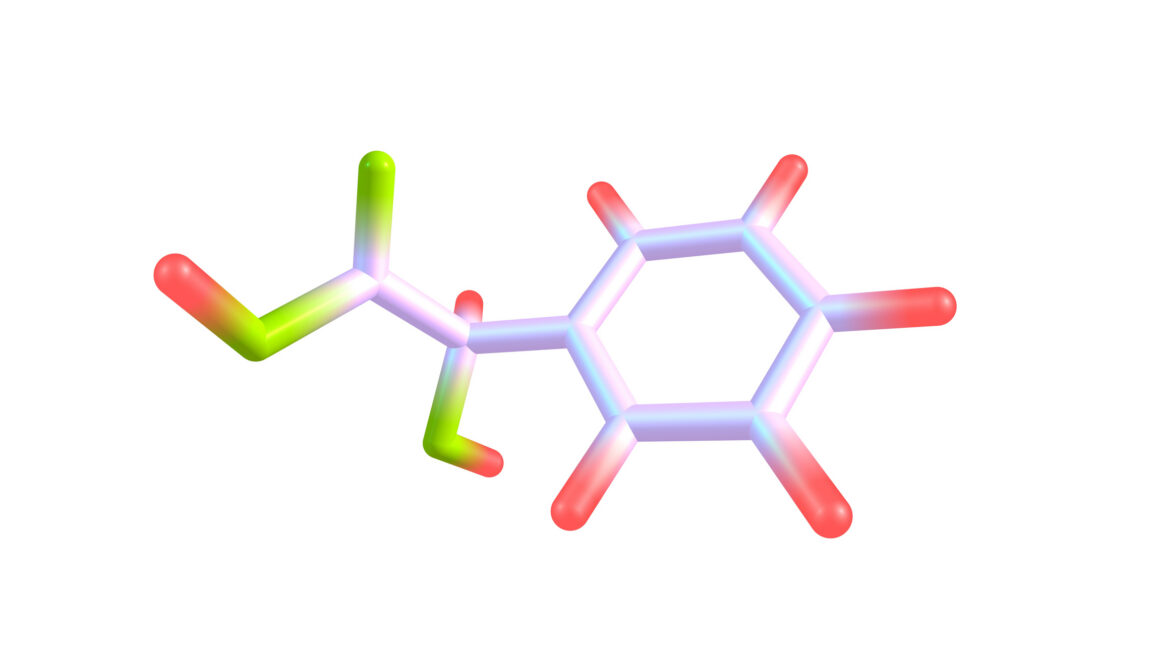
Altering molecular handedness has implications for the origins of life.
Life is remarkably selective. Life relies on many molecules with what is termed “handedness”—they’re chemically identical but are mirror images of each other. Most chemical reactions will make a 50-50 mix of the left- and right-handed forms of a chemical, but life uses only one of them. In fact, because of the differences between left- and right-handed chemicals, most of the key enzymes used by organisms will fail to work if they’re presented with chemicals that have the wrong handedness.
That poses a bit of a challenge for origin-of-life research, as we’re forced to explain how a world that may have started with an even mix of left- and right-handed chemicals produced organisms that only used one of them.
Today’s Nobel Prize in Chemistry goes to two individuals, Henri Kagan and Kenso Soai, who discovered chemical reactions could be biased, producing large excesses of one of the two forms of a chemical.
The technical term for molecular handedness is “chirality,” and scientists replace left and right with dextro (D) and levo (L). But the ideas are largely the same. Your hands have all the same components—fingers and thumbs—organized in the same way. Yet if you point your thumb upward, the fingers curl in opposite directions, making one the mirror image of the other. Depending on the arrangements of the chemical bonds, many molecules can form similar mirror-image forms, with all the same parts oriented slightly differently in space.
(For the geekier among the readership: carbon atoms have four potential sites that can form bonds, spread evenly across the surface of the atom’s sphere. If each of those sites is linked to a different chemical, then swapping the chemicals located in any two of them can potentially change the way it’s arranged in 3D space.)
This can really matter when it comes to enzymes, which typically latch onto chemicals using binding sites that are sculpted by evolution to fit only that chemical and its close relatives. Try to feed the enzyme the mirror-image version of that same chemical, and it will often fail to fit the binding site. Since life uses nothing but the D form of sugars, all of its enzymes are optimized to latch onto those, and many cannot interact at all with the L form.
There are two ways this could have happened. The first life may not have been as picky about the reactions it catalyzed and only evolved chirality preferences slowly. Or life could have evolved in an environment where one chiral form dominated. Or there was some combination of the two. But either of the latter two cases simply pushes the question back a bit: How could chemistry create an environment where one chiral form dominates?
Over the years, there have been a number of ideas about how this might occur. Several of those trace back to a physicist, Frederick Charles Frank, who addressed this issue in a data-free, theory-focused paper. (It’s clear from the Nobel Prize Committee’s writing that, were Frank still alive, he might have shared in this award.) One option is that a catalyst with only a slight preference for forming a D or L molecule could, over time, produce a large excess of that form. Another is that a chiral reaction product could itself serve as a catalyst for forming more of the same form. Or the chiral reaction product could inhibit the formation of its mirrored form.
Many chemical reactions reach an equilibrium, finding a point where forward and reverse reactions occur at similar rates. If the reverse reaction is indifferent to chirality, but the forward one is influenced by one of the factors above, then time would allow this to create a large excess of one chiral form.