// TOM'S HARDWARE US — HARDWARE & GADGET
Researcher develops method for fingerprinting cheaters using Counter-Strike mouse and keyboard input patterns
It's insanely difficult for a person to change the way they use a mouse and keyboard.
When you purchase through links on our site, we may earn an affiliate commission. Here’s how it works.
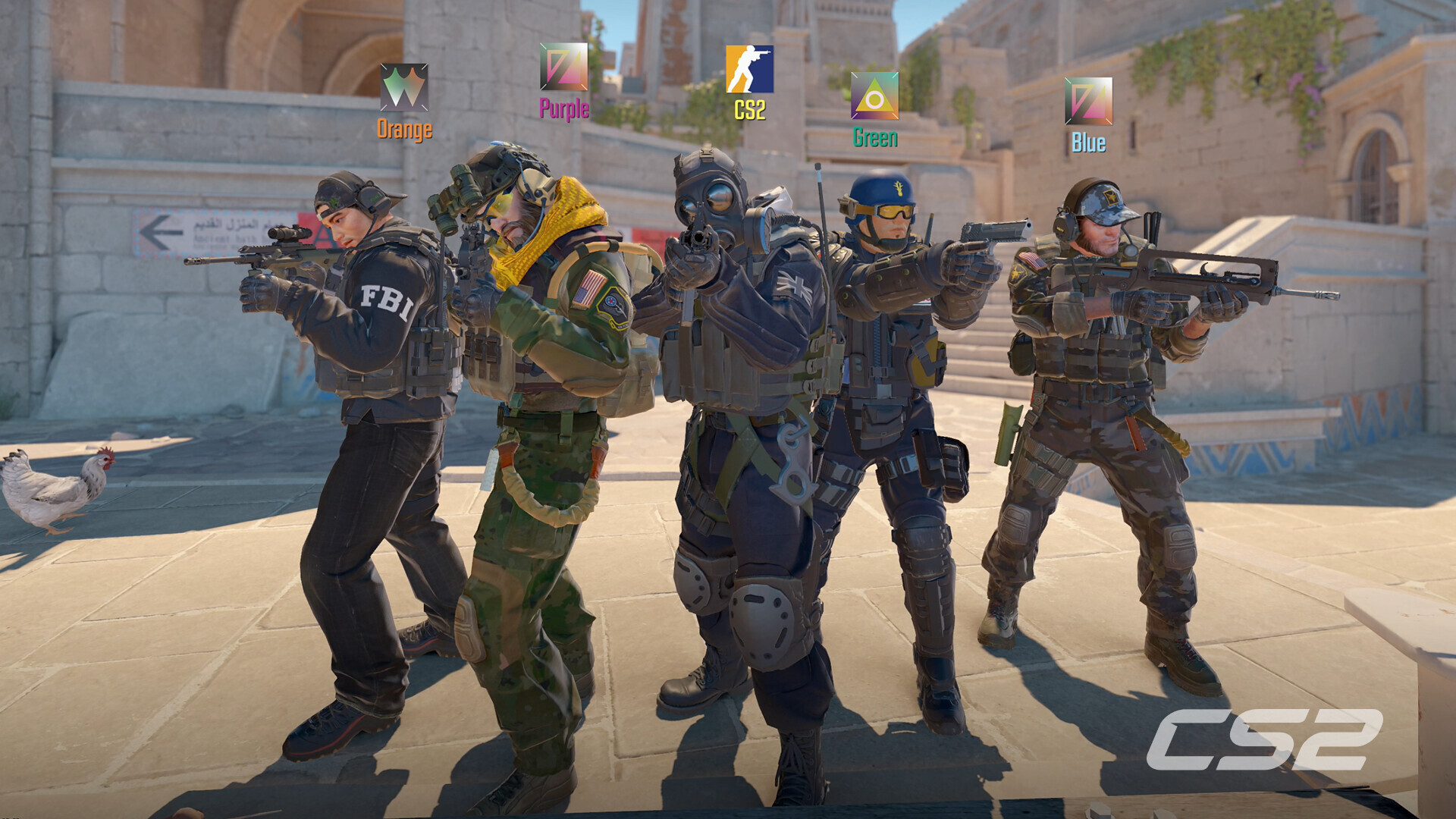
A master’s student from the Norwegian University of Science and Technology developed a fingerprinting technique that identified gamers from their mouse and keyboard input patterns as part of their thesis. u/Magga_ shared the results of their study on the r/GlobalOffensive subreddit, where they tracked the mouse and keyboard signals from more than a thousand players and then correlated them to each other. Using this technique, they were able to fingerprint unique users and match them to specific accounts, even those that used multiple smurf accounts.
u/Magga_ said that his technique was able to determine unique players 100% of the time from the mouse dataset, while keyboard fingerprinting was able to pick the right player 98% of the time. Since both metrics measure entirely different movements, combining them makes for highly accurate detection. There are concerns that unrelated people could potentially have the same play style, especially as Counter-Strike 2 still has over 1.2 million players at peak, resulting in false positives. However, u/Magga_ said that even though complete strangers can have similar signals for either mouse or keyboard, there’s very low statistical probability that two people would have similar mouse and keyboard habits.
“Across pairs of strangers, the correlation between how alike their mouse habits are and how alike their keyboard habits are is just 0.11, where 0 means unrelated and 1 means they always go together,” the researcher wrote. Interestingly, they faced an obstacle during the testing of their method for a time after it kept on returning a number of “false positives.” But once they investigated deeper, u/Magga_ found out that these accounts were actually related to each other, revealing unknown account pairs and even connecting four different accounts to one person.
They even claimed that this method of fingerprinting accounts and matching them to specific players isn’t a proof of concept but a working system. It’s designed to take in demos and link accounts continuously, allowing it to build a reference system with every uploaded match. Despite the massive number of matches and players that it must handle, it’s designed to work on a single 20GB slide of an Nvidia A100 GPU. Still, the author said that the amount of data they tested on it is pretty thin, and they want to see it in action on the real population size of CS2 players. Another limitation they noted is that shared accounts would break the system.
While this system might be a good idea to help game developers find cheaters and prevent them from ruining the online gaming experience, it also raises issues regarding privacy and ethical use. Some players have been criticizing invasive anti-cheat measures, which led to Riot dropping its controversial always-on anti-cheat requirement. There were also complaints when Valorant soft-bricked $6,000 cheating hardware, with some saying that this was a step too far for the developer. The researcher understood the implications of their anti-cheat technology but said that it’s up to the game developer how it would implement this anti-cheat measure.
“Cheating once as a kid should not bar you from a game for life, so I think a ban passed on through a link should expire after a set period,” u/Magga_ said. “Where to draw that line is a real question, but it is a policy choice, not a limit of the method.”
Follow Tom's Hardware on Google News, or add us as a preferred source, to get our latest news, analysis, & reviews in your feeds.
Get Tom's Hardware's best news and in-depth reviews, straight to your inbox.