// SPACE.COM — SPAZIO & SCIENZA
On this day in space! Oct. 14, 1947: Test pilot Chuck Yeager breaks the sound barrier in the Bell X-1, the first X-plane
When you purchase through links on our site, we may earn an affiliate commission. Here’s how it works.
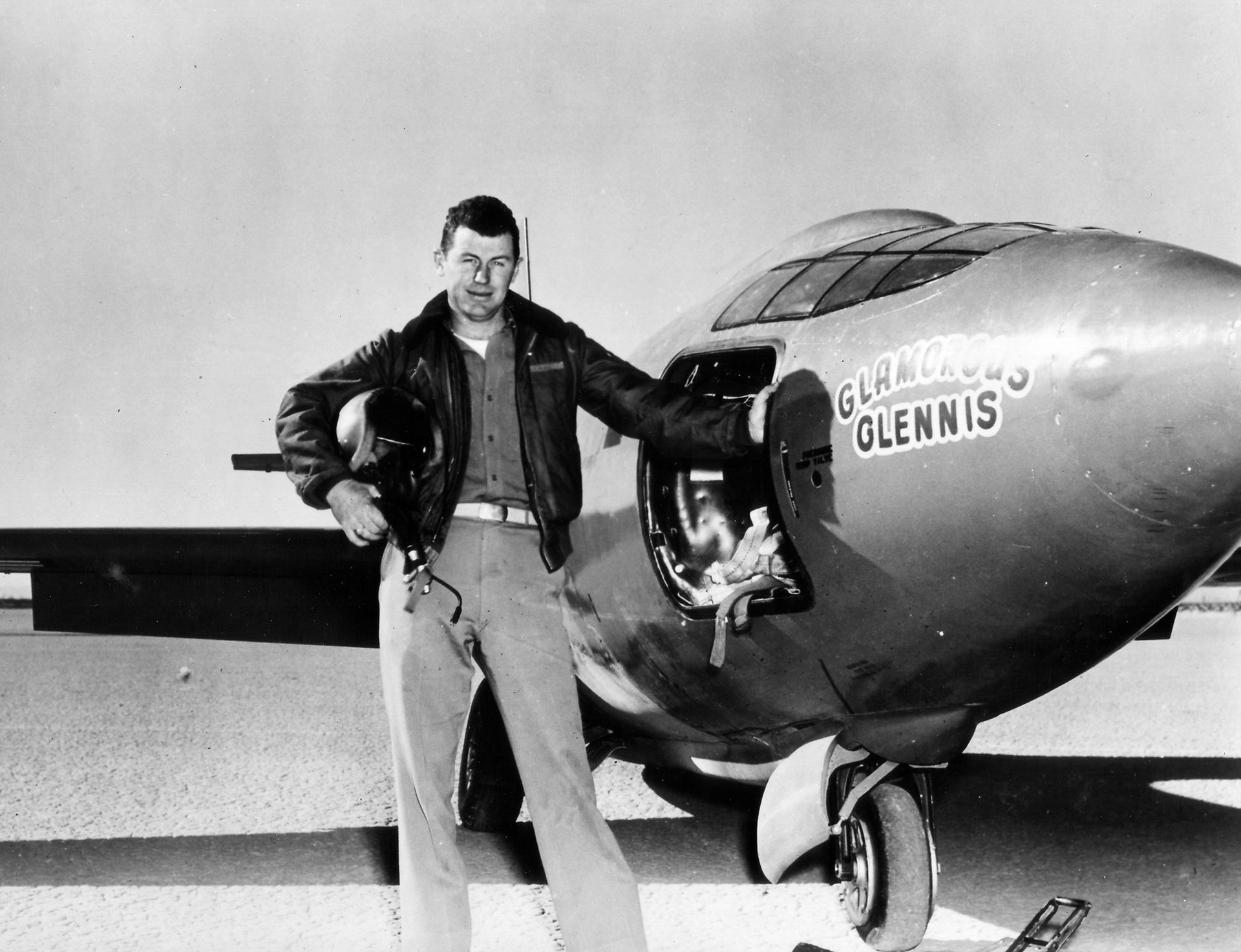
On Oct. 14, 1947, Chuck Yeager broke the sound barrier for the first time!
Chuck Yeager was a test pilot for the U.S. Air Force who made history by flying an aircraft faster than the speed of sound.
Yeager made his historic flight in a Bell X-1 rocket plane that he named "Glamorous Glennis" after his wife. Yeager had broken two ribs the night before when he fell off a horse, but that didn't stop him!
His aircraft was dropped from a Boeing B-29 bomber before accelerating to a speed of Mach 1.07, which is about 821 mph (1,321 km/h). The speed of sound, Mach 1, is about 760 mph (1,223 km/h).
Before Yeager made his daring Bell X-1 flight, piloted supersonic flight was only a concept.
The Bell X-1 began its life as the XS-1, a cooperative project between NASA's predecessor the National Advisory Committee for Aeronautics (NACA) and the U.S. Army Forces, which would evolve later into the U.S. Air Force. Bell Aircraft won the contract to build the experimental plane in March 1945 and was delivered in December of that year.
The final vehicle was a single-piloted aircraft that was just over 30 feet (nearly 11 meters) long, had a wingspan of about 28 feet (8.5 m) and powered by a rocket engine using liquid oxygen and ethyl alcohol in water as propellant. Yeager's historic flight followed a series of unpowered glide tests, incuding three by Yeager himself in August of 1947, followed by ever faster subsonic powered flights.
"The first generation X-1 aircraft changed aviation history in numerous ways, and not simply because they were the first aircraft to fly faster than the speed of sound," NASA wrote in an overview. "Rather, they established the concept of the research aircraft, built solely for experimental purposes, and unhampered by any military or commercial requirements."
According to NASA, Yeager's history-making flight wasn't immediately known to the public, a departure from the agency's X-plane tests today.