// KOTAKU — GAMING
Ready Or Not: The Kotaku Review
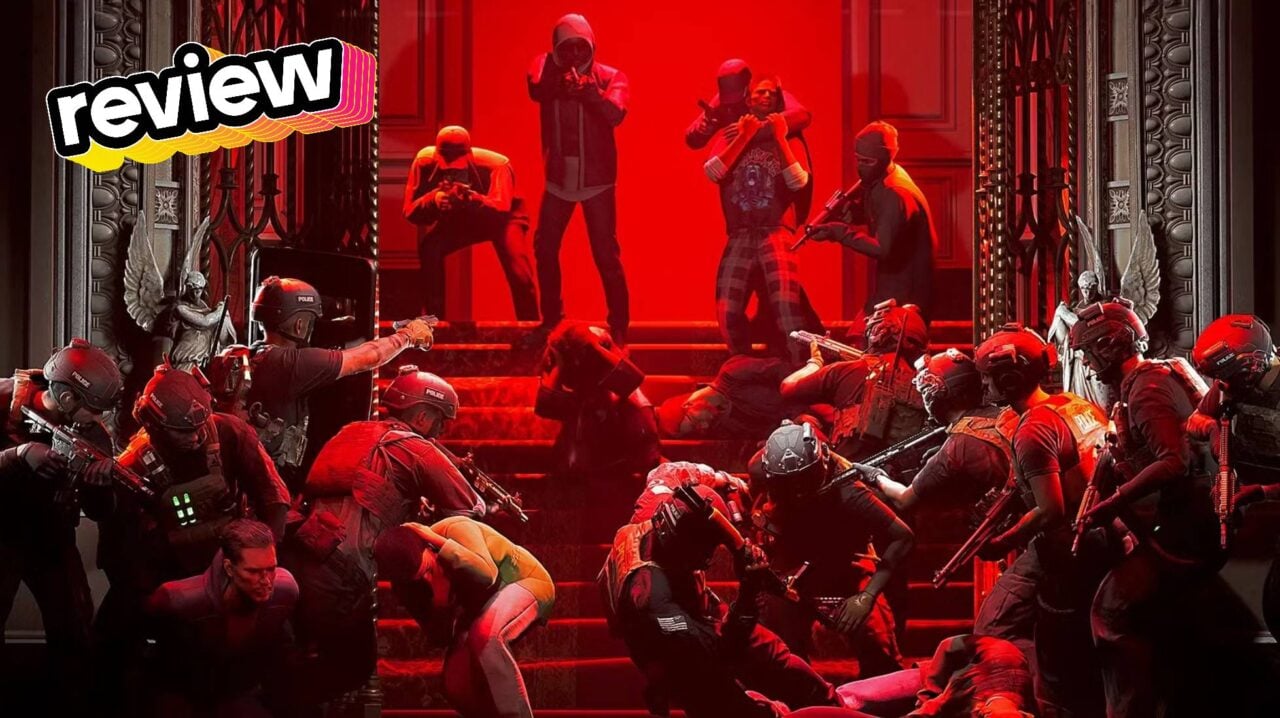
“Bring Order To Chaos.” That’s how tactical shooter Ready or Not sums up your role as part of Special Weapons and Tactics, or SWAT. As a commander, you lead an “element” of four officers through a gauntlet of ripped-from-the-headlines catastrophes in fictional Los Suenõs, California—the “City of Dreams,” not angels. Some missions merely touch a nerve, while others evoke mononymic American tragedies like Columbine, Pulse, Waco, or Vegas with the serial numbers filed off. Developer VOID Interactive has stated that it intends Ready or Not to immerse players in split-second, volatile situations, leaving them with an appreciation for the totalizing physical and psychological strain these officers endure for our sake.
Order comes to chaos at the end of a gun. You mash X to scream “I wanna see hands!” at everyone in sight, civilians and gunmen alike. It’ll piss you off when they don’t comply. You’re here to help. Non-lethal means of submission will net you the best rating at the end of a mission, but nobody’s perfect.
Indulge me in a quick history break. In Rise of the Warrior Cop, Radley Balko says the 1965 Watts riots were “the first major incident to push America toward more militarized policing.” Infamous LAPD chief Daryl Gates is credited with creating SWAT proper after his experience during the riots, which the LAPD had “no idea” how to handle. Nearly 30 years later, Daryl Gates would produce Sierra’s 1993 Police Quest: Open Season, the fourth entry in the series.
Gates was fresh out of the LAPD in ’93, having taken the fall for an entire culture of brutal, racist policing, including but by no means limited to the 1991 beating of Rodney King and the riots sparked a year later by the acquittal of King’s attackers. By the ’90s, Balko says most teams weren’t responding to “urban warfare” situations of the sort the division was created to handle: they were breaking down doors on drug raids. A militarized police needs a war to fight.
Police Quest was rebranded as SWAT in 1999, and Ready or Not is widely referred to as the spiritual successor to Irrational Games’ SWAT 4—VOID Interactive even hired SWAT 4 modders in the early days of development.
Evil heart of America. Methodical pace. Meticulous level design. High-pressure shooting.
Evil heart of America. Weapon fetish. The post office level.
VOID Interactive is aware it’s working with hot-button material. The game is careful to toe an apparently neutral line of tastefulness by gesturing/dog-whistling to left and right ideologies alike. The enemies in one mission are a Vietnamese family modifying semi-automatic weapons into fully automatic ones in order to pay for their mother’s cancer treatment, which is pure liberal pathos. Contrast that with a mission where you clear an abandoned building full of homeless people taking shelter from a hurricane, most of whom open fire on sight or mindlessly rush you like Condemned: Criminal Origins mooks—a peek into the nightmares of people who ask you if Chicago is really that violent.
The game’s plot is loose and non-linear, but if you poke through pre-mission briefings and evidence, it’s clear that everything from fake-ISIS to MKUltra, Hollywood sickos to 4chan trolls are besieging Los Suenõs. Drug cartels? Sure. Russians? Got ’em. Armed…misandrist…cults? Okay! The specifics, nonsensical as they are, suggest an overarching, Mark Wahlberg-ian fantasy of intervention in historical mass shootings. You’re here to right wrongs. The rest is flavor. Paramilitaries in a Vegas hotel or a group of kids holding up a gas station: any one of them could draw a weapon or take a civilian hostage. Get on the fucking ground!
Academic and Twitter user Ian Bogost coined the term “persuasive games,” saying they “strive to alter or affect player opinion outside of the game, not merely to cause him [sic] to continue playing.” While the politics, the milieu, and the mechanics of Ready Or Not are far removed from essentially any game anyone has ever described t