// NATURE NEWS — SPAZIO & SCIENZA
How pregnancy reshapes the brain throughout life
Liisa Galea is a neuroscientist at the Centre for Addiction and Mental Health, University of Toronto, Canada.
Search author on:
PubMed
Google Scholar
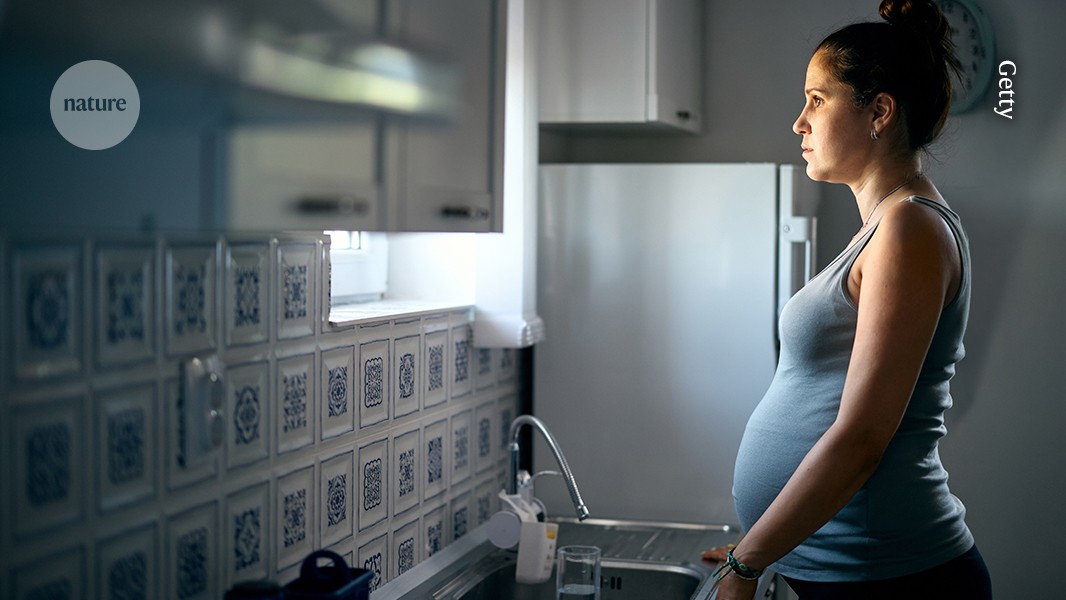
Mental as well as physical health can be affected during gestation and beyond. Credit: Getty
A Mother’s Brain: The New Science of the Neuro-Maternal Revolution Susana Carmona MIT Press (2026)
When I acquired a copy of the book A Mother’s Brain by neuroscientist Susana Carmona, I thought: at last, a book about what happens to your brain during pregnancy. I recalled how I’d realized in 1997, when I was a young assistant professor, soon after giving birth to my first child, that books for expectant or new parents were light on what happens to the brain. As a neuroscientist, I was curious. What was going on with my brain?
Another observation that I had was how jarring it was to go from having so much attention being paid to me when I was pregnant — including intrusive attention about what I was consuming and unwanted hands on my belly — to the utter lack of attention on me after my baby was born. All of the attention went from pregnant me to the baby. Fair enough, babies can be cute, but what about the mum? What was happening to me? Clearly things in my brain were different, but there was little in the scientific literature to tell me what was happening — which is one of the big reasons I started to work in this area of neuroscience.
My first study on this topic (L. A. Galea et al. Horm. Behav. 37, 86–95; 2000), was about memory and changes in the volume of the hippocampus, a region of the brain, throughout pregnancy. Fast forward two years to me being pregnant with my second child, and I could not for the life of me find where I had parked my car at the end of the day. It was not unusual to find me crying in the stairwell of a ten-storey car park because I was about to be late to pick up kid number one from childcare.
In my experience, mums are often told that our bodies will ‘bounce back’ after pregnancy. But work from Carmona and others now suggests that pregnancy can leave lasting signatures on the brain and body. This will probably not shock any parent, particularly the one who gave birth.
A Mother’s Brain is, in many ways, an ode to the remarkable ‘plasticity’ or adaptability of the brain and body during and after pregnancy. Gestation requires adaptations across almost every physiological system, and Carmona describes these changes to the cardiovascular, immune and circulatory systems exceptionally well. The book also details the remarkable role of the placenta in orchestrating many of these adaptations. When considering this physiological transformation, it’s no surprise that pregnancy also leaves a signature on the brain.
Embryos share cells with the parent through the placenta.Credit: OMIKRON/SPL