// SPACE.COM — SPAZIO & SCIENZA
Van Gogh's 'The Starry Night' depicts the sky on July 22, 1889, researchers find
When you purchase through links on our site, we may earn an affiliate commission. Here’s how it works.
Researchers think they might have pinpointed the exact night sky that we see depicted in Vincent van Gogh's iconic painting "The Starry Night."
Perhaps one of the most famous paintings in modern history, Van Gogh's "The Starry Night" carries a legacy that continues to inspire and mystify generation after generation. But while you might see in its swirls of color and bright spots of starlight a night sky derived purely from imagination, some scientists think it represents an actual view — one that includes a waning crescent moon, Venus and the Hyades cluster. And they may know exactly when this sky appeared..
In a new study, researchers suggest that "The Starry Night" depicts the pre-dawn sky seen around July 22, 1889 from Saint-Rémy-de-Provence, where Van Gogh painted it. But while this sky happens to perfectly match the one depicted in the artwork, art historians have long thought that Van Gogh painted this piece in June. Could these findings shift the date of this legendary artwork?
This investigation started decades ago with art historian Albert Boime and astronomer George Abell at UCLA in 1984 and continued in the following years with astronomer Charles Whitney at Harvard University. However, these earlier analyses did not agree with one another, and there was no true consensus about exactly when the sky matched with the painting.
So the question remained, lingering in the minds of those with a shared love for both art and space. And a team led by Elijah Jeong-hyun Kim, the CEO of South Korean robotic telescope company SLLAB and a Ph.D. candidate at Kyung Hee University's School of Space Research, picked up the search once more.
"When they see a fragment of a starry sky, observational astronomers like me and amateur astronomers alike will want to solve the puzzle. I am simply someone who pursued that process a little more actively," Kim told Space.com.
But how did Kim's team come to their conclusion, after others had failed to nail down a date over the decades? In short, "we analyzed the painting astronomically, analyzed documents about his situation in July 1889, and then carried out ecological and meteorological investigations," Kim said.
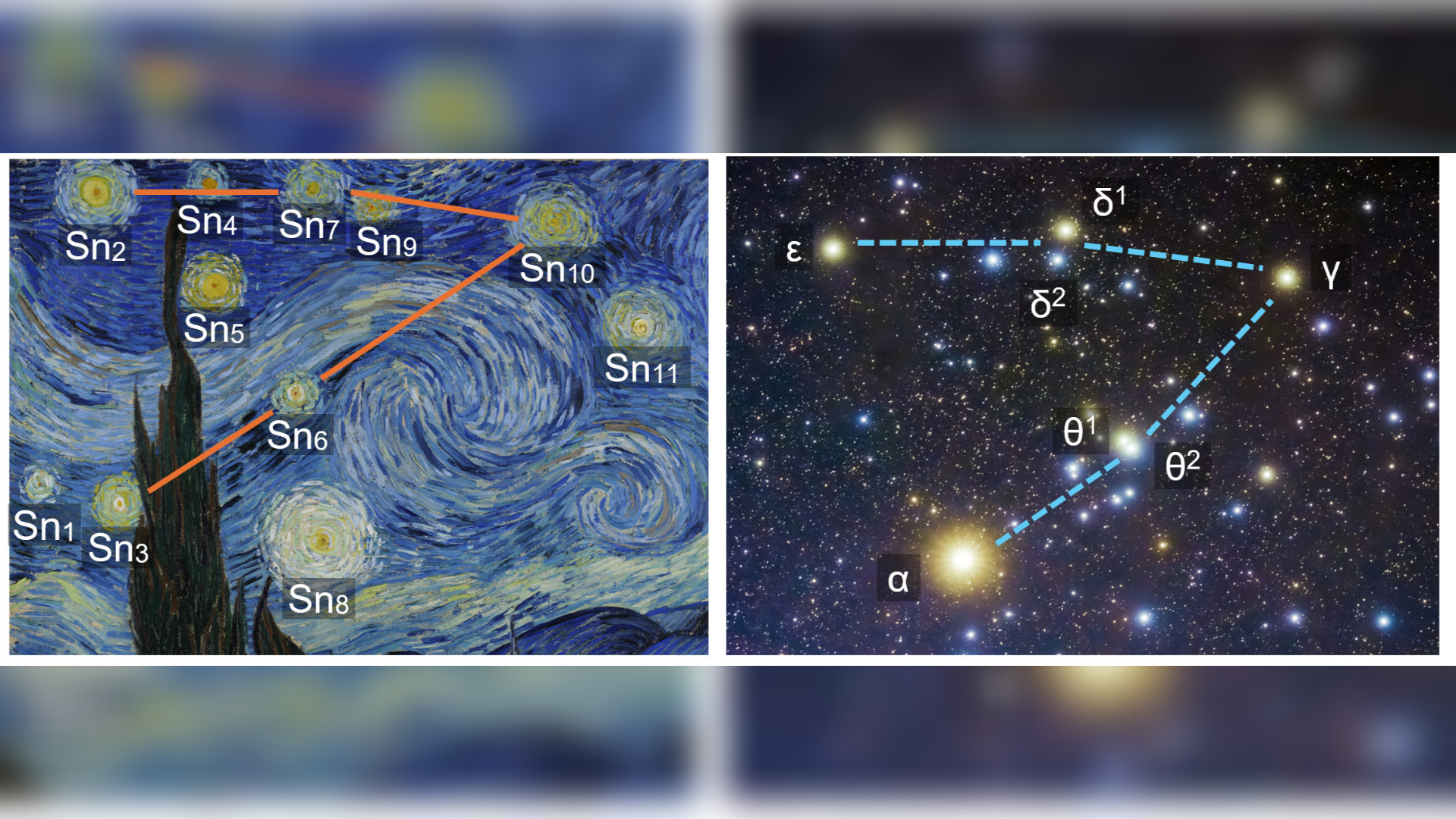
To start with, the team analyzed the sky from the exact location in Saint-Rémy where Van Gogh is said to have painted "The Starry Night." They then used observational geometry to map the historical night sky.
"Modern telescopes are equipped with a function called astrometry, which compares an image of the night sky with celestial coordinates stored in a computer and automatically extracts the coordinates of the image," Kim said. "We used Procrustes analysis, a method that compares only the 'shape' of two sets of points. After matching their position, size and rotation, it measures how similar the two shapes are from the differences that remain (the residuals)."