// SPACE.COM — SPAZIO & SCIENZA
October full 'Hunter's Moon' dazzles in spectacular photos from around the world
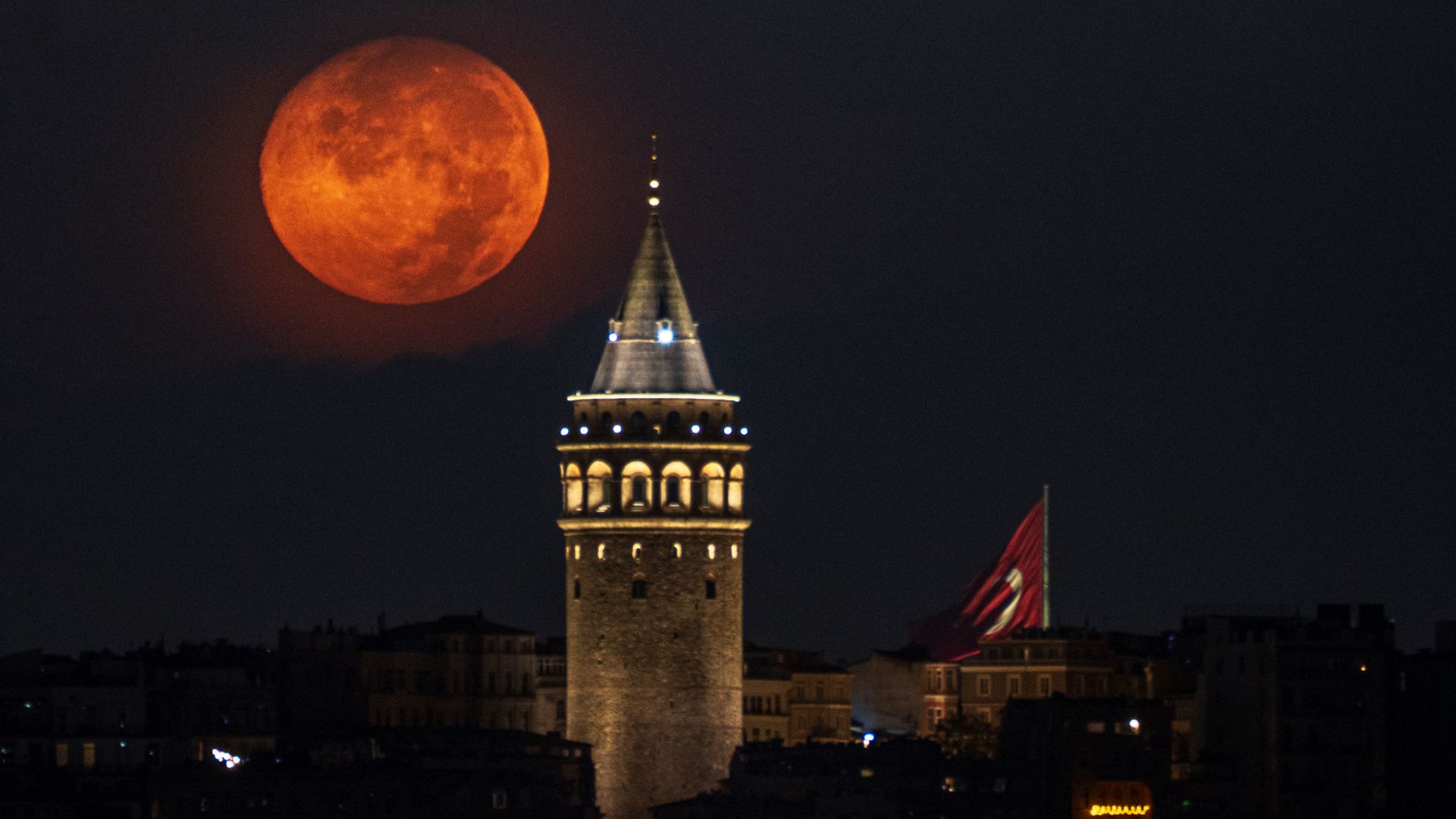
Feast your eyes on the best photos of October's full 'Hunter's Moon'.
When you purchase through links on our site, we may earn an affiliate commission. Here’s how it works.
The full "Hunter's Moon" wowed stargazers with a breathtaking display of natural light when it rose to dominate the autumn sky overnight on Oct. 25-26. Here are our favorite photos captured from around the world.
October's full moon is often known as the Hunter's Moon because it traditionally rose around the time that hunters would take to the newly harvested fields to catch animals to prepare as food for the coming winter.
Well, in 2026 the Hunter's Moon certainly succeeded in captivating the imagination and attention of photographers, who snapped the lunar disk alongside magnificent natural vistas, glowing cityscapes and ancient wonders. Read on to enjoy the most spectacular images of the Hunter's Moon.
We begin with a beautifully detailed shot of the Hunter's Moon captured by photographer Bill Trojan, who sent in a spectacular view of October's full moon close to moonrise on Oct. 25, shortly before the lunar disk reached its point of 100% illumination.
Next feast your eyes on an atmospheric shot of the near-full moon captured by Tayfun Coskun as the lunar disk shone balefully over the skyscrapers of San Francisco on Oct. 25 ahead of moonset.
Coskun also captured this incredibly well-timed shot of a passenger jet as its landing gear appeared to skim the upper edge of the Hunter's Moon, while leaving contrails in its wake.
Veteran New York photographer Gary Hershorn was also able to line up a shot of the full Hunter's Moon rising behind the iconic architecture of the Empire State Building from Hoboken, New Jersey, on that same night.
Davide Pischettola, meanwhile, captured the moon as it loomed behind the stained glass windows and towers of the Basilica of the Madonna dei Martiri in the town of Molfetta, Italy, as a river of cloud appeared to crown the lunar disk.