// NATURE NEWS — SPAZIO & SCIENZA
The Selfish Gene, 50 years on — it’s time for an update
Nathaniel Comfort is a historian of science based in Baltimore, Maryland, USA.
Search author on:
PubMed
Google Scholar
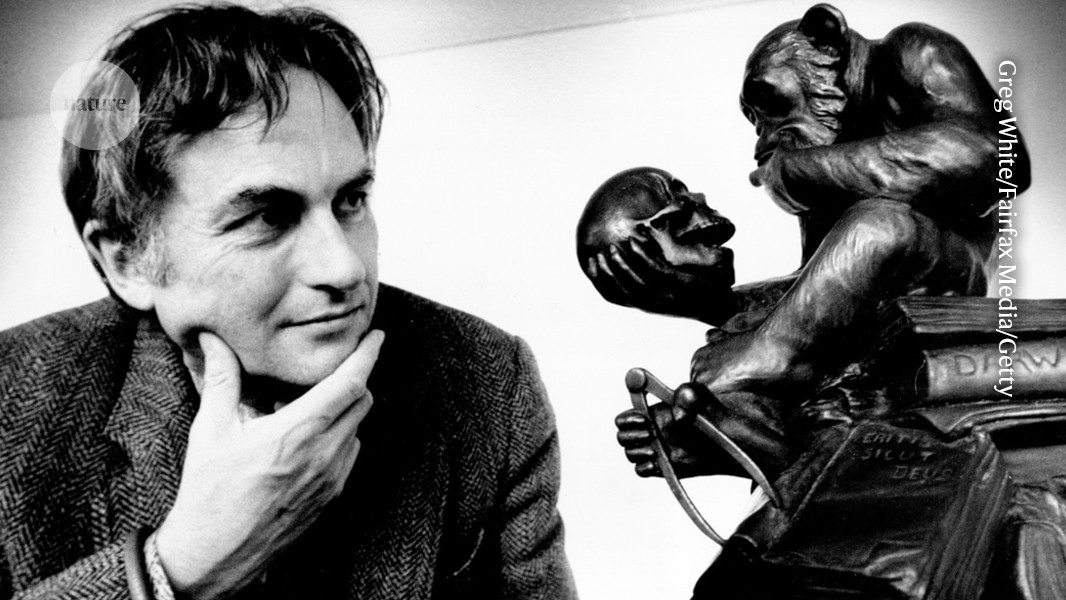
Richard Dawkins set out how genes drive evolution in his popular 1976 book. Credit: Greg White/Fairfax Media/Getty
I first read The Selfish Gene in the 1980s, as a graduate student in neurobiology and animal behaviour. I admired the clarity with which biologist Richard Dawkins distilled mid-twentieth-century work in evolutionary biology.
The idea at the core of the book, published in 1976, was thrillingly simple: that a living organism is just a gene’s way of making more organisms that can carry the gene down the generations.
Dawkins’s paradox: dissecting the body’s battle to keep selfish genes in check
Back then, The Selfish Gene seemed pretty harmless. Dawkins’s ideas tracked with mainstream sociobiology. It was a popular book that covered exactly the sort of ideas that my lecturers were already teaching.
Re-reading it now, with decades of scholarship in the history of biology under my belt, it seems less benign. The determinism baked into the “gene’s-eye view” in the book troubles me, as does the passivity of the organism in Dawkins’s telling — a “vehicle”, a mere “replicator”. The implication: that traits such as aggression are hard-wired into people. Fortunately, over the past couple of decades, new tools, fresh models and scholars in many disciplines have begun to embrace the complex reality of biology. Readers in search of an understanding of life on Earth today would do better to reach for books that take a broader view.
The Selfish Gene was the apotheosis of the ‘modern evolutionary synthesis’. That theory uses mathematics to quantify species evolution at the population level, through changes in the frequency of different versions of genes, known as alleles, across time and space.
Dawkins wrote in The Selfish Gene that the gene’s-eye view was “implicit” in the 1930s writings of modern-synthesis pioneer (and eugenicist) Ronald Fisher and his contemporaries, but was made “explicit” by evolutionary biologists George Williams and William Hamilton, in the 1960s. “For me,” he wrote, “their insight had a visionary quality. But I found their expressions of it too laconic, not full-throated enough.” The Selfish Gene, then, takes the ideas to their extreme.