// SPACE.COM — SPAZIO & SCIENZA
NASA ends Swift space telescope mission after failed rescue attempt
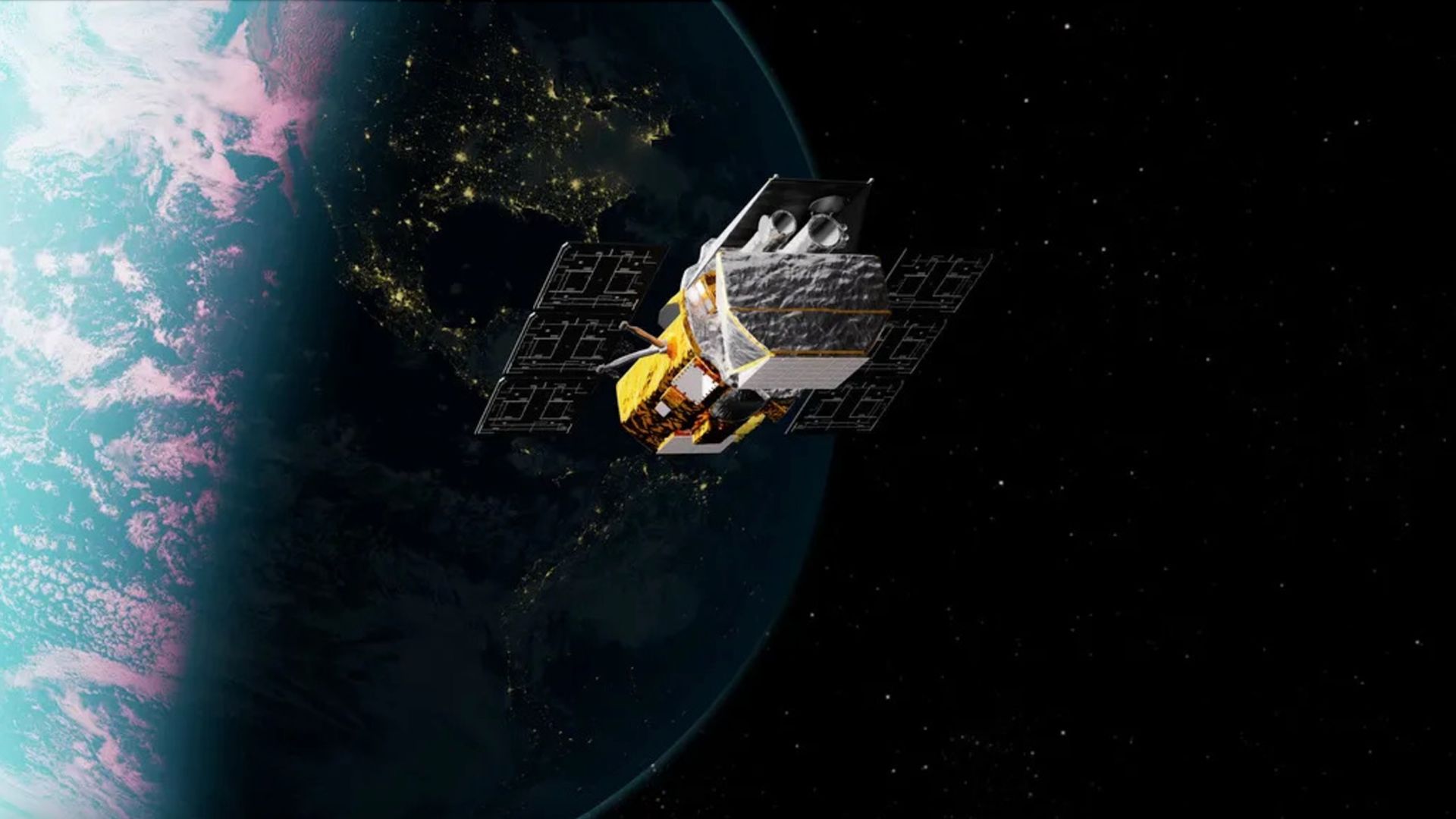
Swift is expected to crash back to Earth in the next few weeks.
When you purchase through links on our site, we may earn an affiliate commission. Here’s how it works.
NASA has officially ended the mission of its Swift space telescope, after a private satellite failed in its bold bid to rescue the aging spacecraft.
That rescue mission was led by the Arizona company Katalyst Space Technologies, whose LINK spacecraft tried to meet up with Swift this summer to boost its orbit.
That didn't work out, however, so Swift continues its fall back toward Earth. The telescope is expected to reenter Earth's atmosphere "in the next few weeks," NASA said in a statement on Friday (Oct. 23).
That statement served primarily to announce the end of the Swift mission after more than 20 very productive years.
The telescope launched to Earth orbit in November 2004, tasked with studying gamma-ray bursts (GRBs) — the most powerful explosions in the cosmos. Swift was designed to operate for two years, but it continued studying the high-energy universe for more than two decades.
"In that time, Swift played a major role in advancing our understanding of the changing universe and was part of a revolution in astrophysics that showed how critical rapid-response observations are to the entire community," Shawn Domagal-Goldman, director of the Astrophysics Division at NASA Headquarters in Washington, said in the statement.
NASA had hoped to keep Swift going even longer. In September 2025, the agency awarded a contract to the Arizona company Katalyst Space Technologies to rescue the observatory, which was falling back to Earth thanks to atmospheric drag.
Swift has no thrusters capable of counteracting this drag. So Katalyst built a refrigerator-sized spacecraft called LINK, which aimed to rendezvous with Swift, grapple it with three robotic arms and boost it to a higher orbit, allowing the observatory to continue its science work.