// SPACE.COM — SPAZIO & SCIENZA
Cowboy Space unveils 'Big Iron' rocket to launch 20,000 AI data centers
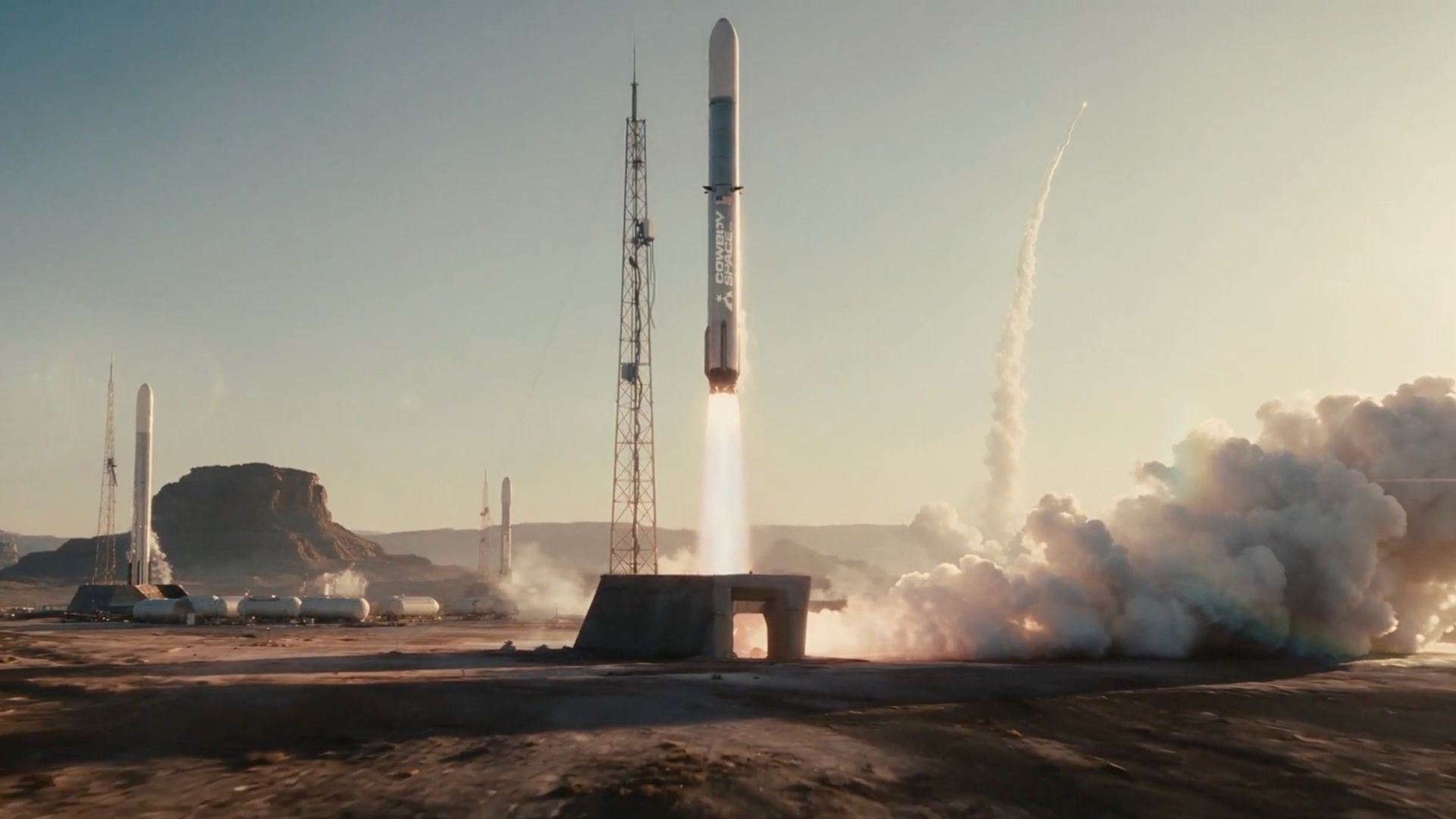
Cowboy Space aims to launch the 282-foot-tall (86 meters) Big Iron for the first time in late 2028.
When you purchase through links on our site, we may earn an affiliate commission. Here’s how it works.
PALO ALTO, Calif. — Cowboy Space just showed us how it plans to become a big player in the final frontier.
The California-based company, which is run by Robinhood co-founder Baiju Bhatt, intends to operate a constellation of 20,000 AI data centers in low Earth orbit (LEO). It will build those satellites in house and launch them on a homegrown rocket — a vehicle Cowboy Space unveiled here on Monday night (Oct. 26), at an event it called "Big Sky Rising."
"It's a fundamentally novel approach to rocketry in the modern era, in our opinion," Bhatt said during the event. "The idea is that you have a two-stage rocket where the upper stage of the rocket itself transforms into the satellite."
That rocket is called Big Iron, Bhatt told us on Monday night. And so is the data-center satellite, as both are considered to be part of the same system.
The stainless-steel rocket will be 282 feet (86 meters) tall and 15.4 feet (4.7 m) wide. It will be powered by Cowboy Space's Clydesdale engines — nine in the first stage and one in the upper stage, the same configuration employed by SpaceX's workhorse Falcon 9 rocket. And, like the Raptor engines that power another SpaceX launcher, the giant Starship, Clydesdale will burn liquid oxygen and liquid methane, a combo known as methalox.
Big Iron's first stage will be reusable; an animation Bhatt showed during "Big Sky Rising" showed the booster coming down for a landing on a ship at sea, as Falcon 9 first stages often do these days.
The upper stage, meanwhile, will stay in orbit as a Big Iron satellite. The spacecraft will tip the scales here on Earth at about 33,000 pounds (15,000 kilograms), and, after unfurling its solar panels, it will be about 433 feet (132 m) long.
The payload fairing that protected the satellite during launch will morph into a radiator, which will dump into space the prodigious heat generated by Big Iron's GPUs (general processing units). And there will be a lot of GPUs: Each satellite will carry five racks of them, Bhatt said, which will provide about 1 megawatt of compute payload.