// NATURE NEWS — SPAZIO & SCIENZA
Dengue comes back even in vaccinated people — new clues
Search author on:
PubMed
Google Scholar
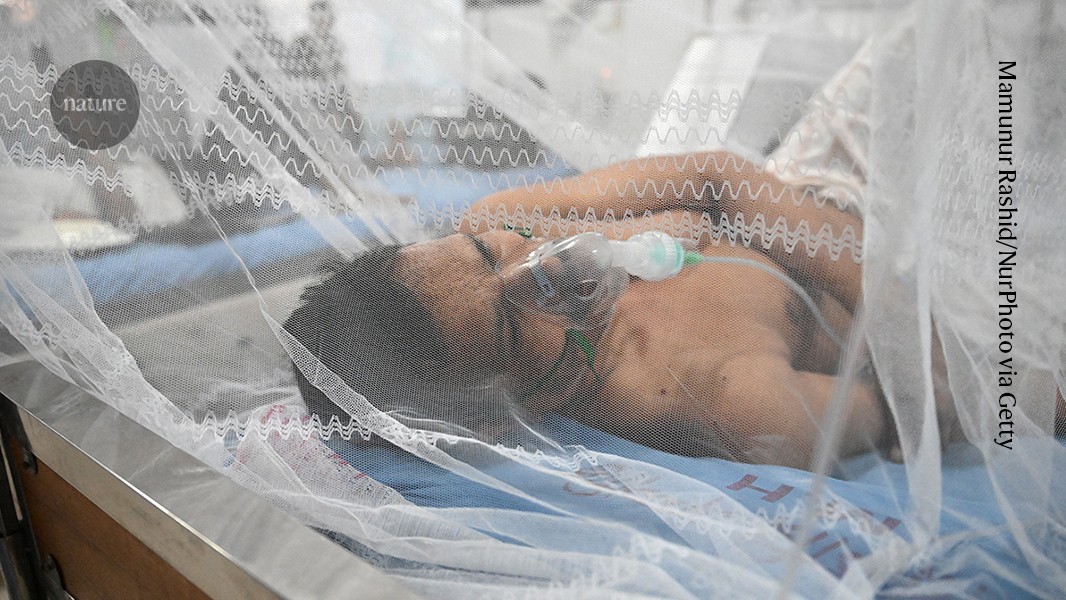
People who are infected with dengue virus for a second time often develop severe disease.Credit: Mamunur Rashid/NurPhoto via Getty
Infecting people with a weak strain of dengue virus is helping researchers to unravel the disease’s bizarre effects on the immune system.
Dengue is spread when someone is bitten by an infected female Aedes mosquito. The viral disease kills around 40,000 people every year, with up to 400 million infected annually. Bangladesh and Kenya are among the countries battling a deadly outbreak. Although most adults survive their first brush with the disease, people who are exposed to a second, different strain of dengue virus often develop more severe symptoms.
This unusual quirk has complicated dengue vaccine development. Now, a human challenge trial that exposed 45 people to a modified mild strain of dengue virus is beginning to reveal the immunological underpinnings of dengue’s second wind, according to a study published in Science Translational Medicine on 28 October1.
Understanding the biology behind dengue’s infection pattern could help researchers to develop better vaccines, says study co-author Leah Katzelnick, an epidemiologist at the National Institute of Allergy and Infectious Diseases in Bethesda, Maryland.
“Dengue is still considered a neglected tropical disease,” she says. “But it’s become a problem for almost everyone now.”
Part of the problem with existing dengue vaccines is that even the immunizations can trigger secondary infections. This issue caused concern in the Philippines when some children contracted severe dengue infections after a major public vaccination effort started there in 2016.
Why the secondary infections happen is unclear. One theory is that, when confronted with a different dengue virus strain, the immune system deploys antibodies that were originally generated against the previous dengue strain it encountered. These antibodies aren’t as effective against the second strain, which can lead to people experiencing worse symptoms. Subsequent infections with other variants of dengue don’t seem to trigger the same immune response.
To learn more about how dengue immunology works, Katzelnick and her colleagues recruited 45 healthy people and split them into three groups: those who had never been infected with dengue; others who had been infected by one dengue virus strain; and those who had been infected by several dengue strains. The team then exposed all participants to a weakened version of DENV-3 (one of four strains of the virus) and compared their immune responses using blood and lymph-node samples.