// ARS TECHNICA — MOBILE & WEB
Building a rocket is hard. AST SpaceMobile thinks it's "simple."
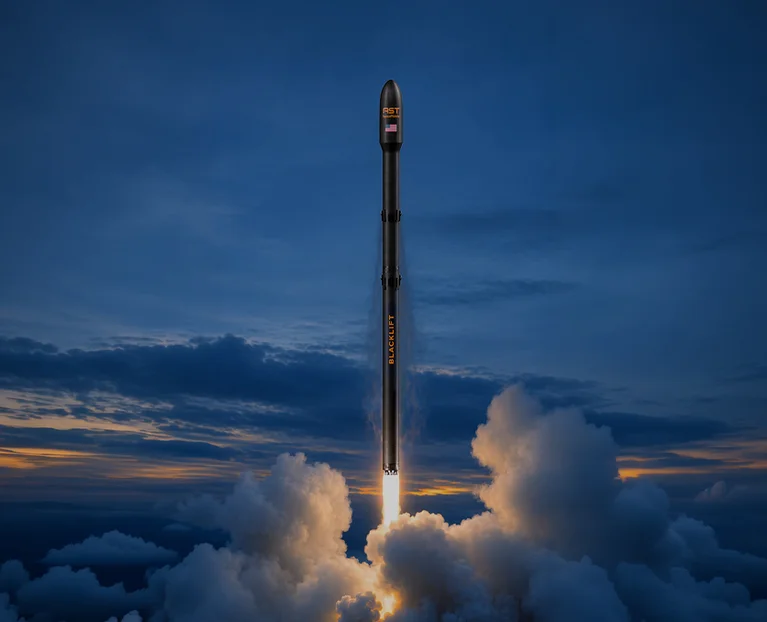
“We’re not doing this thing because we like rockets.”
During an hour-long event on Thursday, Abel Avellan, the founder and chief executive of the telecommunications company AST SpaceMobile, laid out his vision for developing a large rocket to launch his Bluebird satellites into orbit.
Avellan emphasized, over and over again, that AST plans to build a “simple” rocket. He paraphrased SpaceX founder Elon Musk several times, saying, “the best part is no part.” Avellan emphasized that AST has already procured engines for its proposed Blacklift rocket, asserting that engine development accounts for 80 percent of a typical rocket’s development cycle.
“Of course rocket engineers are going to get mad with me, but you can simplify it as a big tank feeding engines,” he said of the rocket. “So big tanks—we know how to do them. We know how to do them. We know how to do them in composite.”
I am not a rocket engineer, and I am not mad at Avellan. But he sure seems to be substantially underestimating the challenge of building rockets.
Avellan also has a problem. AST SpaceMobile appears to be successful in building very large satellites, Bluebirds, that are capable of providing direct-to-cell capability from an orbit about 550km above Earth. The problem is there is a commercial launch crunch, and the company is struggling to get its satellites on orbit today, and projects to do so into the future.
“We’re not doing this thing because we like rockets,” he said during the presentation. “We’re not doing this thing because we want to be in the launch business. We want this because we have so much demand of our satellites, and as you have seen it, we cannot get enough launches.”
The Blacklift rocket will be “simple,” he said, because it will be solely tailored to lift five Bluebird satellites into low-Earth orbit at a time. It will have 20 metric tons of lift capacity, a reusable first stage, and launch twice a month from a pad at Wallops Flight Facility in Virginia that formerly served the Antares rocket. It will have all composite tanks and three stages. And, Avellan said, it will be ready to launch in 2028.
If that timeline sounds preposterous, that’s because it is.
However, Avellan believes AST has a workaround: It is committed to spending $1.3 billion to acquire enough engines for the first three Blacklift launches from Firefly Aerospace, as well as a license to manufacture additional engines over time. He is basing this argument on the Miranda first stage engine, which he said is “ready to fly.”