// SPACE.COM — SPAZIO & SCIENZA
On this day in space! Nov. 12, 2014: European Philae probe lands on Comet 67P, bounced twice and then got lost for nearly 2 years
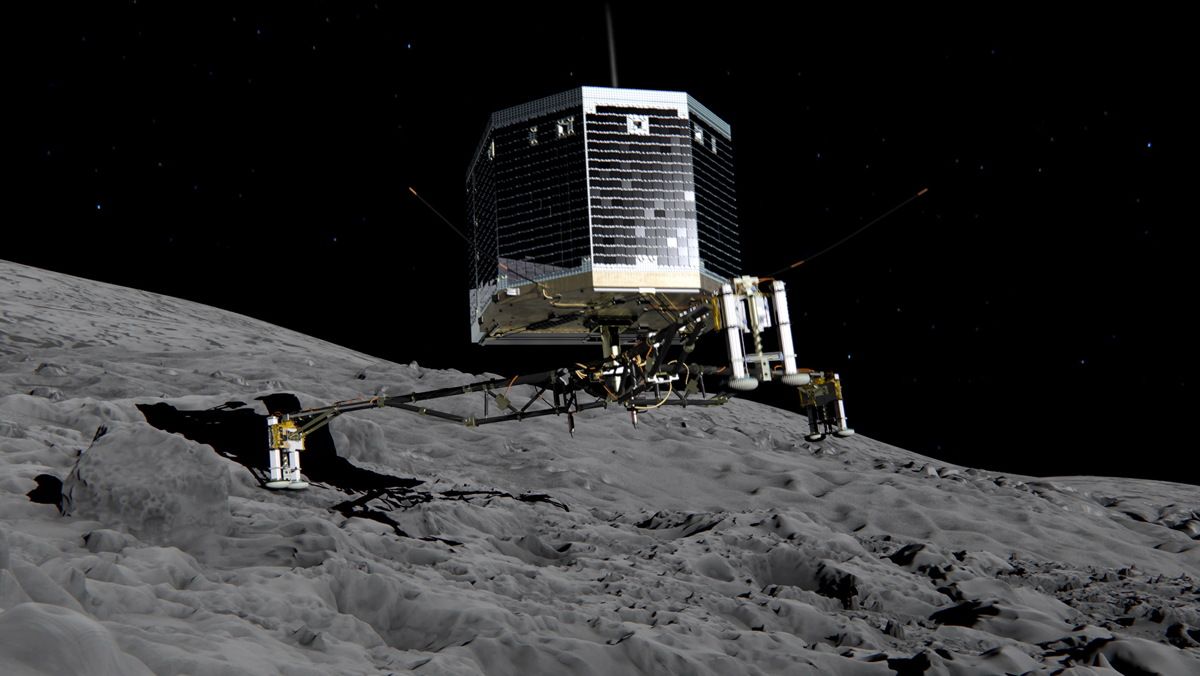
Philae drifted and bounced around the comet for two hours before Rosetta's cameras lost track of it.
When you purchase through links on our site, we may earn an affiliate commission. Here’s how it works.
On Nov. 12, 2014, a European spacecraft named Philae landed on Comet 67P. To say it was a bumpy landing would be an understatement.
The European Space Agency's Philae lander separated from an orbiter called Rosetta ahead of its historic landing in 2014. It was supposed to use harpoons to secure itself on to the surface of Comet 67P, but the harpoons never fired.
When it touched down, it immediately bounced back up into space. The first bounce brought Philae half a mile above the comet's surface before gravity brought it back down.
Philae was missing for almost two years before scientists found it. Images from Rosetta showed Philae stuck in a dark crevice on top of the rubber duck-shaped comet.
The European Space Agency's Rosetta and Philae expedition was a first-of-its-kind mission, an endeavour to not just rendezvous with a comet and watch it change over time as it approached the sun (that was Rosetta's job), but also to soft-land a probe on its icy and rocky surface to see what a comet is truly made of.
The Rosetta and Philae mission succeeded on both counts, but Philae's historic landing was marred by its turbulent touchdown. Philae actually landed three different times on Comet 67/P, all because the harpoons designed to secure it in place didn't fire as planned.
After the first landing, Philae bounced up and drifted around the comet for two hours, making another bounce before Rosetta's cameras lost track of it. Scientists figured it was stuck in a shady spot where sunlight couldn't reach its solar panels. Because it was solar-powered, Philae needed to be facing the sun properly to generate enough power for sustained operation on the comet's surface.
Still, Philae did have some power stored in batteries, which lasted for more than two days on the surface. That allowed Philae to perform some science with its 10 instruments in the time it had on Comet 67/P. Most notably, Philae found organic molecules that had never been detected on a comet before.