// SPACE.COM — SPAZIO & SCIENZA
Voyager 1 team, unbowed by communications glitch, celebrates epic 1-light-day distance milestone
"I'm confident that it won't be too long, and it will send us data back."
When you purchase through links on our site, we may earn an affiliate commission. Here’s how it works.
PASADENA, Calif. – NASA's Voyager mission team cheered and wiped away tears here on Thursday (Nov. 19), celebrating a big milestone — Voyager 1 just reached one light-day from Earth, something no other spacecraft has ever done. The excitement persisted despite a communication anomaly that cropped up on the probe, which the team remains confident is temporary.
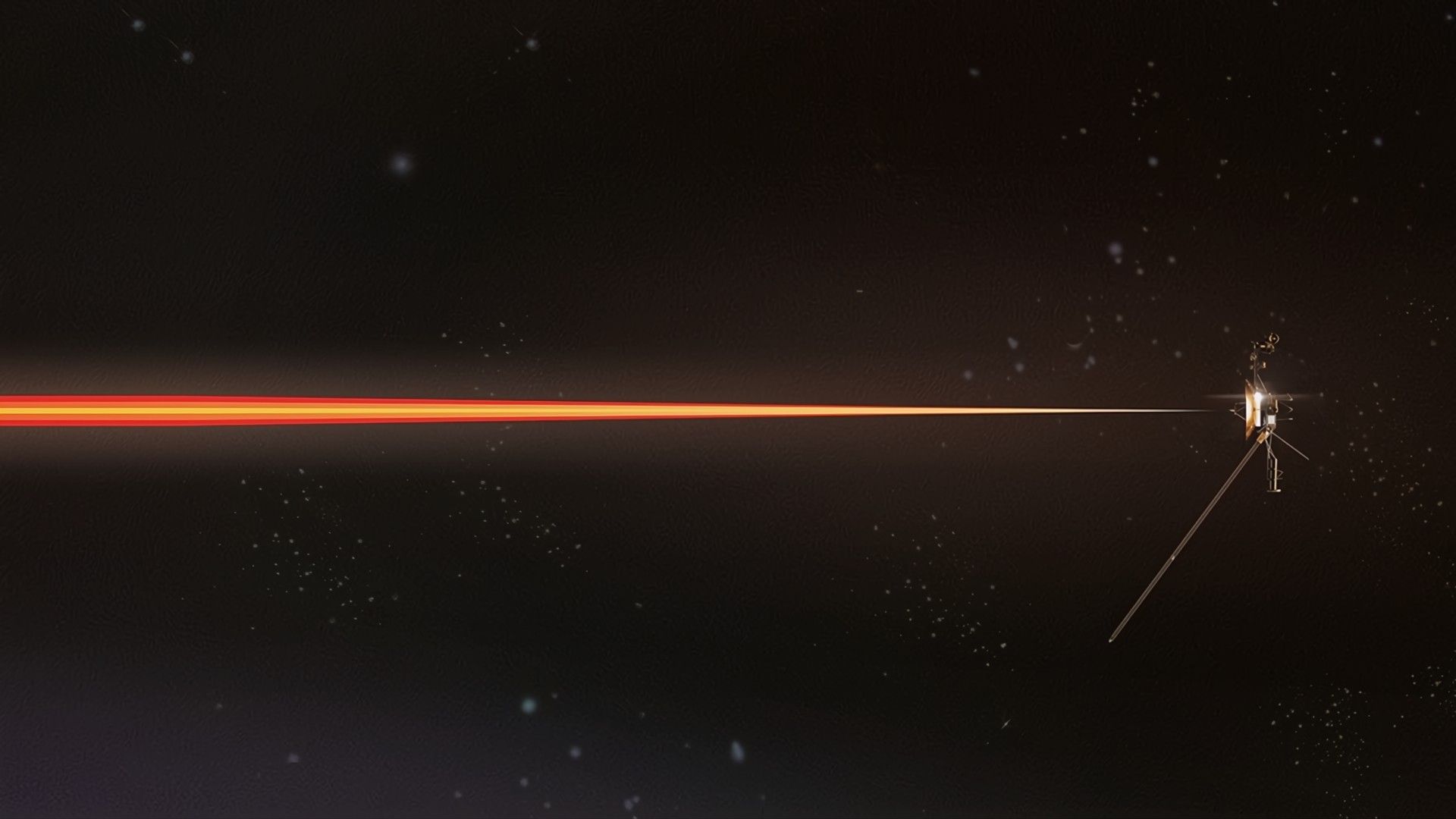
Voyager team members gathered for a press conference about the mission at the Von Karman auditorium here at NASA's Jet Propulsion Laboratory (JPL) — the first such Voyager event since 1989, when Voyager 1's twin, Voyager 2, flew past Neptune. The gathering served to celebrate Voyager 1's distance milestone: At 5:16 a.m. EST (1016 GMT) on Wednesday (Nov. 18), the probe reached one light-day from Earth — the distance a photon travels in one day, which is about 16 billion miles (26 billion kilometers). That means it now takes a full day for a signal to travel from Earth to Voyager 1, the farthest human-made object out in space.
"I remember in 1977 I was standing at the Cape watching Voyager launch, and I never thought I would be here today, 49 years later, to celebrate Voyager's one light-day. What an incredible milestone," Voyager project scientist Linda Spilker said during Thursday's event.
While this day and this week have been chock-full of excitement over the distance milestone, the Voyager mission team has been hard at work, as usual, keeping the two nearly 50-year-old spacecraft alive and functioning.
Unfortunately, as JPL spokesperson Raquel Villanueva shared at this celebration, on Saturday (Nov. 14), Voyager 1 stopped transmitting science and engineering data. The team has remained in contact with Voyager 1 while investigating the issue, and they are confident that they'll be able to solve it soon.
"We listen to each spacecraft every day," Voyager project manager Suzanne Dodd told Space.com at the event. Regarding Voyager 1, "we have an anomaly that is not something unseen before," Dodd said. "We do have a very strong carrier signal. We currently don't have a frame sync, so we're not getting the science or engineering data currently."
"But if you recall," Dodd added, "one light-day is very far from us. [It takes] 24 hours to get the signal to the spacecraft, 24 hours for the signal to come down, so it takes two days to diagnose anything on the spacecraft … So we can't do anything fast, and the data rates are very low."
According to Dodd, this anomaly isn't a major cause for long-term concern. Rather, it's likely just part of the natural aging process for spacecraft.