// SPACE.COM — SPAZIO & SCIENZA
Astronomers just discovered a rare triple star system 28 light-years away, and they have ‘no clean explanation for how it got here’
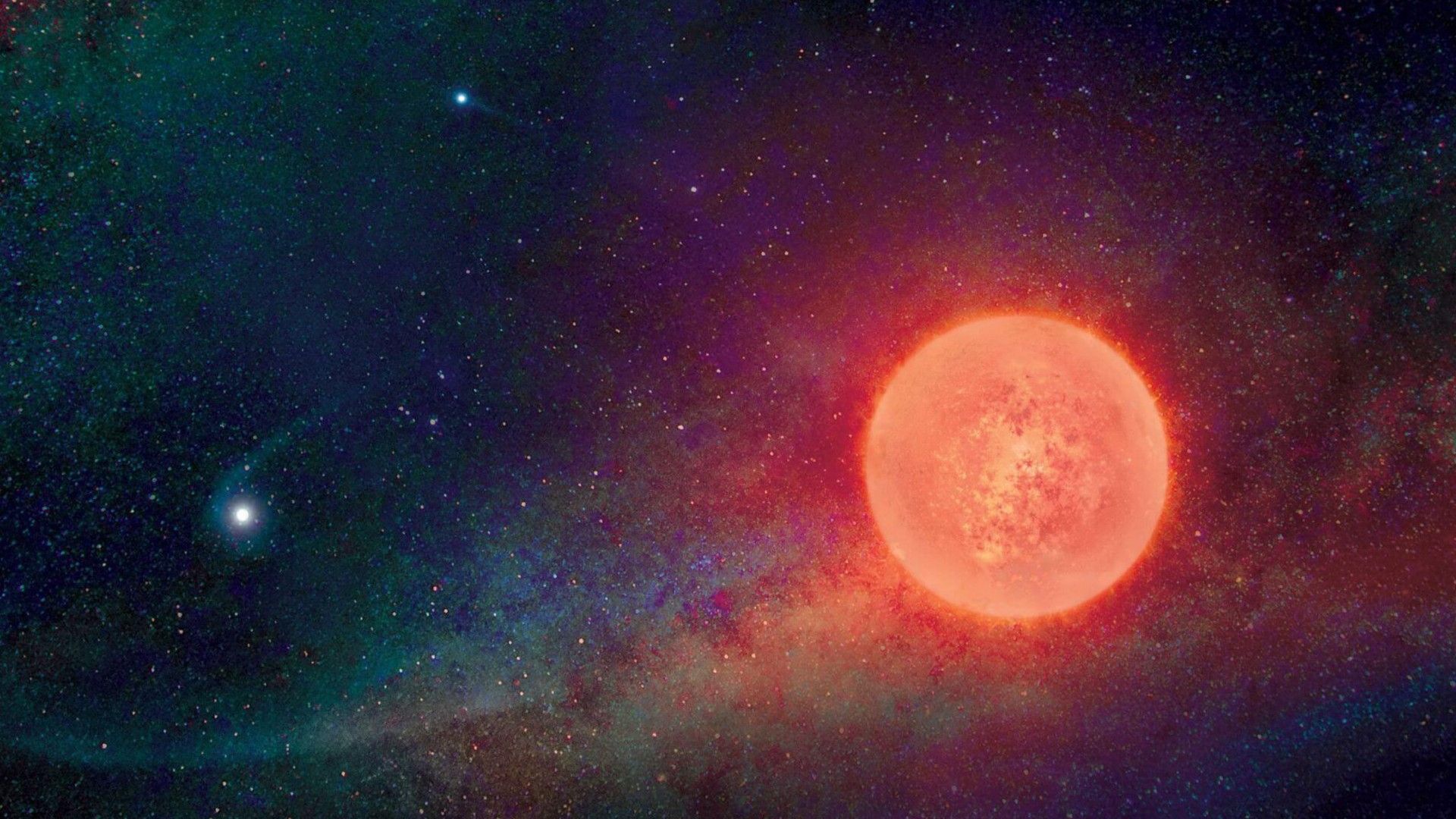
Three stars, 28 light-years, and one big cosmic mystery.
When you purchase through links on our site, we may earn an affiliate commission. Here’s how it works.
A triple system containing a dim red dwarf star and not one but two white dwarfs has been fortuitously discovered just 28 light-years away from our solar system.
"We were actually looking for planets," Étienne Artigau of the Trottier Institute for Research on Exoplanets at the Université de Montréal, who led the discovery, said in a statement. "Instead, we found something much more surprising."
So surprising that there are no similar systems within at least 100 light-years. Furthermore, the configuration of the system seems impossible. "This system should not exist," added Montreal's Patrick Dufour. "We have no clean explanation for how it got here."
This triple system has been called Welopō'ai, which is a portmanteau of two Hawaiian words that means a 'path of family traits', and to understand the mystery behind it requires astronomers to figure out the history of the three objects.
A white dwarf is what remains when a star of similar mass to our sun reaches the end of its life. As it begins to run low on hydrogen for nuclear fusion reactions in its core, the star's energy generation begins to falter and its interior starts to contract under gravity. This has the effect of raising the temperature throughout the star, causing an outer shell of hydrogen to ignite its own fusion reactions. The star promptly bloats to become a red giant tens or even hundreds of millions of kilometers across.
Soon enough the star ceases fusion reactions completely. The star's outer layers are shed and they expand out into space, while its core contracts to become an inert white dwarf with a diameter similar to Earth but with a mass generally between half and two-thirds of a solar mass.
Therefore, the Welopō'ai system was once a triple system with two sun-like stars plus the red dwarf. Now the two sun-like stars have undergone this stage of star death while their companion red dwarf continues to linger, since its low mass bequeaths it a longer life because it does not use up its core hydrogen as quickly.
One of the white dwarfs orbits the red dwarf at a distance of 129.3 astronomical units (19.3 billion kilometers or 12 billion miles) and takes about 1,000 years to complete one orbit. This white dwarf and the red dwarf were previously known, and Artigau's team had been using the SPectropolarimètre InfraROUge (SPIRou) instrument on the Canada–France–Hawaii Telescope atop Mauna Kea to search for planets orbiting the red dwarf when they noticed something highly unusual.