// TOM'S HARDWARE US — HARDWARE & GADGET
Samsung Odyssey G8 G80SH 32-inch 4K OLED gaming monitor review: Color, performance and style
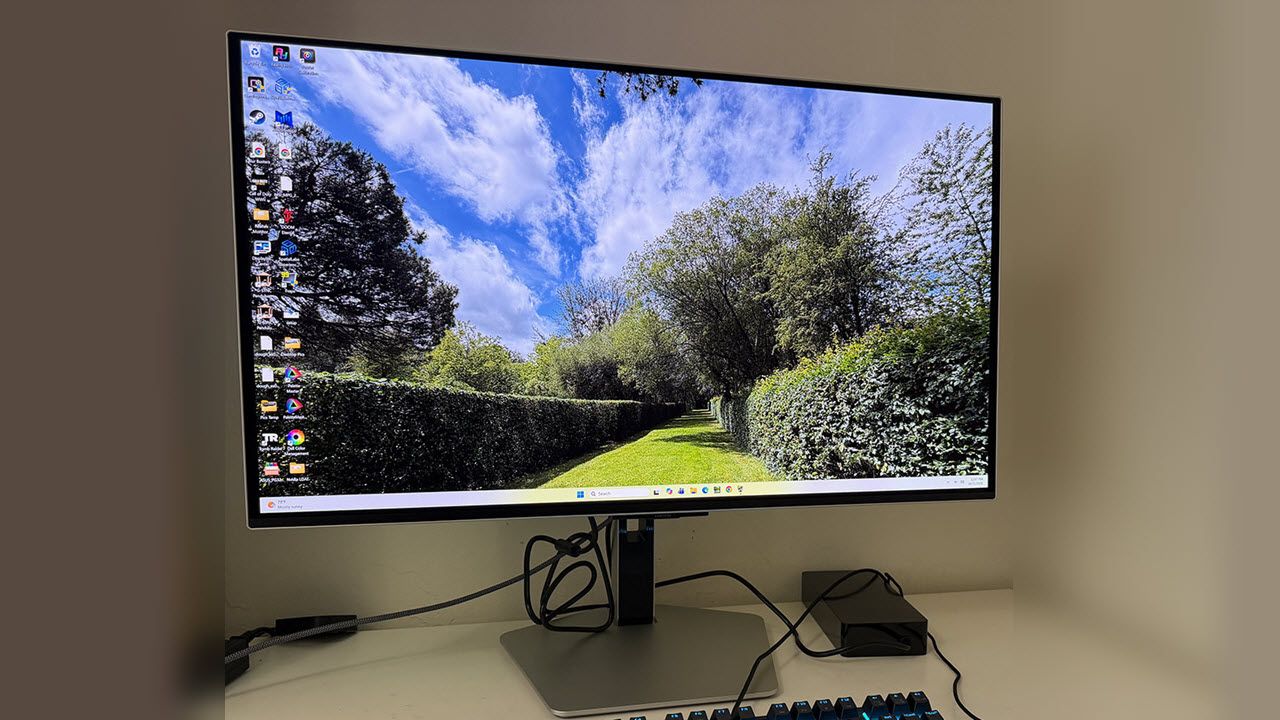
The Samsung Odyssey G8 G80SH is one of the best HDR OLEDs I’ve reviewed. It delivers a stunning image with no need for calibration and addictive gaming that will keep you playing for hours.
Why you can trust Tom's Hardware
Our expert reviewers spend hours testing and comparing products and services so you can choose the best for you. Find out more about how we test.
If you’re shopping for one of the best OLED gaming monitors, the 240 Hz QHD category offers the most choices and the best bang for the buck. But 4K at 240 Hz is creeping downward in price and only represents a small upcharge. It also means that you can go to 32 inches and maintain good pixel density. If you have enough video card horsepower to push frame rates over 180fps, the quality is unmatched.
Samsung slides into the neither-expensive-nor-inexpensive position with its Odyssey G8 G80SH. This 32-inch Quantum Dot OLED runs 240 Hz at 4K resolution with Adaptive-Sync, HDR10, HDR10+, wide gamut color, factory calibration, and high brightness for HDR content. Let’s take a look.
First, I want to clear up any potential confusion with another recently reviewed Samsung display, the G80HS. That is a 6K resolution dual-refresh mode model that currently costs around $1,600. The G80SH I’m covering here is a 4K screen with a single 240 Hz mode, and it’s currently selling for $900.
The G80SH delivers the best of everything in the premium OLED category. It’s 4K with a Quantum Dot layer that delivers a measured 106% coverage of DCI-P3. That’s about average among the QD-OLEDs I’ve tested, which range from 104 to 108%. The visual difference there is extremely small, not enough to affect a purchase decision. The G80SH also offers excellent out-of-the-box accuracy courtesy of a factory calibration. Though my sample didn’t need any tweaking, it benefited from a few adjustments. And that capability extends to HDR content, where you have full control of color temp, brightness, and luminance tracking.
Speaking of HDR, you get the requisite HDR10 support that all monitors have, plus Samsung’s answer to Dolby Vision, HDR10+. This extension of HDR10 includes dynamic tone mapping where the content matches its luminance curve to whatever display it’s shown on. Since HDR is mastered to a specific peak luminance, usually 1,000 nits but sometimes as high as 10,000, it’s beneficial when the screen can adapt to the incoming metadata to accommodate a lower or higher limit. You’ll see the same fine detail and nuance that the content creator did.
Gaming benefits from the aforementioned 240 Hz refresh rate plus a flawless implementation of Adaptive-Sync. The G80SH works with equal precision on G-Sync and FreeSync platforms, as well as the VRR output from gaming consoles. To help with your aim, there are reticles available in different colors and shapes, with a dynamic mode that keeps them in contrast with the background.
Like every Samsung monitor I’ve experienced, the G80SH delivers high style and solid build quality. The main color is silver, which you can see everywhere except the front, keeping the screen and surrounding bezel all black. There’s a matte anti-glare coating too, effectively eliminating all ambient light reflections. If you have a sunny room, this monitor can handle it without a degradation in image quality. You also get the latest video interfaces, four in total, plus USB and a headphone jack. LED lighting is featured on the back and can be controlled from the OSD.
Get Tom's Hardware's best news and in-depth reviews, straight to your inbox.