// SPACE.COM — SPAZIO & SCIENZA
December full moon 2026: When, where and how to see the Cold Moon
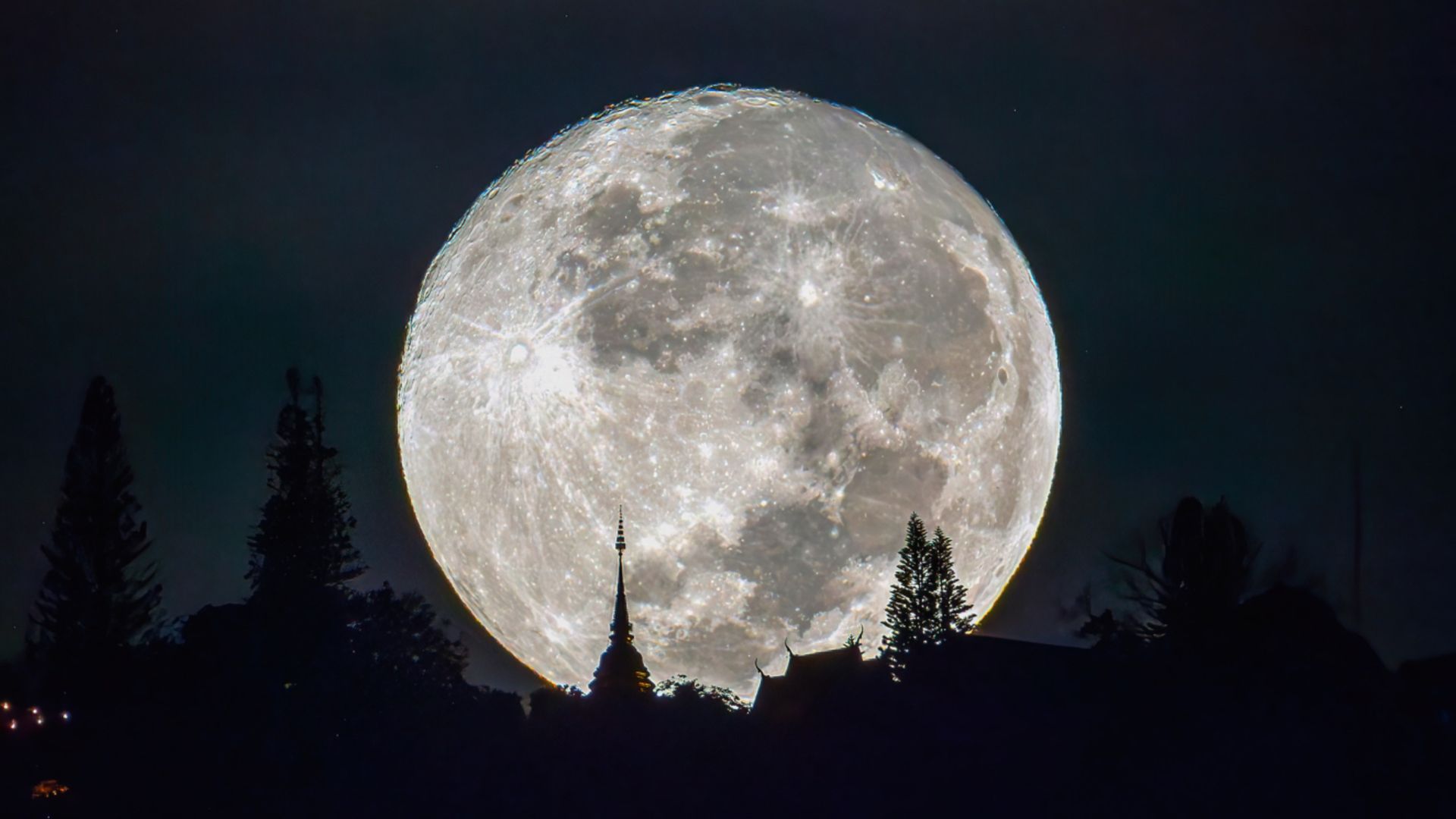
Your guide to December's full Cold Moon, from peak times to skywatching highlights.
When you purchase through links on our site, we may earn an affiliate commission. Here’s how it works.
The December full moon reaches peak illumination at 8:28 p.m. EST on Dec. 23 (0128 GMT on Dec. 24) as the lunar disk shines opposite the sun in Earth's sky. It is often called the "Cold Moon" in reference to the frigid temperatures that prevail in the Northern Hemisphere around the time of its rising, according to the Old Farmer's Almanac.
December's full moon will also occur close to perigee — the moon's closest point to Earth in its elliptical orbit — giving rise to a spectacular supermoon. A supermoon can appear 30% brighter and 14% larger than a full moon at its farthest point from Earth (also known as a micromoon)..
According to the late, great astronomer Fred Espenak, the Cold Moon will be just 221,667 miles (356,740 kilometers) from Earth when it turns full, making it the closest supermoon of 2026!
The full Cold Supermoon will make for a spectacular sight when it rises over the eastern horizon at sunset on Dec. 23, mere hours before reaching maximum illumination. Remember to use Time and Date's moonrise and moonset tracker for timings specific to your location.
Earth's satellite may appear larger than normal while close to the horizon. This is partly because it is near perigee, when it appears subtly larger in the night sky, but also because of a phenomenon called the moon illusion, which tricks us into perceiving the moon to be bigger than it actually is while in the presence of foreground objects.
The moon may also adopt a striking golden or orange hue around moonrise and moonset. When the moon is low on the horizon, its light travels through more of Earth's atmopshere, scattering shorter, bluer wavelengths of light and allowing longer, redder wavelengths to reach our eyes.
The table below details moonrise timings for a selection of cities spread across the globe for Dec. 23-24:
The December full moon is often called the Cold Moon in reference to the often freezing temperatures that can descend this time of the year. It's also known as the "Long Night Moon" by the Mohican tribe of North America, because of its proximity to the winter solstice, which marks the shortest day of the year in the Northern Hemisphere.