// KOTAKU — GAMING
Splatoon Raiders: The Kotaku Review
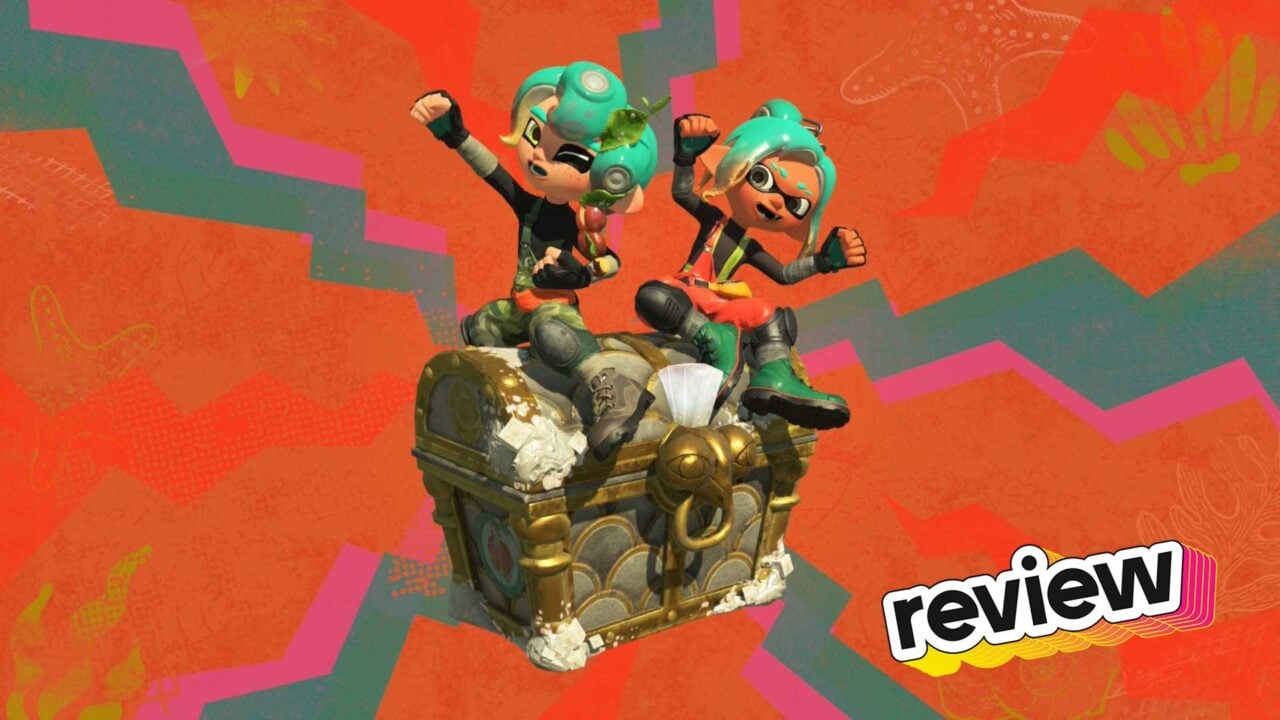
Man, guys, Splatoon is over a decade old? It’s kind of nuts that in that time we’ve gotten three main entries, plus now a new single-player-centric variation on the theme in Splatoon Raiders. Nintendo has been rightfully praised for its interpretation of the competitive shooter, a genre that if you had asked me ahead of Splatoon’s announcement, I would have said Nintendo cannot and will not ever play in. But it has, and been riotously successful with it. While the main three Splatoon games had single-player campaigns, Splatoon Raiders is Nintendo’s first proper attempt to take a stab at what a meaty, mission-based shooter looks like.
If you’ve ever played a Splatoon, you’re probably not that worried about how well it’s going to translate. You certainly shouldn’t be.
Splatoon Raiders sends a trio of treasure hunters (who moonlight as a band) and their pilot-turned-mechanic out to a set of deserted islands said to be full of sick loot. These islands are also full of Salmonids, a group of sapient life forms that exist in the same world as Splatoon’s Octolings and Inklings but who, for some reason, are not treated as reasoning beings and are instead largely shot on sight with ink guns that kill them. Look, this is a goofy and lighthearted Nintendo game, and the dev team clearly just regards the Salmonids as thoughtless monsters. But it is a little weird to give them a clearly expansive culture with art and music and society, publish a dev interview about how internally everyone felt bad about murdering them, and then commit to it anyway. I was sort of hoping for at least an attempt at a better explanation for recreational colonialism than Splatoon Raiders gave me.
It may just generally be folly to expect more from a Splatoon story, even a single-player one. The actual plot, when you’re not inking Salmonids to death, is fine. Cute, even. Shiver, Frye, and Big Man are fun, if shallow, companions on the islands, and as unimpressed as I was with the overall depth of what was going on here, their big, joyful personalities are a key part of what makes Splatoon Raiders’ finale so triumphant and effective.
There’s also loads here, buried in hidden collectible scrolls, for Splatoon lore nerds to feast on. I didn’t understand how it all connects, but I’m sure whoever the Splatoon lore YouTubers are, they’ll catch me up later. But while I’m willing to praise what Splatoon Raiders added to our greater understanding of the Splatoon world, I wish there was more aesthetic variety in the maps you visit. I don’t really feel like I’m hanging out in a lived-in world so much as a series of sandy beaches, a glacier, a volcano, a cave, and a temple. That’s it, and those same styles are repeated ad nauseum across some 50 stages.
Speaking of aesthetics, I wish Splatoon Raiders had more and better fashion options, and better music. I think the developers offered a great explanation for why the soundtrack is basically a bunch of people banging pots and pans together, but I still didn’t enjoy most of it (the final boss theme rips). These two issues I found particularly surprising given how critical both fashion and music have been to the Splatoon universe over the years.
But all this is incidental to the experience of actually playing Splatoon Raiders, which is a blast. Splatoon’s single-player modes have always been great, and Splatoon Raiders lets that greatness loose. The campaigns of yore have traditionally been very obstacle-course heavy, and those are present here, too, in all their glory (and terror; some of them are very difficult), but they exist alongside a variety of other missions including objective-based adventures, those where you fight through waves of enemies on a time limit, and big open spaces where you run around and shoot guys until you fill up a meter. There are small boss battles and big ones, too, and stages that throw increasingly obnoxious combinations of familiar enemies at you that make you go “Oh no” to yourself when you s