// SPACE.COM — SPAZIO & SCIENZA
13 amazing things to see during the total solar eclipse on Aug. 12
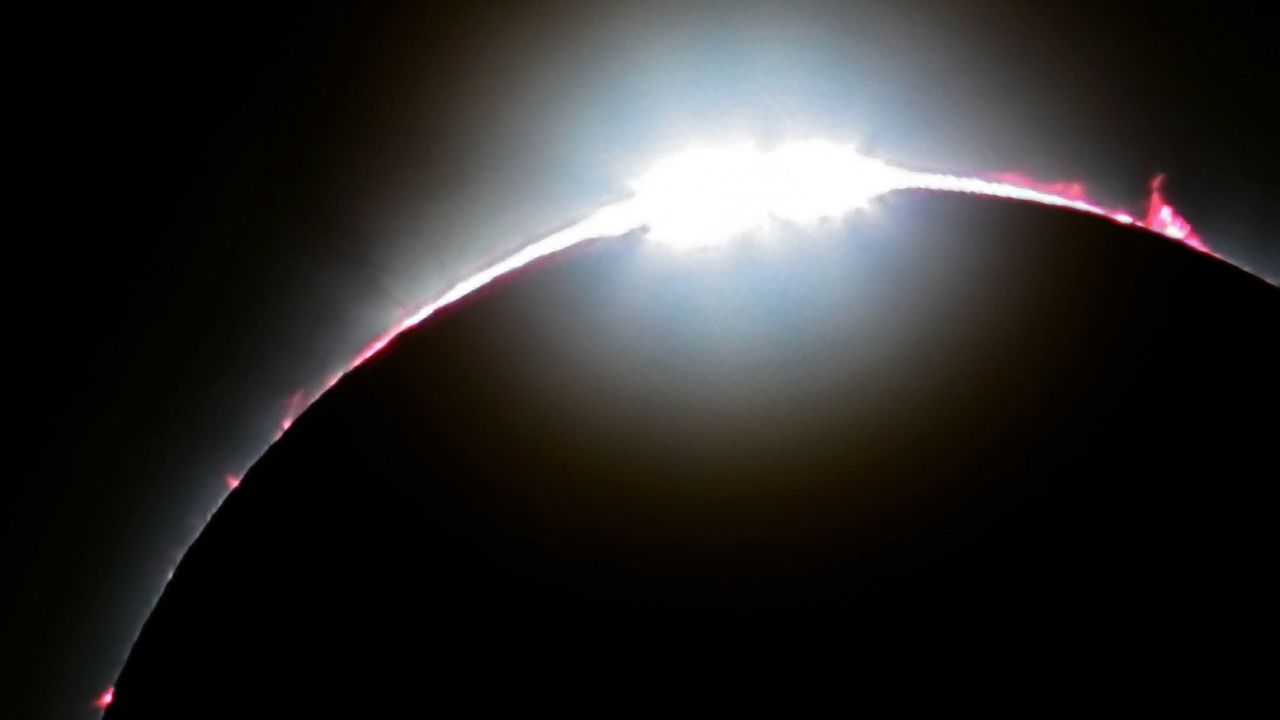
The solar corona is the ultimate sight during a total solar eclipse, but there'll be a chance to see much more on Aug. 12, 2026.
When you purchase through links on our site, we may earn an affiliate commission. Here’s how it works.
Mention that a total solar eclipse is coming, and almost nobody will say, "Wow, we get to see the solar corona!" That's despite the sun's tenuous outer atmosphere being the number one sight during totality — a genuine jaw-dropper.
Instead, the focus on social media is always on the darkness during the day, arguably the least interesting — but easiest to grasp — aspect of a total solar eclipse. It's no wonder that many people misunderstand and underestimate them, and think of eclipse chasers as a little odd.
But that's not the half of it. There are dozens of things to see and experience during a total solar eclipse, so many that we've put together a checklist of things to see as you're swallowed by the moon's shadow. Here's what you may experience during the solar eclipse on Aug. 12, 2026, roughly in the order they occur from first contact — when the moon begins to eclipse the sun — to fourth contact, when it departs.
Here's one everyone in both the partial and total eclipse zones can see on Aug. 12, 2026. As the moon's silhouette moves across the sun, look through your ISO-certified safe solar eclipse glasses/solar filters. With luck, you'll see the edge of the moon move across dark spots on the solar surface. These are sunspots, cool patches where the sun's magnetic field is concentrated and complex. They're where solar flares come from.
You'll often hear someone shout, "There's Venus!" during the totality phase of a total solar eclipse, to which your response should rightly be: "Who cares?" as you focus on the much rarer sight of the solar corona. The correct time to look for planets is about 15 minutes before totality, when — on Aug. 12, 2026 — Jupiter will appear about 11 degrees west-northwest, with tiny Mercury about 4 degrees beyond. Venus will be much farther away, about 46° east-southeast of the sun, but easy to see. Mars will be low in the west, but much more difficult to see.
Here's another one everyone can look out for during a deep partial solar eclipse. When over 50% of the sun is eclipsed, crescent-shaped shadows begin to appear on the ground beneath trees. It's sunlight passing through tiny gaps, which act like the aperture control on a camera. The best way to see them is to grab a colander or spaghetti spoon — or anything with small, defined holes. Failing that, cross your fingers in a waffle pattern and you'll project diffuse crescents.
Here's one for eclipse chasers in Spain. About two minutes before and after totality, it's sometimes possible to see wavy lines on white surfaces. It's the reduced light from the crescent sun being refracted by atmospheric turbulence, and, for some reason, it's much more noticeable when the eclipse is low in the sky — as it will be from Spain. They're called shadow bands or "shadow snakes". Pack as large a white sheet as you can (or borrow one from your bemused hotel).
As the partial eclipse reaches about 80%, you'll begin to notice it getting cooler. By the time it's just seconds before totality, it will be chilly as the light levels around you crash like nothing else you have experienced. "Darkness in the day" does not do it justice — it's as if the world is ending. Even experienced eclipse chasers get a knot in their stomach about now as a primordial fear kicks in. That feeling is not helped by looking at the others around you, who, in the eerie, silvery light, suddenly look almost ghoulish.