// SPACE.COM — SPAZIO & SCIENZA
August full moon 2026: When, where and how to see the Sturgeon Moon
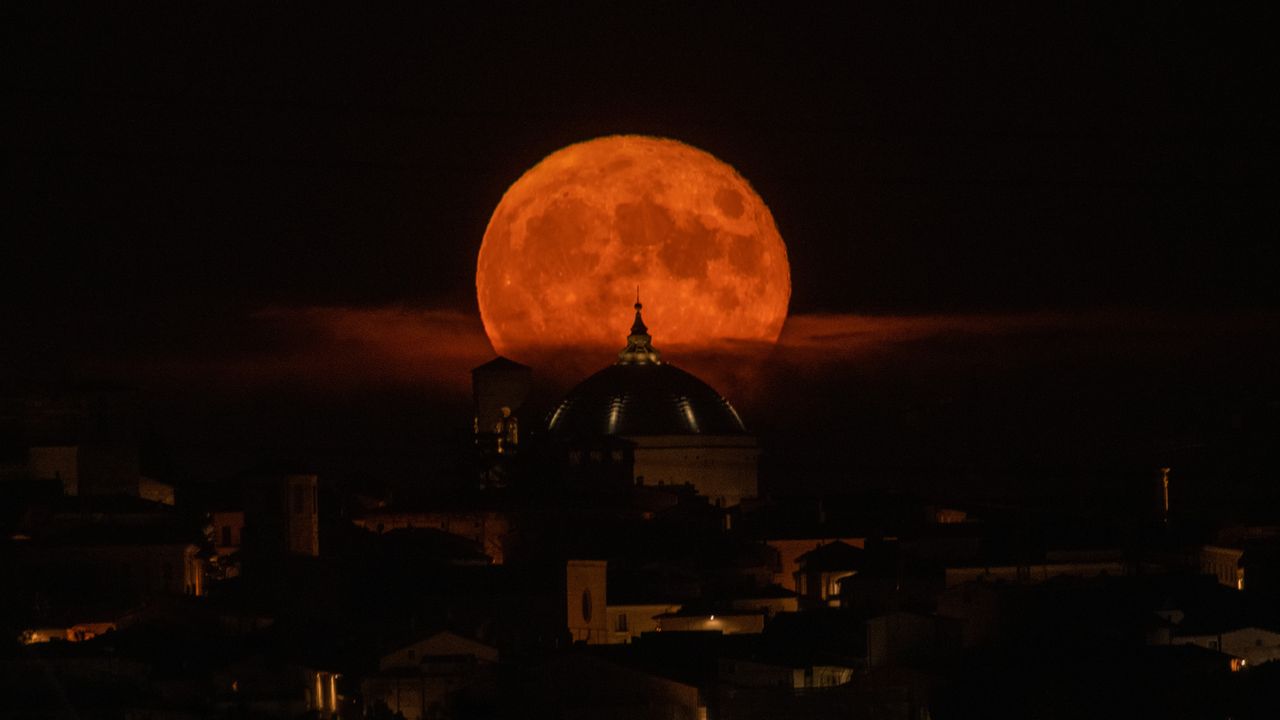
Your guide to August's full Sturgeon Moon, from peak times to skywatching highlights.
When you purchase through links on our site, we may earn an affiliate commission. Here’s how it works.
The full moon of August 2026 will occur at 12:18 a.m. (0416 GMT) on Aug. 28, as the lunar disk shines directly opposite the sun in Earth's sky.
Its arrival will trigger a breathtaking lunar eclipse late in the month, which will be visible across the Americas and parts of Africa and Europe as Earth passes between the sun and moon to bathe the lunar disk in shadow.
August's full moon is often referred to as the Sturgeon moon — a Native American name that reflects the time of year that the giant fish are most easily pulled from the waters of the North American Great Lakes and Lake Champlain, according to the Old Farmer's Almanac.
Stargazers in the U.S. will see the Sturgeon Moon rise over the eastern horizon at sunset on Aug. 27. You may notice the moon adopt a yellow-orange hue in the hour following moonrise, as the blue wavelengths of its light are scattered by Earth's atmosphere by an effect called Rayleigh scattering.
The lunar disk may also appear subtly larger while close to the horizon thanks to a phenomenon known as the "Moon Illusion". This optical illusion tricks our brains into thinking that the moon is bigger than it really is when it shines close to foreground objects, as opposed to when it's higher in the sky.
Earth's shadow will already be visible darkening the lunar surface by the time the moon rises for viewers on the west coast of the U.S. in cities like Los Angeles, while those viewing from east coast cities like New York will have to wait a few hours after sunset until our planet's umbral silhouette begins to darken the lunar disk.
Those in Europe and Africa will see the orbital ballet unfold in the early hours of Aug. 28. Up to 96% of the lunar disk will be immersed in Earth's inner shadow at the point of maximum eclipse. This will turn it a gorgeous blood red as light filtered through our atmosphere falls on its surface, while leaving a thin silvery crescent visible on its outer edge.
The table below details local full moon timings for when the moon is 100% illuminated for a selection of cities spread across the globe (local moonset and moonrise times will vary based on your location):