// SPACE.COM — SPAZIO & SCIENZA
This ZWO astronomy camera is perfect for solar and lunar imaging
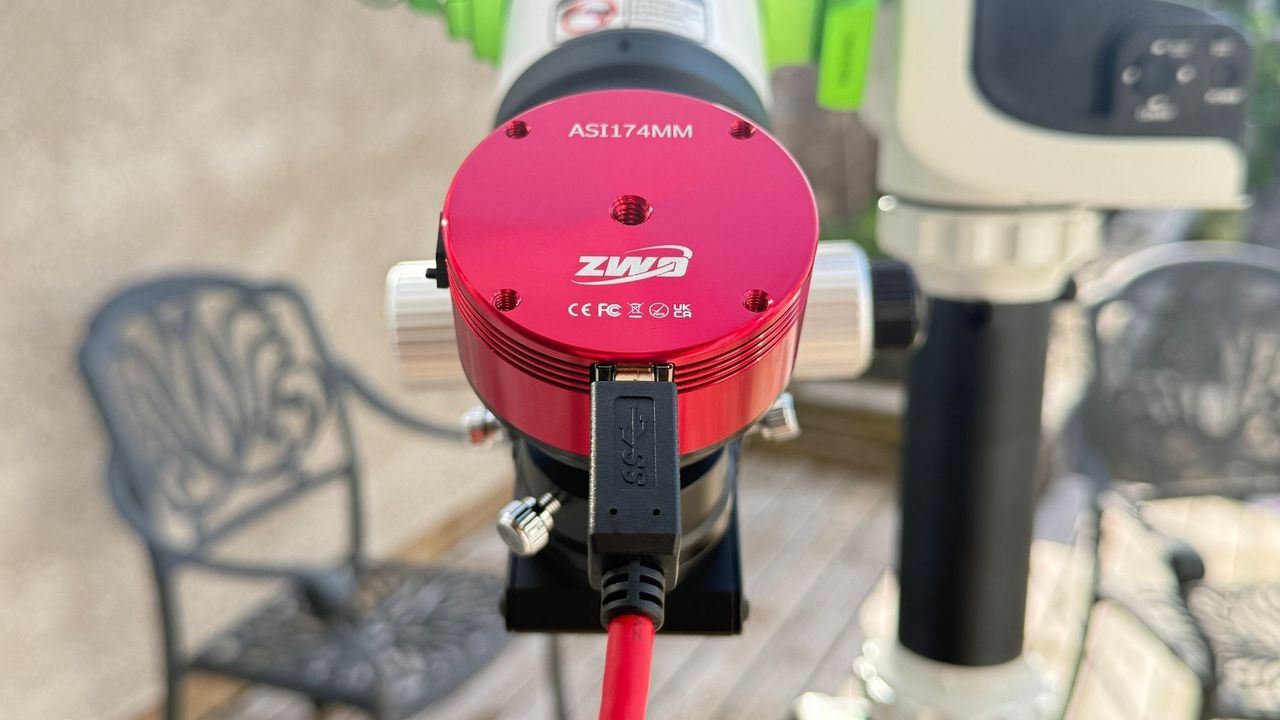
The ZWO ASI174MM is an astronomy camera that earns its place, especially for solar and lunar imaging. Its 1/1.2-inch Sony IMX174 monochrome sensor, large pixels and high frame rates make it a natural match for H-alpha solar telescopes, white-light solar setups and for shooting mosaics of the lunar surface, but its 2.3MP resolution is modest and it’s not ideal for deep-sky imaging.
Global shutter helps avoid distortion on moving or unstable targets
Large 5.86µm pixels suit many solar and lunar setups
Why you can trust Space.com
Our expert reviewers spend hours testing and comparing products and services so you can choose the best for you. Find out more about how we test and review products.
Originally launched a decade ago, the ZWO ASI174MM is a planetary astrophotography camera — something you insert into the eyepiece of a telescope to take images and video of deep-sky objects, planets, the moon and the sun. This one is very much geared towards the latter, with solar and lunar imaging its goal.
Sensor: 1/1.2-inch Sony Exmor IMX174LLJ / IMX174LQJ CMOS
Maximum frame rate: 164.5fps at full resolution in 10-bit mode; 128.2fps at full resolution in 12-bit mode
Accessories: M42-to-1.25-inch nosepiece adapter, 1.25-inch cap, 2m USB 3.0 cable, 2m ST4 cable
At first glance, the specification looks simple: a 2.3MP monochrome Sony IMX174 sensor, 5.86µm pixels, USB 3.0 connectivity and a compact red aluminum body. The important details are the sensor size, speed and global shutter. For lunar and solar imaging, where you often want to capture large areas in high frame rate videos and freeze split-seconds of steady “seeing” — when turbulence in Earth’s atmosphere doesn’t degrade an image of an astronomical object — those traits matter more than headline megapixels.
The ASI174MM is especially attractive for solar imaging with an H-alpha telescope — a filter that blocks all wavelengths of light other than H-alpha, which is emitted by hydrogen atoms. That’s because its 5.86 μm pixels match the focal ratios typical of solar telescopes, yielding sharp, efficient detail. Its relatively large sensor can cover more of the solar disc than many small planetary cameras, while its high frame rate supports the usual lucky-imaging workflow of capturing video, selecting the best frames and stacking them for sharper images.