// SPACE.COM — SPAZIO & SCIENZA
On this day in space! Aug. 13, 2014: Game-changing WorldView-3 Earth-observing satellite launches to orbit
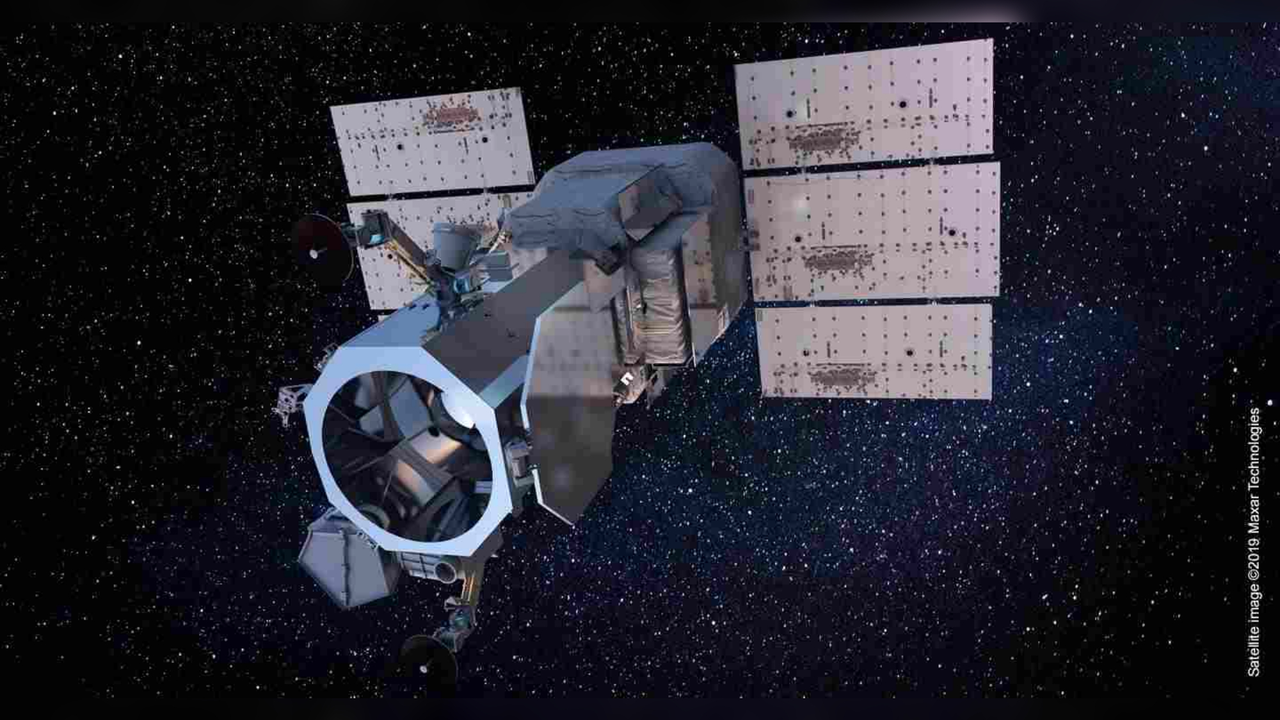
On Aug. 13, 2014, DigitalGlobe launched what was then the sharpest-eyed satellite of all time.
When you purchase through links on our site, we may earn an affiliate commission. Here’s how it works.
On Aug. 13, 2014, a company called DigitalGlobe launched what was then the sharpest-eyed satellite of all time. WorldView-3 is a high-resolution imaging satellite that can resolve features as small as 1 foot (31 centimeters) across.
Its instruments allow it to peer through fog and smoke to see Earth's surface at a level of detail that was unprecedented for a non-governmental spacecraft. WorldView-3 lifted off on a United Launch Alliance Atlas V rocket from Vandenberg Air Force Base in California and has been orbiting Earth ever since.
WorldView-3 pushed forward the technology of Earth-observing satellites. With its high resolution and ability to create mosaic images and deliver data in record time, the spacecraft changed the game in terms of studying Earth from space. While technology continued to advance beyond WorldView-3, it was a critical step in the process. For example, its data has helped researchers better track methane emissions coming from offshore oil and gas rigs, which is important as methane is a powerful greenhouse gas which contributes substantially to climate change.
WorldView-3's data is sorted by an algorithm that helps filter, process and color-correct images that might have been affected by atmospheric effects. With all of the imagery and data from satellites like WorldView-3, researchers can better track and understand contributors to climate change like methane plumes, as well as monitor deforestation and agriculture and study the spread and effects of natural disasters like wildfire.
Lastly, in an unexpected but amazing find, in 2015, archaeologists used data from WorldView-3 to discover what is thought to be a lost Viking village in Newfoundland. The near-infrared imagery captured by the satellite helped an international team to spot this village, which was only the second Viking settlement found in North America.
You must confirm your public display name before commenting
Please logout and then login again, you will then be prompted to enter your display name.
Hanneke Weitering is a multimedia journalist in the Pacific Northwest reporting on the future of aviation at FutureFlight.aero and Aviation International News and was previously the Editor for Spaceflight and Astronomy news here at Space.com. As an editor with over 10 years of experience in science journalism she has previously written for Scholastic Classroom Magazines, MedPage Today and The Joint Institute for Computational Sciences at Oak Ridge National Laboratory. After studying physics at the University of Tennessee in her hometown of Knoxville, she earned her graduate degree in Science, Health and Environmental Reporting (SHERP) from New York University. Hanneke joined the Space.com team in 2016 as a staff writer and producer, covering topics including spaceflight and astronomy. She currently lives in Seattle, home of the Space Needle, with her cat and two snakes. In her spare time, Hanneke enjoys exploring the Rocky Mountains, basking in nature and looking for dark skies to gaze at the cosmos.