// SPACE.COM — SPAZIO & SCIENZA
A beginner’s guide to observing the night sky with a manual telescope
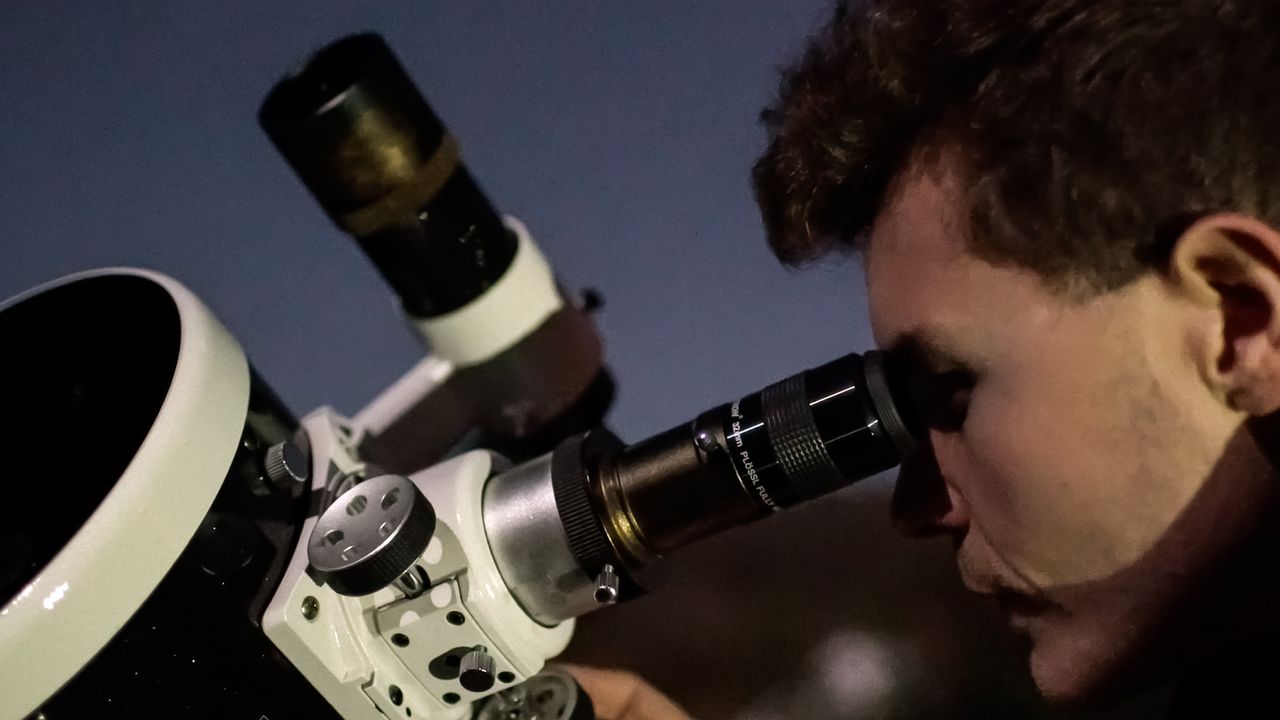
A telescope offers one of the most rewarding ways to explore the night sky, but only if you know how to use it.
When you purchase through links on our site, we may earn an affiliate commission. Here’s how it works.
The night sky is not an impenetrable “blanket of stars.” There is depth and detail that can be navigated and known, probed and plundered for rewards — and the best way to do all of that is with a manual telescope. Sure, you can get a motorized computerized “go-to” telescope and even one of the best smart telescopes that self-align and do all the work for you. Arguably, they also take much of the reward and leave you none the wiser. Can users of smart telescopes find Polaris, the North Star? Probably not. Do they know where the fabulous images of nebulae they produce actually come from? It’s doubtful.
Manual telescopes don’t find celestial objects for you — you find them yourself. However, it’s the only way to build sky literacy. Observing manually connects you to a long tradition of stargazers who learned the patterns of the sky by heart.
The learning curve can be steep, even with one of the best beginner telescopes. Knowing where to point a manual telescope is a challenge for beginners. With narrow fields of view, it’s easy to miss even bright targets unless you understand where objects are, how to navigate the sky and how to move your telescope.
All telescopes use lenses and/or mirrors to collect and focus light. There are several types of telescope — the main two being refractors and reflectors — as well as Dobsonians and catadioptrics (Schmidt-Cassegrains and Maksutov-Cassegrains). Let’s assume you already have one of the best telescopes. How does it move? There are two mount types — alt-azimuth and equatorial — each of which moves differently and has its own learning curve.
To lessen any confusion, here’s everything a beginner needs to know about observing the night sky with a manual telescope, and a glossary of telescope terms.
The night sky is not static. Thinks of it as a celestial sphere surrounding a rotating globe; as Earth rotates, the stars appear to move across the sky — rising in the east and setting in the west, just like the sun — which is why objects drift out of a telescope’s field of view over time.
Since it’s not static, the celestial sphere requires two coordinate systems to help you understand this movement and find objects in the night sky:
Altitude and azimuth: typically shortened to Alt-Az, these describe where something is based on your position, with altitude meaning how far up in the sky an object is, and azimuth, where it is from left to right.