// HACKER NEWS — CYBERSECURITY
Wi-Fi 8 is the first wireless upgrade in years that isn't chasing speed
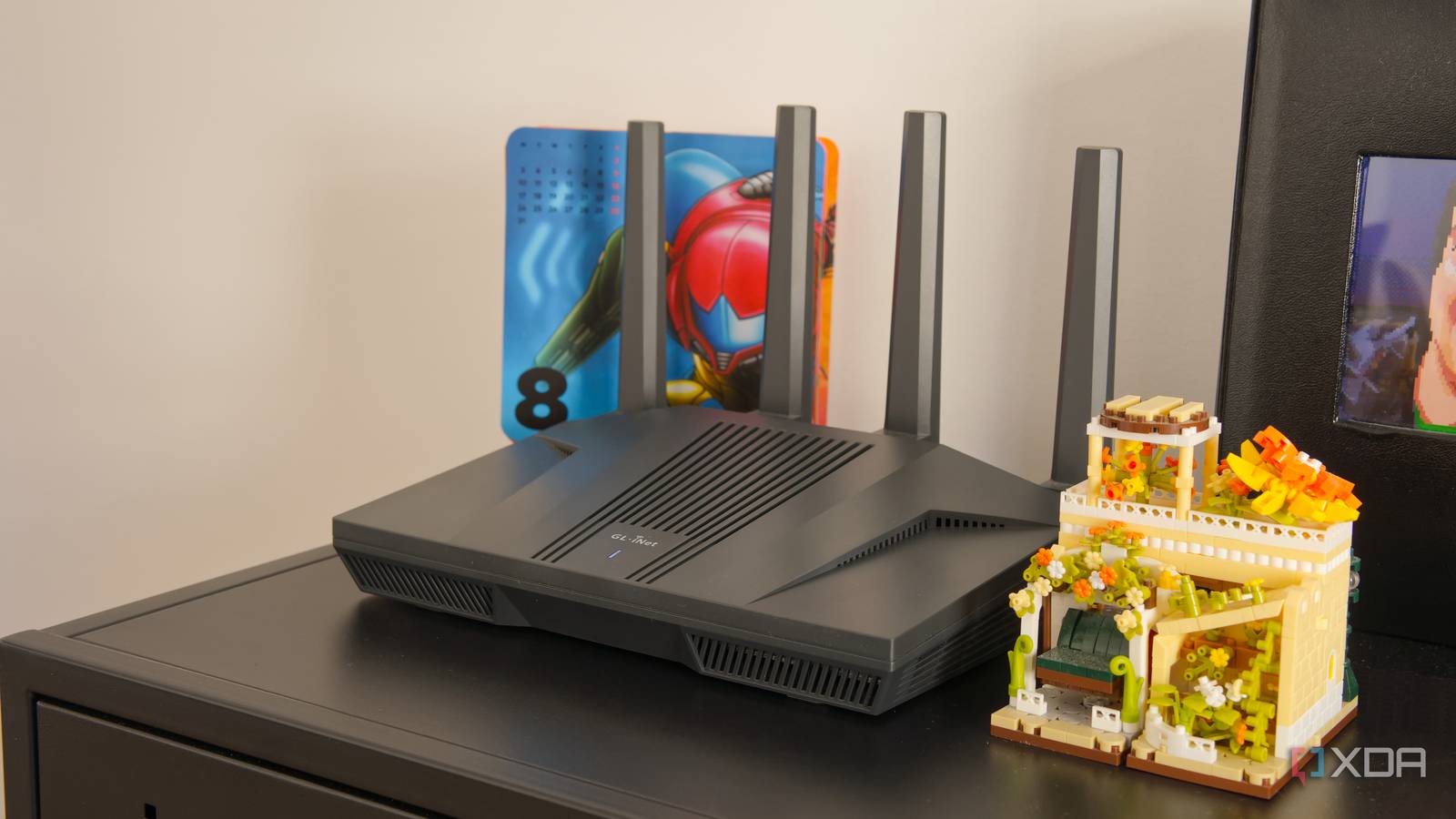
Wi-Fi upgrades have boiled down to a lot of similar talking points over the past decade or so. Every few years, a new generation of Wi-Fi comes along and promises more speed, more bandwidth, more range, and so on. But now, with Wi-Fi 7 still slowly making its way into homes around the world, things are looking different.
Wi-Fi 8 is already starting to take shape, and for the first time in a while, it isn't about speed at all. The IEEE has dubbed this version of Wi-Fi "Ultra High Reliability", and it's about time this became the focus. It may not be the most exciting upgrade on paper, but it could be the one you'll feel the most.
Since the introduction of Wi-Fi 4 (corresponding to the IEEE 802.11n standard) back in 2009, the maximum theoretical data rate for new versions of Wi-Fi has always increased significantly with each release. Wi-Fi 5 increased the maximum data rate by more than 10 times, and while further increments have been smaller in percentage, speeds have always increased very significantly.
Some improvements have been made to help fight interference and improve throughput in areas with lots of devices connected, but they always felt secondary to the improvements in maximum theoretical speeds. But with Wi-Fi 7 reaching a maximum theoretical throughput of 23Gbit per band, that's more than enough for the current internet speeds most users have, so it's arguably time to slow down.
While Wi-Fi 8 is still in development, the goal this time is very different. This new standard will have approximately the same maximum data rate, support the same number of spatial streams, use the same 4096-QAM modulation, work on the same bands, and support the same 320MHz channel bandwidth compared to Wi-Fi 7.
Your home is probably not ready for Wi-Fi 7, and won't be for a long time
Instead, the organization is focusing on improving the reliability and the effective throughput of Wi-Fi networks by reducing interference and handling non-ideal conditions more effectively. The stated goals of Wi-Fi 8 include a 25% increase in throughput at different signal-to-interference-and-noise ratio (SINR) levels, reduce latency by 25% for the 95th percentile scenarios with latency, and decrease MAC protocol data unit loss (MPDU) by 25%.
The official introduction to Wi-Fi 8 pits it against cellular networks, specifically 6G, which it will likely be competing against for a good chunk of its life (Wi-Fi 8 is expected to be finalized in 2028, while 6G should arrive in the early 2030s). Cellular networks notoriously have to handle massive numbers of devices connected at once, so the focus with Wi-Fi 8 is to improve the experience when there are lots of Wi-Fi devices nearby as well.
Since the aim is to improve effective throughput and the overall experience in real-world scenarios, Wi-Fi 8 focuses on introducing or enhancing features that help with those specific aspects.
One example are Distributed-tone resource units, or DRUs, which allows devices distribute its transmissions across a wider range of bandwidth, resulting in higher transmit power without violating regulations around how much power can be transmitted in a given piece of bandwidth. In practice, this means devices with lower transmit power can still offer more reliable connectivity, which can be especially useful for things like smart home devices that may have weaker antennas.