// ARS TECHNICA — LINUX & OPEN SOURCE
RFK Jr. may upend how vaccine recommendations are categorized
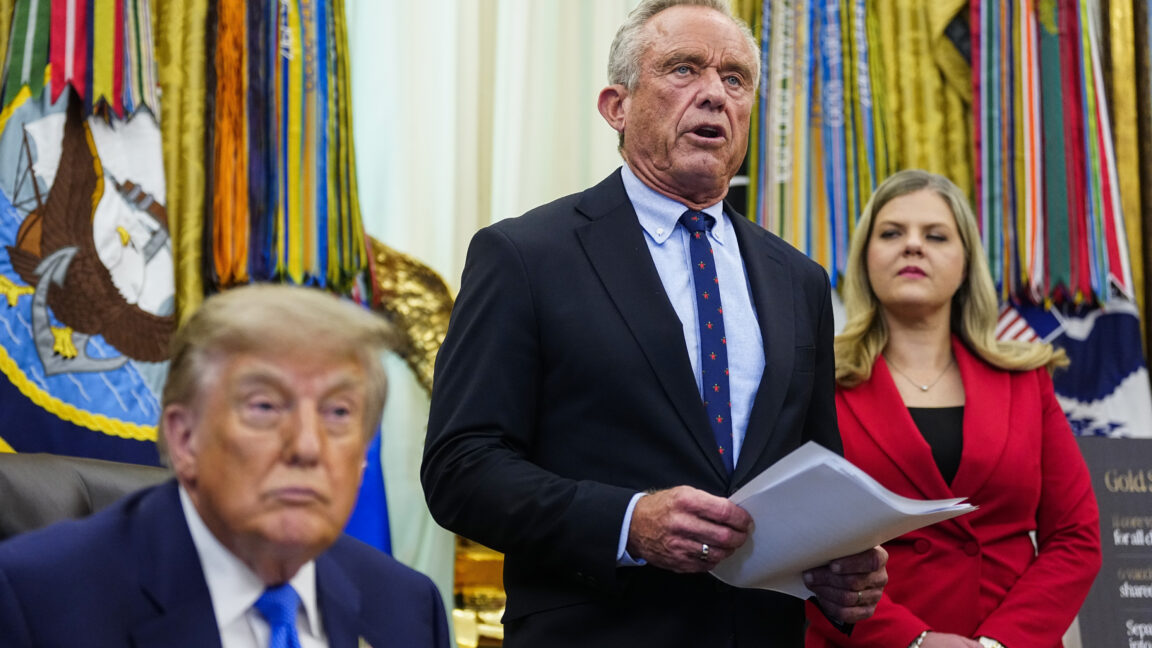
There are currently 3 categories. Without reason, RFK Jr. is considering changes.
Under anti-vaccine Health Secretary Robert F. Kennedy Jr., the US health department is considering changing how vaccine recommendations are categorized and described. The move creates the possibility that vaccinations currently considered “routine” or “universal” could be given new designations that sound less definitive or more conditional, such as “recommended with qualification” or recommended based on “shared clinical decision-making.”
Kennedy has made no new rules or recommendations for the categories yet. However, he laid out ideas and possibilities in a Request for Information (RFI) posted online Friday and published in the Federal Register on Monday. In the 10-page document, Kennedy poses questions about the current categories and asks the public to weigh in on ideas for how to change or replace them. The deadline to comment on the questions and ideas is September 20.
Currently, there are three categories of vaccination recommendations granted by the Centers for Disease Control and Prevention, which is informed by a panel of independent expert advisors, the Advisory Committee on Immunization Practices (ACIP). The three categories are: routine, otherwise considered universal (a recommendation that everyone should get a vaccine); risk-based recommendations (only certain groups at higher risk should get a vaccine); and recommendations based on “shared clinical decision-making,” or SCDM (a flexible but uncommon recommendation for vaccination based on the characteristics, values, and preferences of a patient and the judgment of their healthcare provider).
Before Kennedy’s oversight, the CDC and ACIP used an evidence-based decision-making framework to determine which type of recommendation to give a vaccination. There is no clear, evidence-based reason to question the current categories, nor any evidence to support changing to the new categories Kennedy proposes. In his RFI, Kennedy prefaces his efforts only by citing an executive order on vaccines that Trump signed two weeks ago that aimed to slash and overhaul federal vaccine recommendations.
The order and the new RFI are part of a larger, relentless effort from Kennedy and Trump to undermine federal vaccine recommendations and prop up the false and thoroughly debunked claim that vaccines are linked to autism. Kennedy previously tried to unilaterally slash the CDC’s childhood vaccine recommendations, matching them to those of Denmark—a relatively tiny, homogenous country with universal healthcare that recommends fewer vaccines than any other high-income country. Kennedy also fired all 17 experts on ACIP and repopulated the panel with hand-selected allies who share his anti-vaccine beliefs. Last year, the panel also made several unwarranted changes to vaccine recommendations, including dropping the universal recommendation for a birth dose of the hepatitis B vaccine—a move widely decried by medical and health experts.
For now, a federal judge has temporarily blocked Kennedy’s changes to federal vaccine recommendations, most of his ACIP appointments, and changes made by his ACIP amid a lawsuit led by the American Academy of Pediatrics. The judge ruled in March that Kennedy’s vaccine changes and ACIP appointments were likely illegal and done without proper procedure.
The RFI appears to be part of an effort to follow administrative procedures, which often include public comment periods. But it also offers more insight into Kennedy’s next direction for his anti-vaccine efforts.
In an announcement Friday, Kennedy’s Department of Health and Human Services summarized the RFI as part of an effort “examining whether the current recommendation framework appropriately reflects the strength of the evidence, accounts for individual circumstances and values, and supports informed discussions among patients, parents, and healthcare providers.”
More specifically, the RFI asks the public to consider