// SPACE.COM — SPAZIO & SCIENZA
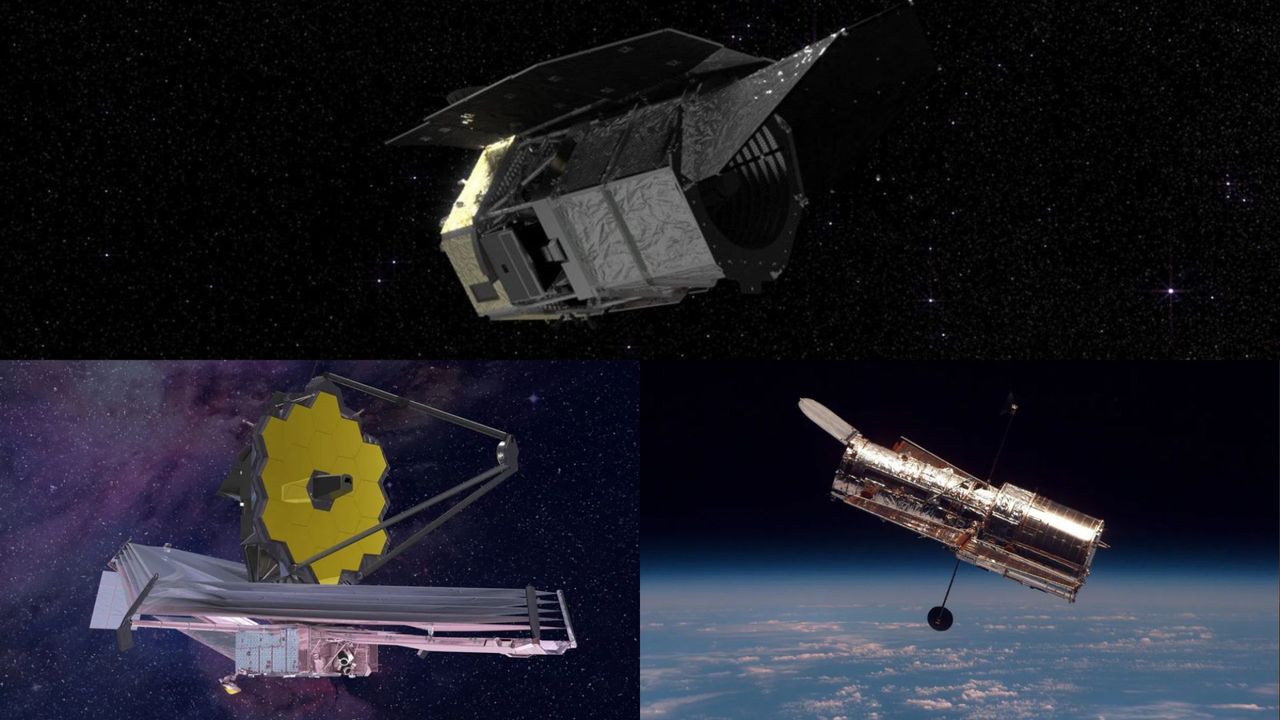
NASA's Roman Space Telescope will reveal the universe in a way the JWST and Hubble cannot
"The images it captures will be so large there is not a screen in existence large enough to show them."
When you purchase through links on our site, we may earn an affiliate commission. Here’s how it works.
Even if you aren't the kind of person who often looks up the latest space images, it's hard to navigate life (especially on the internet) without running into a few. Try choosing a new iPhone background and you'll have your pick of sharp, gray moon portraits. Watch an old "Star Trek" episode and you may not realize how many of those translucent nebulas outside the spaceship's windows were based on real, hard data.
When it comes to space, we're spoiled. Mind-bending objects light-years away from us have managed to become integrated into our everyday lives — and though we're still a ways away from understanding the true nature of the universe, we're also the closest we've ever been. It's in large part thanks to how impeccable our fleet of space telescopes is. In seconds, you can find a Hubble Space Telescope Deep Field with luminescent galaxies warped along the curvature of spacetime and James Webb Space Telescope images of strange hazy red objects from just after the dawn of time.
Moreover, what's tremendously exciting is this fleet is constantly growing. Indeed, very soon, a new space telescope will launch from NASA's Kennedy Space Center in Florida. It's called the Nancy Grace Roman Space Telescope, and it should be able to unlock a new level in the astronomy layer of our lives. It will show us new types of images, reveal new types of data and lead us in directions we may not yet know are possible.
To put it succinctly, the Nancy Grace Roman Space Telescope is an approximately 42-foot-long (12.7-meter-long), cylindrical metal observatory scheduled to lift off from our planet on Aug. 30 aboard a SpaceX Falcon Heavy rocket.
Across a five-year-long mission (a 10-year-long one if everything goes well), Roman is meant to use two powerful instruments — the Wide-Field Instrument (WFI) and Coronagraph Instrument — to image huge swaths of the cosmos and tackle some crucial questions. It will help scientists probe the mysteries of dark matter and dark energy, directly image exoplanets near and far, witness an extensive amount of stars exploding in colossal supernovas and more.
But whether or not it's a fair thought, it's hard not to want to compare the specifications of this space telescope to some of the others that have brought the cosmos down into our daily lives. This is particularly true for two of the major players right now: the James Webb Space Telescope and the Hubble Space Telescope.
To start, one of the biggest benefits of Roman over Hubble is its processing power.
By numbers, that means Hubble has managed to gather about 400 terabytes of data over its approximately 35 years of service so far. Roman is expected to be able to create 500 terabytes of data every single year.