// ARS TECHNICA — SPAZIO & SCIENZA
Researchers get two genetic codes to work at the same time
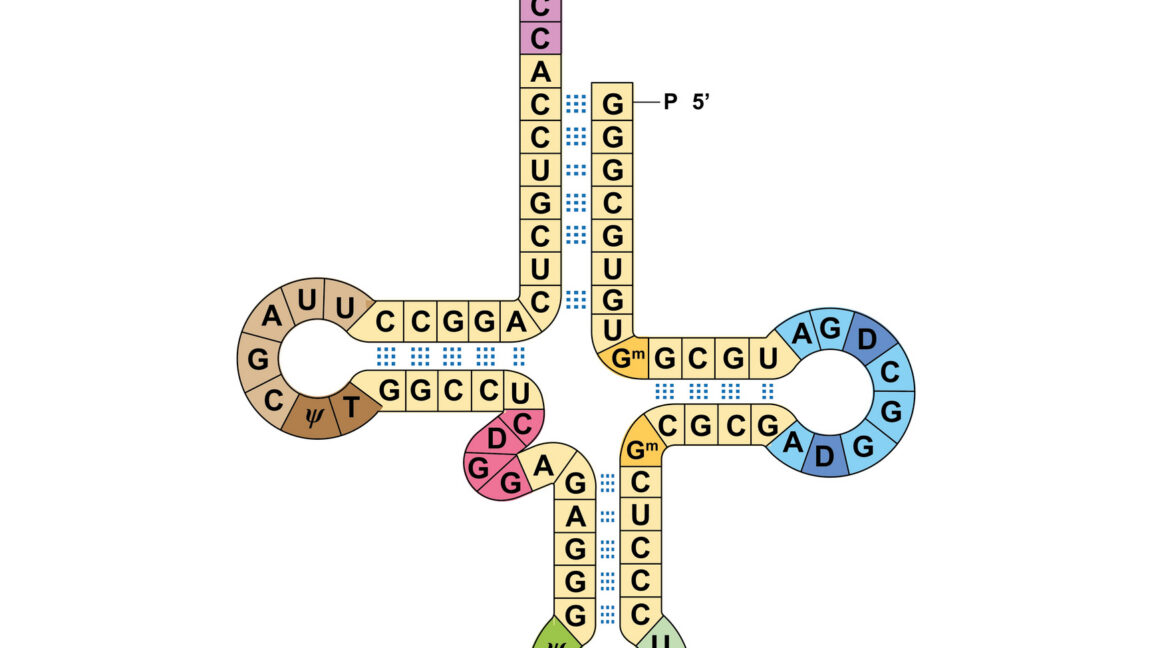
Messing with the genetic code might have gotten a bit easier to do.
The genetic code is what life everywhere uses to convert the information contained in DNA into specific protein sequences. With minor variations, the same genetic code is used by every living thing on Earth, suggesting it was already present in the last common ancestor of all of it. It’s not an easy thing to change, because so many things in every cell depend on it.
Nevertheless, some preliminary steps have been taken. Researchers have managed to add some new amino acids to a bacterial cell and were able to make proteins that were one amino acid less than usual. But it’s a slog; for some of this work, people have had to re-engineer every single gene in a bacterial genome.
Now, researchers have found a way to operate two separate genetic codes simultaneously, avoiding the need to do any work to compensate for altering the code that every protein in a cell relies on. They didn’t test it in an actual cell, and it might cause some problems there. But it’s a creative solution that should accelerate some synthetic biology work.
To understand how this works, we need to go back to that high school biology class you might not have paid much attention to. In the genome, part of most genes is dedicated to encoding a protein. The linear arrangement of bases in the DNA gets directly translated into the linear sequence of amino acids that make up a protein. Each set of three bases in the DNA corresponds to a specific amino acid (with three exceptions, each of which signals the end of the protein).
That translation isn’t direct. DNA is first copied into a messenger RNA. Then, a complex of proteins and RNA called a ribosome latches on to the messenger RNA and starts translating it, one amino acid at a time.
That translation relies on yet another type of RNA, the transfer RNA (tRna). While transfer RNAs fold up into a complex structure, they all have two key parts. On one side is a set of three bases that can pair with the messenger RNA, matching the three bases of the genetic code. At the other end, the tRNA is chemically linked to the corresponding amino acid. The ribosome simply ensures that the right transfer RNA is base paired, and then transfers the amino acid it carries to the growing chain of the protein.
A key part of this system is not directly involved in the process: the enzymes that chemically link the transfer RNAs to the correct amino acid. These enzymes need to recognize both the three-base code on the transfer RNA, and the appropriate amino acid to add to it. (This process is often referred to as “charging” a tRNA.)
So, to make comprehensive changes to the genetic code, you have to modify some combination of these factors: the sequence of genes, the sequence of transfer RNAs, and/or the enzymes that charge the transfer RNAs. (The only thing that doesn’t need to be changed is the ribosome itself.) And you have to do it in a way that either doesn’t impact every gene in an organism’s genome, or edit all the genes to compensate.
All of which is, not surprisingly, rather difficult. And, in most cases, you can’t just do things via intermediate steps, or the entire genome will end up producing malformed proteins. All of which has slowed down our attempts to experiment with artificial amino acids and alternative genetic codes.