// TOM'S HARDWARE US — HARDWARE & GADGET
Hot Chips 2026: Nvidia touts benefits of its DSX MaxLPS site power management approach — tech allows for more compute from fixed data center power budgets
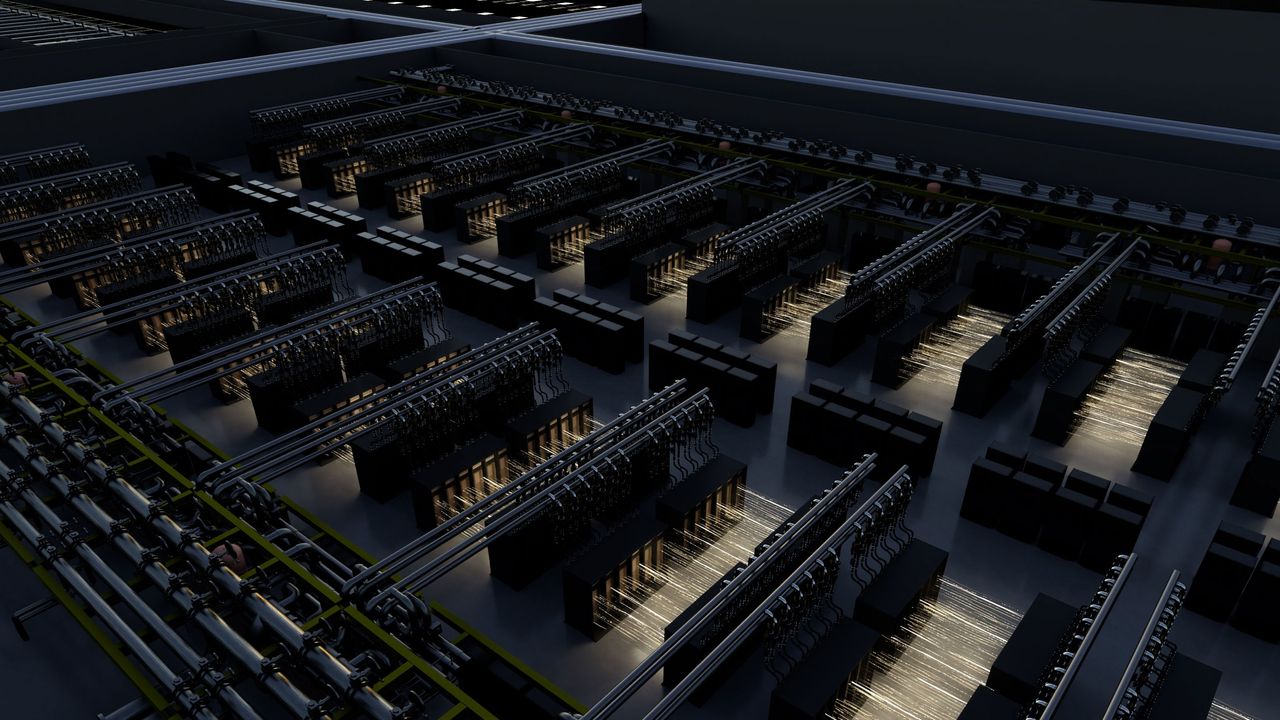
Real-time monitoring, dynamic allocation, and smarter planning are all needed for maximum performance from a Rubin installation.
When you purchase through links on our site, we may earn an affiliate commission. Here’s how it works.
This Tom's Hardware Premium article is free to read with a Tom's Hardware account; no payment necessary. We're offering free access from August 23 to 26 so you can read all of our reporting from Hot Chips.
For as much as we might discuss the performance of an individual CPU, GPU, or other chip in a rack-scale AI system, the ultimate constraint on the performance of those chips is the amount of power one can get to the building and into each of the racks that contain them. The management and allocation of that power is a major concern for maximum productivity from a data center installation going forward.
During Nvidia's Hot Chips presentation on the Rubin GPU, the company emphasized this hard limit on data center capacity and touted the amount of compute that Vera Rubin NVL72 systems can deliver within an example fixed facility power budget of 100MW.
Nvidia says that the use of all of Vera Rubin’s power management technologies, in tandem with its DSX MaxLPS (Land, Power, Shell) suite of design and site-level dynamic power management resources, will allow operators to provision installations of 40,000 of those next-gen chips GPUs (or about 40 Rubin DGX SuperPODs) within that 100MW budget, and expects that hardware to deliver up to 2 zettaFLOPS (ZFLOPS) for NVFP4 inference and up to 1.4 ZFLOPS for NVFP4 training.
Doing some back-of-the-napkin math for ourselves from publicly available Rubin specs, we feel safe in assuming that those performance figures are estimated, not measured. The maximum number of achievable FLOPS from real-life workloads is likely to be significantly lower for a host of reasons.
But the overall point still stands: getting the most compute out of precious power budgets when planning the AI data centers of the future is going to require more refined planning, monitoring, and facility management than simply applying the coarse measure of estimated peak power draw for every electrical component in the facility. And Nvidia has those building blocks ready for data center constructors in the form of its DSX toolkit.
According to a companion blog post that Nvidia shared, as data center operators provisioned their facilities in the past, many of the assumptions they made around power usage focused on those fixed, worst-case power peaks per rack, potentially leading to inflated power budgets that end up stranding power allocation in racks that will rarely, if ever, use all of it.
In just one example, if there was an application load differential between racks in a cluster such that one system would benefit from having more power sent its way in that moment, it couldn’t be re-routed under a static provisioning scheme. The less-utilized rack would use less of its allocated power budget, and the more heavily loaded one might still run into the limits of an overly conservative guard band.