// HACKER NEWS — CYBERSECURITY
A Man Who Saw Humanity from Two Billion Years Away
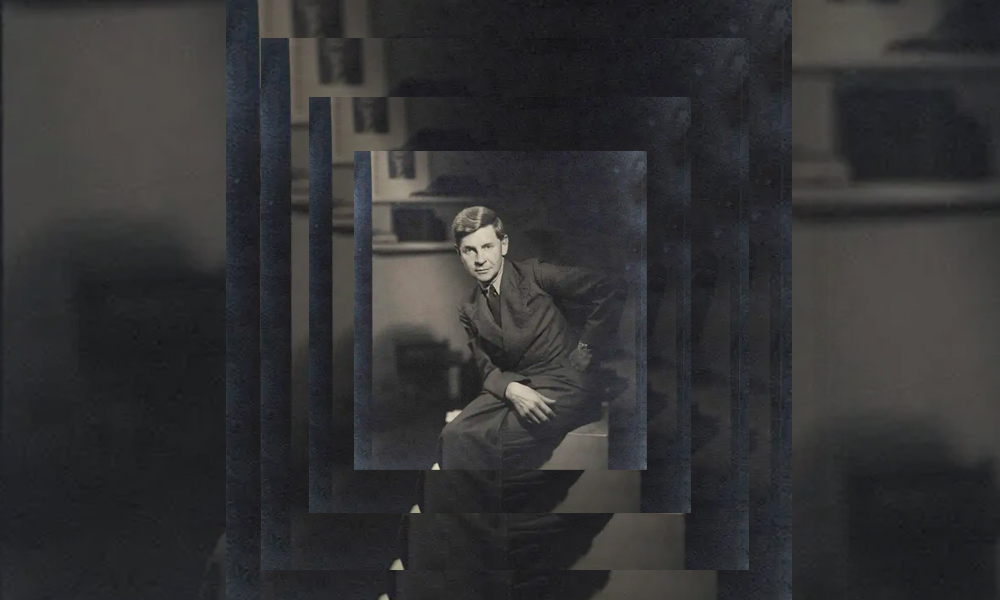
Olaf Stapledon published his first epic cosmic novel, “Last and First Men: A Story of the Near and Far Future,” in 1930. It is a speculative history of humanity’s evolution told from the vantage point of one of the Last Men, the people of the 18th era of humanity, 2 billion years in the future.
“Last and First Men” eschews the dramatic conventions of the novel form: There are few significant characters or particularities of place. Instead, the plot is a causal chain of civilizations rising and falling. There is a voice, infused with a distant sense of beauty and tragedy as it considers humanity in the abstract. Stapledon described the novel as “an essay in myth creation.”
In his autobiography, Stapledon relates the “Anglesey vision” that inspired the novel. He was scrambling on an island off the rugged coast of Wales when he came across a colony of seals surrounded by crashing waves. Perhaps the faces of the seals suggested blurred abstractions of human faces. He had “a sudden fantasy of man’s whole future, aeon upon aeon of strange vicissitudes and gallant endeavours in world after world.”
This inspirational moment is an abductive, metaphoric leap. Quite distinct from the plodding extrapolative logic that gives us jet packs, automated cars, and other low-hanging fruit of the imagination, prevalent in the pulp sf writing of the same era and reheated in the corporate imaginations of our contemporary tech executives.
Stapledon’s imagination is profuse. He can be read as a compendium of science fiction ideas: his “Odd John” (1935) with its homo superior and titular telepathic character seeds the ground for Marvel’s X-Men; in “Star Maker” (1937) he describes the stellar structure that Freeman Dyson conceptualized as the Dyson sphere; in “Last and First Men” and its sequel, 1932’s “Last Men in London,” human evolution is driven across millennia to produce telepathy, as in Frank Herbert’s “Dune”; in the age of the Fifth Men, the Moon is destroyed and falls to Earth, raining down destruction and driving further evolution of the species — Neal Stephenson’s masterful pan-generational novel “Seveneves” is powered by the same conceit.
A science fiction author could spend their career turning Stapledon’s speculative paragraphs into novels.
A further astonishing influence, traced by the scholar Dominic Moran, is upon Jorge Luis Borges and his short story “El jardín de los senderos que se bifurcan” (1941), or “The Garden of Forking Paths.” Borges reviewed Stapledon and went on to cite a section of “Star Maker” that anticipates the idea of the multiverse. The “many worlds” theory of quantum mechanics would not be proposed until 1957, nearly 20 years after Stapledon’s speculation of a creature capable of taking many possible courses of action at once, with each choice creating a new dimension in time.
A science fiction author could spend their career turning Stapledon’s speculative paragraphs into novels.
The long future of “Last and First Men” is influenced by the interwar concern with deep time. Doris Lessing observed that surely what was going on in archaeology in the period inspired Stapledon: The early 20th century was marked by the rediscovery of civilizations such as the Olmec mother culture in the Americas, the opening of Tutankhamen’s tomb, and the excavation of the Hittite capital that proved they were a genuine civilization and not solely a Biblical one. Lessing’s own science fiction sequence, “Canopus in Argos: Archives,” first published in 1979, is a similarly eon-spanning future history.
The different generations of Stapledon’s humankind evolve under pressure from cultural and environmental effects. Their advances leave a mark on the Earth, and the Earth violently reacts. This anticipates a key theme of the 21st century, the Anthropocene, the theory that humanity has left evidence of itself in the geological record, thus making our mark in deep time.