// NATURE NEWS — SPAZIO & SCIENZA
Does the shingles vaccine cut heart disease risk? Mounting evidence suggests a link
Gemma Conroy is a freelance science journalist in Mexico City.
Search author on:
PubMed
Google Scholar
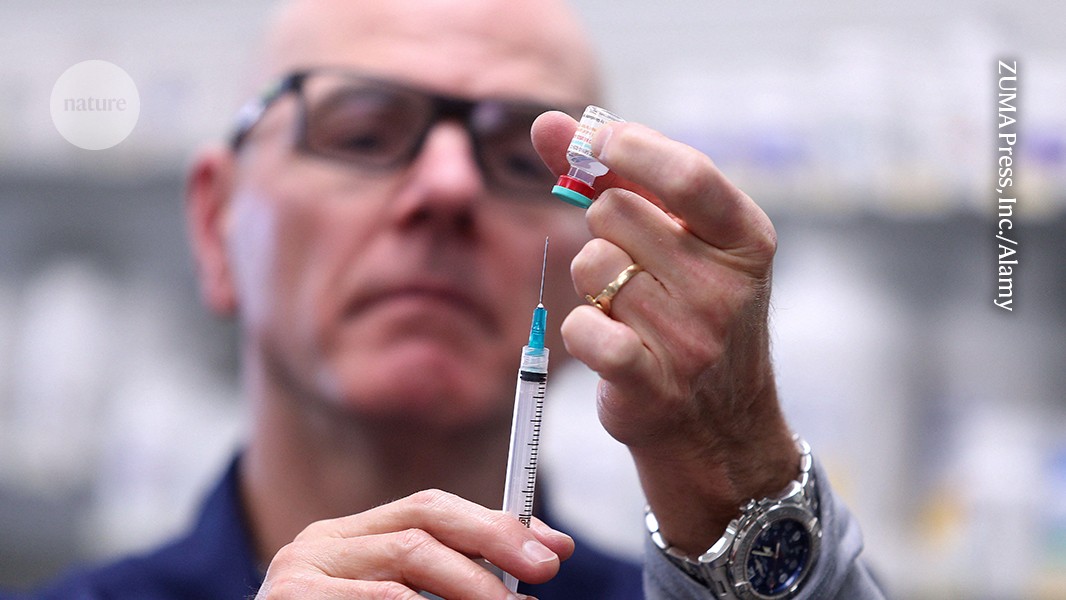
The shingles vaccine called Shingrix contains a viral protein and an immune-boosting compound.Credit: ZUMA Press, Inc./Alamy
The shingles vaccine in use today has been linked to a reduced risk of heart disease and heart failure, according to a study of more than 70,000 people who received either the current vaccine or an older formulation1. The results were published today in Nature Medicine.
The findings are “particularly exciting” because they are more robust than those from previous work2 on the heart-protective effects of shingles vaccination, says Emily Rayens, an epidemiologist who specializes in vaccine development at the health-care provider Kaiser Permanente in Pasadena, California. Still, more work is needed to confirm whether the jab truly lowers the risk of cardiovascular events. “We cannot definitively conclude that there is a causal link,” adds Rayens, who was not involved in the study.
Shingles is a painful rash condition that is caused by varicella zoster, the same virus that causes chickenpox. It occurs when the virus reactivates in the body later in life, most often in people over the age of 50. Previous observational studies suggested that the Shingrix ‘recombinant’ vaccine — which is a mixture of a surface protein from the varicella zoster virus and an immune-boosting compound — might provide extra perks by reducing the risk of cardiovascular disease and even dementia3.
But most of these studies compared vaccinated people with unvaccinated individuals, which can make any benefit seem larger than it is, says study co-author Maxime Taquet, a psychiatrist at the University of Oxford, UK, who has investigated the effect of the shingles vaccine on dementia risk3. That’s because those who opt to get the jab tend to be healthier than people who don’t. “We know that this is a very biased way of answering the question,” says Taquet.
Flu’s link to cardiovascular disease shows why vaccination is essential
To address this issue, Taquet and his colleagues turned to TriNetX, a database that includes the electronic health records of people from across the United States. They compared the heart health of two groups of more than 36,000 people aged 60 and over. One group got the Shingrix recombinant vaccine and the other had received Zostavax, a now-discontinued vaccine that contains a deactivated version of the virus. Shingrix replaced Zostavax in the United States after October 2017, allowing the team to conduct a natural experiment.
The researchers tracked the participants’ incidence of heart disease, heart failure and stroke for seven years after their immunizations, looking specifically at ‘disease burden’ — the time span spent living with a diagnosed cardiovascular condition.