// 9TO5GOOGLE — MOBILE & WEB
Review: Google’s Pixel 11 Pro Fold just barely keeps up
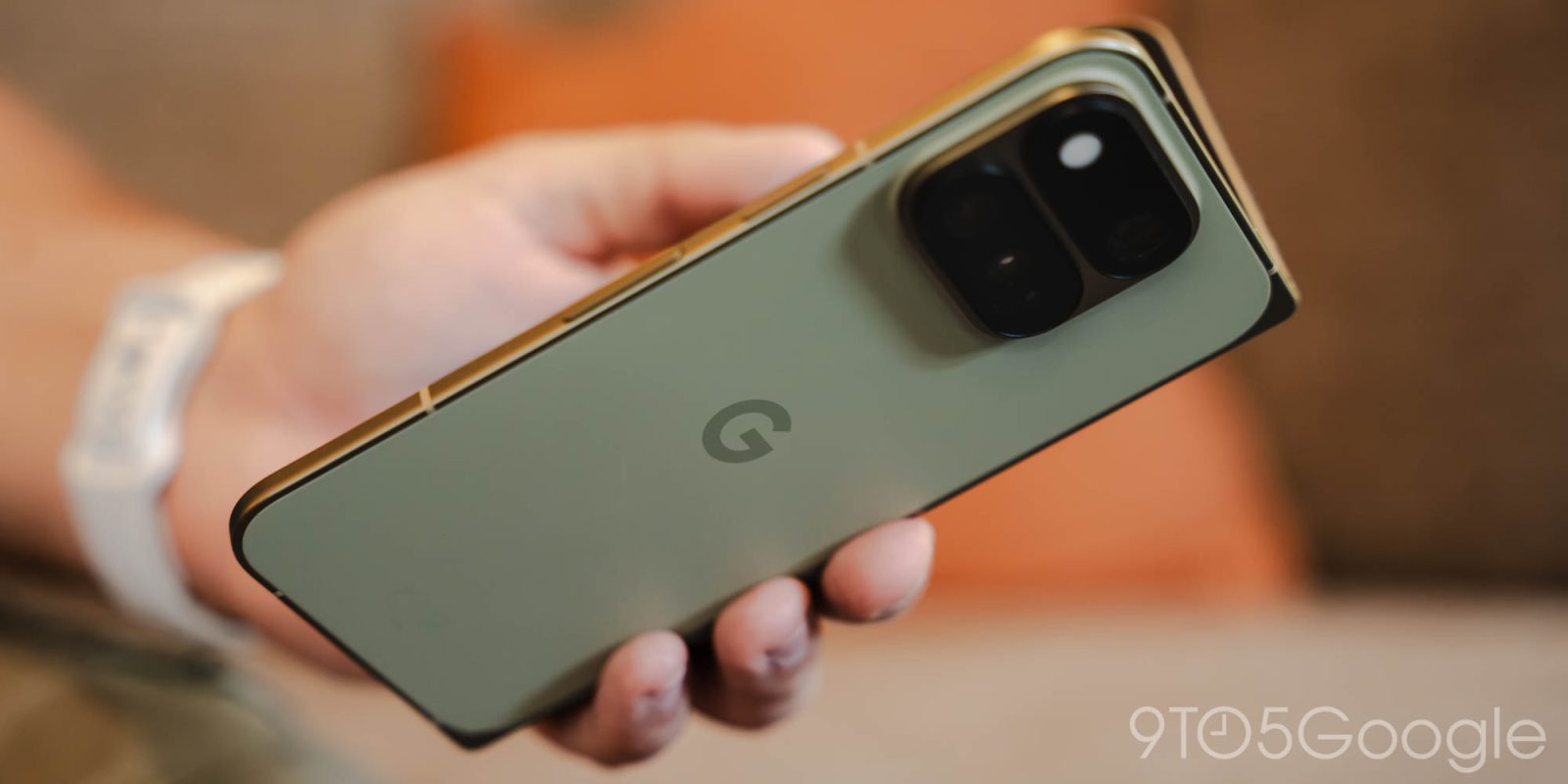
The foldable market has been moving fast, with hardware and software we saw just a few years ago having been completely rethought and drastically improved. In the middle of it all, the Pixel 11 Pro Fold feels like a concerted effort to make the best of a tough situation – Google’s new foldable tries its darndest to keep up with the competition, and it does just enough to deserve your attention, save for a couple of sore points.
The Pixel 11 Pro Fold was never going to be revolutionary. It basically has the same design, recycled for year three. That said, it’s a good design and there are some welcome refinements here.
For one thing, it’s thinner. At 10.1mm when closed, Pixel 11 Pro Fold is Google’s thinnest foldable to date, and moving back in the right direction after the last generation put on a couple of millimeters. The “how” is a little wild, though, as Google opted to make one side thinner than the other, leading to an awkward profile and a little ridge you can feel when the device is opened. This is a complete non-issue – a visual oddity, sure, but a problem in no sense of the word. Anyone seriously looking at this phone who is put off by this is being far too petty in my opinion, and while I do wish the halves were symmetrical, I’m happy to accept this trade-off for a thinner overall device.
As far as the fit and finish goes, the Fold looks and feels the part. The metal frame feels sturdy and there are no obvious creaks or croaks as you’d find with earlier generations. Google’s work on refining this form factor has also paid off, as the outer display experience feels drastically better compared to the Pixel 9 Pro Fold I last used. The “Olive” color is subtle but good-looking, too.
Google’s big claim on the Pixel 11 Pro Fold is around durability. Like last year, this is the only mainstream foldable with an IP68 dust/water resistance rating, something that will really only prove its value in time. The same goes for Google’s improved hinge, which feels smooth and snappy so far.
What I was far more keen to try out was the ceramic outer display covering and the “glass fiber composite” around back. The former has held up great so far, without a scuff or scratch to show for its time. The backing material is interesting. Google says that it will be “nearly impossible to crack,” and I do believe that because, well, it’s basically plastic. It feels better than plastic, but this definitely isn’t your typical frosted glass. I’m a bit worried to see how it holds up to scratches over time, but so far, it’s flawless. And those two really do bid well for longer-term use. Previous Pixels I’ve used have scratched within a week or two on the front, and my Galaxy Z Fold 7 scratched on its back panel in what felt like mere hours of use last year. I’m all for trying out new materials to solve this long-running problem, and I’m very excited to see how these hold up after a good start.
The flip side to Google’s pitch on durability is that there are still some glaring structural flaws in this design, for the third year in a row. Those likely won’t show themselves to the average person, but it’s a problem Google should solve to back up the rest of the claims around the strength of this device.
But, ultimately, the problem is that Google’s refinements aren’t enough to stand out. The Pixel 9 Pro Fold launched this design in 2024 into a market that was stagnant. By being a fair bit thinner, packing in decent camera hardware, and having a usable battery, it automatically stuck the landing. In 2026, you need more than that. Every other foldable brand has spent those same two years essentially eliminating every big foldable flaw – from massive batteries to creaseless displays, it’s all reality now. The Pixel 11 Pro Fold is just left to barely keep up. It’s good enough to be respectable, but it’s also a hard sell to anyone who took issues with those prior flaws.
If you’ll notice, we got through that whole section without talking about “HiLight.