// SPACE.COM — SPAZIO & SCIENZA
On this day in space! Aug. 27, 1962: NASA launches Mariner 2 to Venus for ambitious flyby
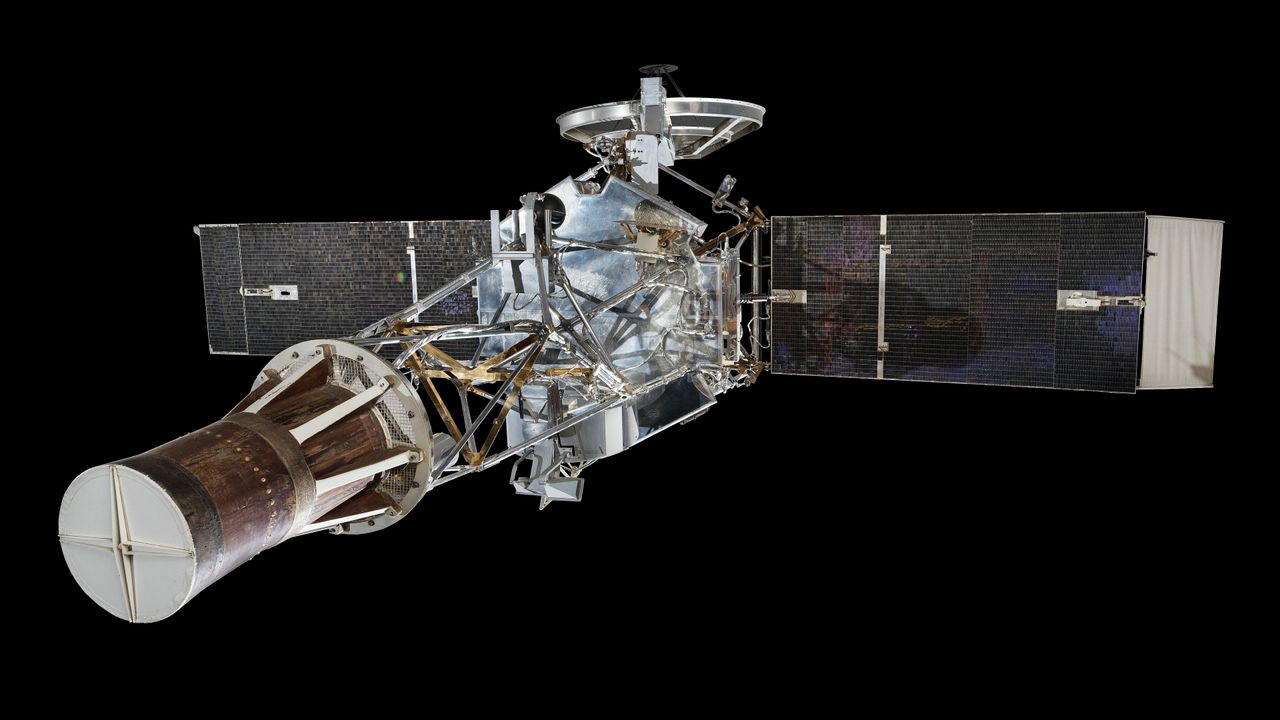
Despite a glitch after launch, Mariner 2 would make the first fully successful flyby of another planet!
When you purchase through links on our site, we may earn an affiliate commission. Here’s how it works.
On Aug. 27, 1962, NASA launched Mariner 2, the world's first spacecraft to successfully visit another planet.
Mariner 2 flew by Venus after a 3.5-month voyage through space.
The mission launched just one month after the Mariner 1 mission failed during launch. After departing from Cape Canaveral, Florida, Mariner 2 almost met the same fate when an electrical problem with the Atlas-Agena rocket caused it to start rolling, which made it unable to respond to any guidance commands from mission control.
By some miracle, the problem fixed itself, and Mariner 2 was on its way to Venus!
Mariner 2 was a watershed mission for NASA at a time when, in the early 1960s, the U.S. was trailing behind in the Space Race with the Soviet Union — which had already launched the first satellite (Sputnik 1 in 1957), the first living creature (Laika the dog on Sputnik 2 that same year), the first human in space (Yuri Gagarin in 1961) and sent a probe to the moon (Luna 1 in 1959).
NASA's big Venus first mission, Mariner 1, failed out of the gate as mentioned above during an attempted launch on July 22, 1962, but those fortunes changed with Mariner 2.
It was an electrical short that caused Mariner 2's rocket to roll during ascent, but the booster managed to correct itself after about a minute, NASA has said.
The trip to Venus was a bit rocky, too, with Mariner 2 suffering a solar panel power drop out two times, as well as glitchy attitude control gyroscopes. Mariner 2 also got surprisingly hot as it approached its Venus flyby, prompting worries it might be cooked before it even reached the planet.