// NATURE NEWS — SPAZIO & SCIENZA
Will Meta’s deal make social media safe for kids? Researchers are dubious
Search author on:
PubMed
Google Scholar
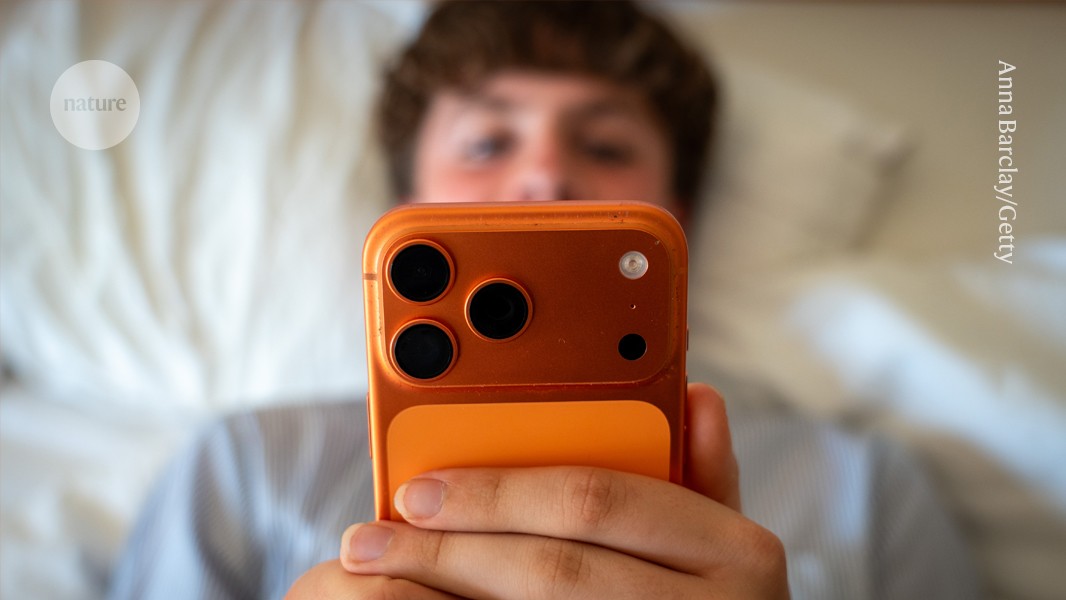
Under a legal settlement, teenagers in the United States will have time limits put on their use of certain social-media platforms. Credit: Anna Barclay/Getty
Social-media giant Meta has agreed to pay up to US$18 billion to US states and make changes to its Facebook and Instagram platforms, settling a legal case about whether its technology harms kids’ mental health. But how effective will these changes be in protecting children and teenagers?
Is social media addictive for teens? US courts wade into scientific debate
The 26 August settlement, which is legally binding only in the United States, is the latest in a series of global efforts to protect kids from harmful social-media use. In the coming months, US Facebook and Instagram users under 18 years old will see a flurry of new restrictions on their accounts, including a two-hour daily time limit and a block on using the platforms between midnight and 6 a.m. Some of the restrictions will require the permission of a parent or guardian to be switched off.
Research is divided on whether social media harms teenagers’ mental health, and whether changes such as the ones announced by Meta can even be enforced. Australia banned social-media use by children under 16 in December last year. But three months afterwards, a survey of almost 900 parents by the country’s Internet safety regulator found that nearly seven in ten reported that their child still had accounts on a top social-media platform.
Kathryn Modecki is a psychologist at the University of Western Australia in Perth who is leading a study on Australia’s social-media ban. Xiaoran Sun is a psychologist at the University of Minnesota in Minneapolis who investigates how teenagers and parents use social media. Nature spoke to both to understand the likely outcomes of Meta’s settlement.
Sun: There is definitely more to be done, and I don’t think we should be satisfied with this case, but this is a big step that I’m happy to see.
Modecki: My concern is that people will think, ‘Oh yeah, now young people are safe.’ A lot of experts would disagree. It’s important to acknowledge the efforts that went into making this decision — the substantial progress being made.
But the pessimistic side of me knows that Meta, in this case, is defining the game. It’s defining what harm is. And it’s choosing, selectively, how it is going to engage with this issue. If you take a step back and ask, ‘What if our goal was truly to make social media safer for everyone, including kids who might have caretakers with less digital literacy, or who aren’t able to be deeply involved?’, we would be coming at this in a different manner. I get asked a lot whether the Australian ban is working, and I always say, what if we instead ask, ‘How do we make social media better for all of us, kids included?’