// NATURE NEWS — SPAZIO & SCIENZA
India has an ambitious plan to lure scientists back — will it work?
Search author on:
PubMed
Google Scholar
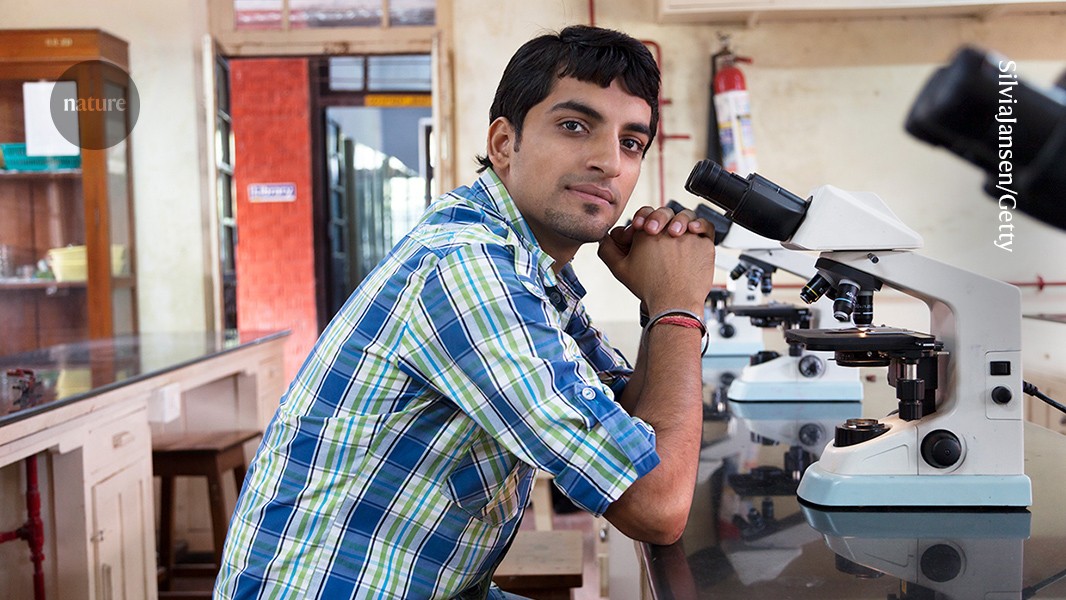
New fellowships hope to entice Indian researchers living abroad to return to home.Credit: SilviaJansen/Getty
India is the latest country that is trying to entice researchers who have moved abroad to come back and help to reverse the country’s brain drain. Scientists mostly support these initiatives, which offer generous fellowships and research funding. But some say the programmes are unlikely to make much of a difference, because they don’t address the reasons that many researchers leave the country in the first place, such as a lack of research infrastructure and income security.
In June, the government launched the Prime Minister Research Chair (PMRC) Scheme, a public programme to entice researchers to return. It will support 120 overseas researchers who are originally from India to work at an Indian university, laboratory or research centre. The scheme offers up to 50 million rupees (roughly US$520,000) in research grants, with extra stipend, residential and medical allowances, for five years. Researchers will be selected from strategic fields such as artificial intelligence, quantum computing, biotechnology and advanced materials.
India is not alone in this strategy. China has also attracted thousands of researchers back with generous funding and conditions, which studies suggest have helped to improve research quality and quantity1; France, Germany and Denmark also have fellowships for returnees.
A huge number of citizens from India move abroad to study — particularly to the United States — and don’t come back. In the 2024–25 academic year, as many as 363,000 students from India were enrolled in US universities — the largest cohort of international students in the country. A 2025 preprint suggested that 73% of researchers who leave India never return2. Lack of sufficient research funding and facilities, poor pay compared with global standards and few career opportunities are some of the reasons researchers migrate.
But the pull of the United States could be fading. Tighter immigration controls, heightened visa scrutiny and uncertainty around research funding are making the country less palatable for many international scientists, says theoretical physicist Aavishkar Patel at the International Centre for Theoretical Sciences (ICTS) in Bengaluru. Inside Higher Ed reports that the number of new student visas issued to applicants from India decreased by more than 50% in 2025. US uncertainty, combined with increasing opportunities in India, is driving more researchers to return, adds Patel.
Although no data on the number of scientists who have returned to India are available, researchers who spoke to Nature say that, anecdotally, the country is becoming a more popular research destination. Spending on research and development more than doubled between 2010 and 2021, although it remains lower than the average expenditure by countries that are part of the Organisation for Economic Co-operation and Development. In 2018, the country ranked third globally for the number of science and engineering PhD students and in 2020 it was ranked third in terms of its output of science and engineering publications.
Another new opportunity for researchers is the country’s first privately funded research fellowship. The Murty Science Fellowship was launched last year by the family foundation of N.R. Narayana Murthy, who founded the global technology company Infosys, and author and engineer Sudha Murty. It is modelled on the US MacArthur fellowship, which offers research funding over five years. The Murty fellowship offers early-career researchers up to 50 million rupees over five years to pursue research and is designed to retain talented early-career researchers in India, the foundation says.
Patel received an inaugural Murty fellowship last year, which he used to set up his laboratory. Before that, he did research at t