// SPACE.COM — SPAZIO & SCIENZA
On this day in space! Sept. 3, 2006: Europe's SMART-1 spacecraft crashes into the moon in lunar death dive
When you purchase through links on our site, we may earn an affiliate commission. Here’s how it works.
On Sept. 3, 2006, a European satellite named SMART-1 crashed into the moon! This wasn't actually as disastrous as it sounds, because the spacecraft did it on purpose.
SMART-1 launched in 2003 and was the first European spacecraft to go to the moon. It was also the first mission of a program called Small Missions for Advanced Research in Technology, which was a series of low-cost spacecraft that the European Space Agency launched to test new spaceflight technologies.
SMART-1's primary objective was to test something called Solar Electric Primary Propulsion, or a solar-powered electric engine. While it orbited the moon for almost two years, it looked for water ice and other chemicals on the lunar surface.
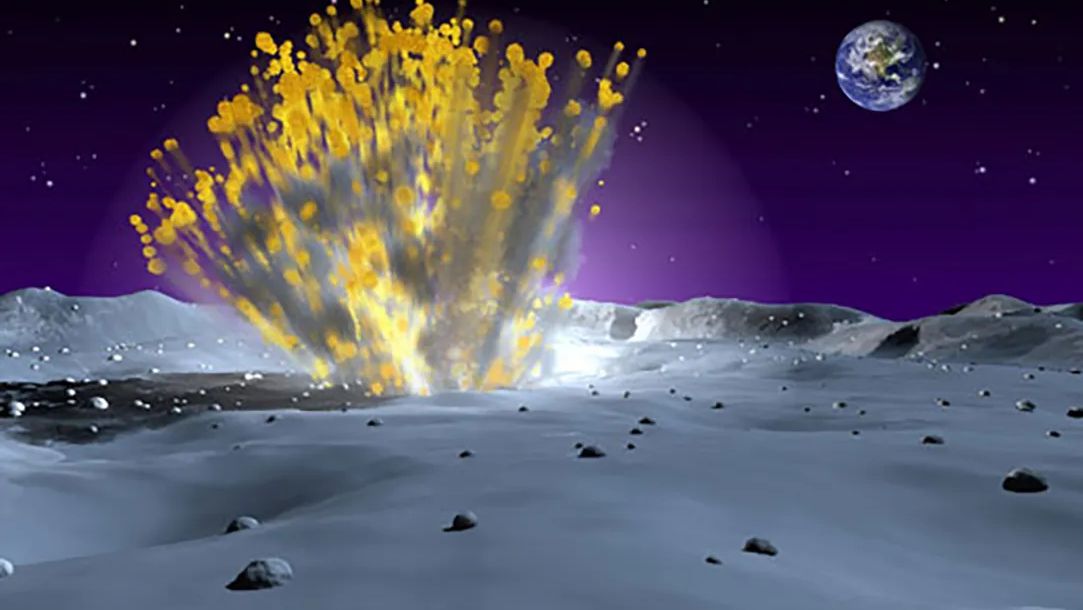
When SMART-1 slammed into the moon, that was also done for science. Astronomers back on Earth watched the impact with their telescopes, hoping that it would give them some insight into the mechanics of meteor impacts.
At its core, ESA's SMART-1 moon probe was a technology testbed for spacecraft technologies, that doesn't mean the mission was without science merit.
The spacecraft carried a suite of instruments to map the surface of the moon, study the mineral composition of the lunar surface and seek out infrared signatures for signs of water ice. Scientists hoped the probe would help build a geologic history of the moon to better understand its violent origins in a cosmic impact.
SMART-1 accomplished all this and more. The mission was expected to last just six months at the moon, but the probe persisted for about three years.
ESA initially expected SMART-1 to crash into the moon in September 2005, but mission managers devised a series of engine maneuvers that added a full year onto the mission. An even later maneuver, which completely exhausted SMART-1's xenon supply, extended the probe's life by a few more weeks, ESA officials have said.
But on Sept. 3, 2006, the moon's gravity pulled SMART-1 out of its lunar orbit. The probe crashed into the moon at a relatively slow 4,473 mph (7,200 kph) -- Leonid meteoroid impacts on the moon are more than of 156,585 mph (252,000 kph), for example -- in a region known as the "Lake of Excellence." No spacecraft in lunar orbit saw its demise, but a telescope on Earth did record the flash from the lunar impact.